Sabbath Meditation #35 – The Testimony of God By Kelly McDonald, Jr.
Exodus 31:18 “And he gave unto Moses, when he had made an end of communing with him upon mount Sinai, two tables of the testimony [EDUT], tables of stone, written with the finger of God.”
Psalms 19:7 “The law [TORAT] of the LORD is perfect [complete, whole, sound], converting [Shuv – to turn, return] the soul: the testimony [EDUT] of the LORD is sure, making wise the simple (simple, naïve, foolish).”
Psa 119:138 “Thy testimonies [EDOTEKA] that thou hast commanded are righteous and very faithful [vemunah].”
When God gave Ten the Words (or what we commonly call the Ten Commandments), on the tables of stone, they were given another name: The Testimony or Testimonies. The Hebrew word translated as testimony is eduth; the plural form is edah. These words mean a testimony or witness of someone or something.
The Ten Commandments are a testimony or witness of God and His character. They provide for us a perspective of how God views the world and people, including how we should honor God and treat others. Below, I have a summary of at least one way that each commandment reflects Him. At the end, we will look more specifically at how the Sabbath testifies of God.
1) “I brought you out of Egypt. You shall have no other gods before me.” – He deserves our complete attention/total focus and all our worship because He freed us. No other god could free us or even come close to Him.
2) Commandment against graven images/idols – God wants us to seek Him from within. In turn, this reflects that He wants to know us individually and personally and transform us from the inside out. The God of Israel does not want to know you impersonally through an image/statue.
3) Do not take His name in vain (said another way: do not lift up or bear His name in vain). God does not want His name placed on causes, purposes, and events that do not align with His character.
4) Sabbath – We are going to examine this one in just a moment.
5) Honor your father and mother – God values the importance of the family unit. Children should show respect to those who brought them into this world (they likely will be parents one day too).
6) Do not kill – God values the life of every human being.
7) Do not commit adultery – God honors and values the covenant relationship between a man and a woman.
8) Do not steal – God recognizes and values private property rights and the labor it takes to honestly accumulate it. This means that He wants us to respect the property of others. Moreover, He wants us to recognize ownership and hard work.
9) Do not bear false witness – God values truthfulness and an accurate account of events that we see and experience.
10) Do not covet – God wants us to learn to be content and satisfied with what we have and respect the ownership/hard work of others. Covetousness is an attitude that will lead to destructive behaviors. It will keep us dissatisfied and cause us to harm others and self.
There are many more lessons we learn about God’s character from Ten the Words, but this gives us an overview. What about the Sabbath? What does it testify concerning God’s character?
On the Sabbath, we are reminded that fulfillment in life cannot come merely through material means or through work. In other words, the seventh day is a testimony to how God established other things in life to focus on besides work, such as our relationship with Him and others (family, the fellowship of believers). God wants us to be part of a plan and purpose greater than ourselves or our personal ambitions for life. God does not want us enslaved to our work or the work of others – we must be free every seventh day to learn these lessons about His character.
The Sabbath testifies that there is a fulfillment that comes through rest and necessary a focus on other things in life. One lesson of the Sabbath is that God teaches us to trust in the unseen.
“Visiting Israel for the first time, I discovered modern-day Pharisees living there. Reflecting on all we saw and felt on our tour, I began to consider if we American Christians may also be living like Pharisees.
All around Israel, but especially in Jerusalem, one sees bearded men in long black coats and odd-looking hats. They wear their sideburns in long ringlets. The women, though they don’t stand out so much, always have their heads wrapped. They are Hassidic Jews.
Orthodox Judaism abounds in Israel and affects everyday life, even for a tourist. One of the most noticeable effects is the kosher foods served. Observing the laws of “clean meats,” it was a relief for me to not always be asking, suspiciously “What’s in it?” However, keeping a restaurant’s kosher license means much more, as we discovered.
Because of the scriptural admonition to “not seethe a kid in its mother’s milk,” no dairy products can be served at a meal where any meat might be served. Instead, we had margarine and soy milk and non-dairy frozen sorbets. Only at breakfast were we offered real milk, butter, and cheese along with smoked turkey, fish and eggs but no beef or lamb….”
“Surely someone will speak up on behalf of our children! Acquiescing to a popularist, media-driven agenda is nothing less than dangerous – and possibly fatal.
The definition of marriage and family life is one father, one mother, married for life, providing both emotional and spiritual nurture for their children. Anything else, like homosexuality, paedophilia, adultery, fornication, incest, bestiality and the like are an aberration. In other words, these deviations are plainly sinful and wrong.
Who says so? Why, Jesus, of course! And so do His followers – or at least they should by their example.
When entire countries, supported by their judiciaries and driven by the media, begin “voting in” and incrementing what become sweeping immoral changes, then perhaps we ought to spare a thought, first, for our grandparents who would shudder to think that such immoral antics are undermining the very society they pioneered, and secondly, for our children whose minds and hearts become irreparably damaged because they’ve never known the true love and identity that only a loving father and mother in marriage can provide…”
(this article is an excerpt from the Fall 2015 edition of the Sabbath Sentinel)To read the rest of this article, which starts on page 5, click this link: https://biblesabbath.org/media/TSSFALL2015.pdf
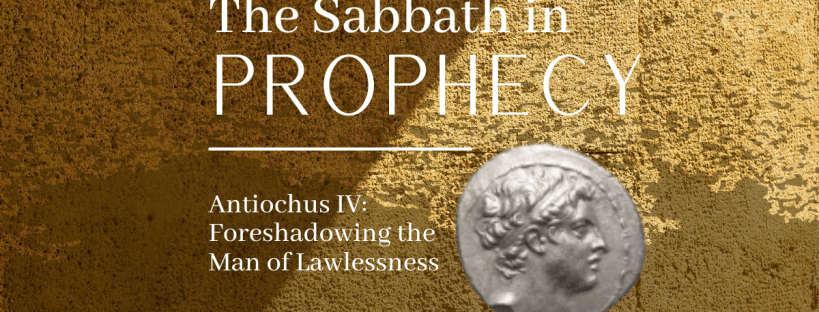
Antiochus IV: Foreshadowing the Man of Lawlessness
By Kelly McDonald, Jr.
In 2 Thessalonians 2:3-4, the Apostle Paul wrote: “…for that day will not come, unless the rebellion comes first, and the man of lawlessness is revealed, the son of perdition, who opposes and exalts himself against every so-called god or object of worship, so that he takes his seat in the temple of God, proclaiming himself to be God…” (NIV)
In verse 3, the Greek word translated as lawlessness is anomias, and it means one who transgresses God’s law. Paul described a future time where a leader will appear who mandates lawlessness worldwide. This means that the commandments of God will be outlawed, including the Sabbath. It is prophesied that this man will sit in God’s Temple and proclaim himself to be ‘god’. The rest of the chapter goes on to describe false signs and wonders that will accompany his appearance.
Did you know that a past event foreshadows this future event? It is part of the series of events that compose the Hanukkah story! This occurrence was foretold in the book of Daniel chapter 11, which we will briefly summarize.
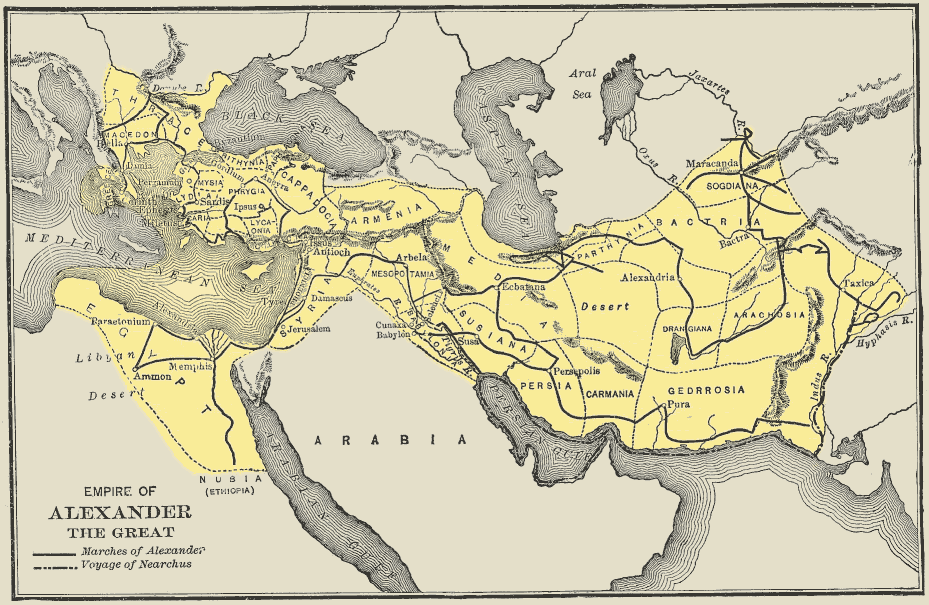
Between 331-323 BC, Alexander the Great conquered from Greece all the way to India. His empire even stretched down into Egypt. We have a map of this expansive kingdom below.
A Map of Alexander the Great’s Empire
After Alexander’s death, his empire was broken up into four separate kingdoms. Of them, only two lasted a long period of time. One of them was called the Seleucid Kingdom; it was based out of Antioch in modern-day Syria. The second one was called the Ptolemy Kingdom; it was based out of Alexandria in modern-day Egypt. In Daniel chapter 11, they are respectively called the Kingdom of the North and Kingdom of the South. We have a map of these two Kingdoms below from the years 175-164 BC.
Seleucid and Ptolemy Kingdoms (175-164 BC)
The Jewish people lived in the land between these two kingdoms. This placed them at the crossroads of interaction between them. The Seleucids and Ptolemies often fought against each other, and the Jewish people were at times pulled into the fray. Such was the case during the reign of Antiochus IV (Epiphanes).
Antiochus IV spent most of his youth as a hostage in Rome because his father lost a war with the Romans. His brother, Seleucus IV, was the rightful ruler of the kingdom. Antiochus was eventually released by the Romans, but his brother was killed not long afterwards. Seizing on the opportunity, he was made king over the Seleucid kingdom in 175 BC. He stole the throne from its rightful heir (which was Seleucus’ son).
This was prophesied in Daniel 11:21: “He will be succeeded by a contemptible person who has not been given the honor of royalty. He will invade the kingdom when its people feel secure, and he will seize it through intrigue” (NIV).
Among the goals of Antiochus IV was to conquer the Ptolemy kingdom. In 170, he nearly succeeded when he forcibly took most of their territory. On his way back to the capital city of Antioch, he stopped in Jerusalem. He robbed God’s Temple of some treasures, including the golden Table of Shewbread.
Two years later, he tried to finish his conquest of the Ptolemies. This second invasion was not successful. The Romans stopped him from proceeding; Antiochus was humiliated. Outraged, he turned his fury towards Jerusalem and the Jewish people.
Antiochus and his army approached Jerusalem in a peaceful manner. Once troops entered the city, they turned on the Jewish people and killed many of them. He then defiled the Temple of God. He had a pagan altar placed on top of God’s Altar of Sacrifice and commanded pagan sacrifices to be made. God foretold these events many years before in the days of Daniel:
“At the appointed time he will invade the South again, but this time the outcome will be different from what it was before. Ships of the western coastlands will oppose him, and he will lose heart. Then he will turn back and vent his fury against the holy covenant. He will return and show favor to those who forsake the holy covenant. His armed forces will rise up to desecrate the temple fortress and will abolish the daily sacrifice. Then they will set up the abomination that causes desolation” (Daniel 11:29-31, NIV).
Antiochus then turned his attention to assaulting the Jewish people throughout Judea. He forced the Greek religion and culture on them, which is called Hellenization, and banned Biblical practices, including the Sabbath and reading of the Torah. He sent troops across the country to compel the people to sacrifice to idols and eat swine’s flesh. Those who would agree to betray their faith were promised riches and positions of authority. Some people did compromise, but many others did not and were martyred.
The first book of Maccabees is an historical account of these events. We have quoted an excerpt from it below:
“41 Then the king (Antiochus) wrote to his whole kingdom that all should be one people, 42 and that each should give up his customs. 43 All the Gentiles accepted the command of the king. Many even from Israel gladly adopted his religion; they sacrificed to idols and profaned the sabbath. 44 And the king sent letters by messengers to Jerusalem and the cities of Judah; he directed them to follow customs strange to the land. 45 to forbid burnt offerings and sacrifices and drink offerings in the sanctuary, to profane sabbaths and festivals, 46 to defile the sanctuary and the priests, 47 to build altars and sacred precincts and shrines for idols, to sacrifice swine and other unclean animals, 48 and to leave their sons uncircumcised. They were to make themselves abominable by everything unclean and profane, 49 so that they would forget the law and change all the ordinances. 50 And whoever does not obey the command of the king shall die… 56 The books of the law which they found they tore to pieces and burned with fire. 57 Where the book of the covenant was found in the possession of any one, or if any one adhered to the law, the decree of the king condemned him to death. 58 They kept using violence against Israel, against those found month after month in the cities 59 On the twenty-fifth day of the month they offered sacrifice on the altar that was on top of the altar of burnt offering” (I Maccabees 1:41-50, 56-59, NRSV).
Antiochus promoted a policy of lawlessness. He threatened the people with death for not complying with his decrees. Even those who had the book of the law were condemned to death.
During all these events, Antiochus also proclaimed himself to be a god. The title “Theos Epiphanos” was added to his name, which means “god manifest”. To prove this detail, we have a picture of one of his coins below:
A Coin from Antiochus IV’s reign (dated between 168-164 BC)
This coin was minted during the time that Antiochus committed these awful atrocities. On the left side, we see the face of Antiochus IV. On the other side Zeus is depicted. He is seated on a throne with a scepter in one hand and the goddess Nike on the other hand. The Greek letters on this side of the coin read as follows:
To the left of Zeus: BAΣIΛEΩΣ ANTIOXOY (English: King Antiochus) To the right of Zeus: ΘEOY EΠIΦANOY (English: god Manifest) Below Zeus: NIKEΦOΡOY (English: Bringer of Victory)
Antiochus stood in God’s Temple and declared himself to be god manifest. The Jewish people, led by Mattathias, rebelled against this wicked ruler. Those who joined this revolt were called the Maccabees. After a multi-year struggle, the Jewish people eventually regained control of the Temple. They cleansed it and resumed worshipping the True God. These events form the foundation for the Hanukkah story. Eventually the Jewish people won complete freedom!
The prophetic “man of lawlessness” who is to come will follow a very similar pattern to the past example of Antiochus IV. This historical example reminds us how important it is to hold onto the commandments of God.
“What has been will be again, what has been done will be done again; there is nothing new under the sun” (Ecclesiastes 1:9).
In this article, we consider whether the New Testament can be trusted as a witness for Jesus’ existence. After all, it is considered the chief primary source for Jesus’ life. Some people wonder: “How can an ancient text, which is almost 2,000 years old, be considered reliable?”
In the first two articles of this series, we looked over the ancient historians that testify to the existence of Jesus and/or his followers (click here to read article 1 and click here to read article 2). To my knowledge, none of them are questioned as to their historical value. These sources are considered reliable. I learned about them in grade school and college; we were taught from these texts. Below, I have listed the approximate dates for the oldest complete manuscripts of these works.
Josephus – 9th or 10th century
Tacitus – 11th century
Pliny the Younger – Late 5th century
Suetonius – 9th through 12th centuries
Lucian – 9th century
The oldest complete manuscript for four out of these five works is about 700 to 900 years after the time in which the author lived. Why is this? From the ninth century onwards, kings and monks engaged in a rigorous campaign to copy older manuscripts of the classical writers, especially as it relates to Roman history. The content from these works has been cross checked with other manuscripts of writers from a similar time. There are also scattered fragments of these works which date earlier. Archaeological findings have been used to corroborate the content. These works have each been critically examined over the centuries. This explains why their content remains to be taught and disseminated in Academia today.
If these texts can be trusted for historical content, though their manuscript history is distant to the events they report, what about the New Testament? The original New Testament describes events that occur mostly in the first century AD. What is the agreed upon date for its oldest complete manuscript?
The oldest complete text is the Codex Sinaiticus (350 AD), which is within 320 years of the life of Jesus. There are also two others that date near it: Codex Vaticanus (fourth century AD), and Codex Alexandrinus (450 AD). Moreover, thousands of fragments or manuscripts of the New Testament that date to the same time and earlier. This includes manuscripts from earlier dates with large portions of the New Testament, such as: Beatty Biblical Papyrus I (which contains the gospels and Acts and dates to the third century), Beatty Biblical Papyrus II (a codex of most of Paul’s letters and dates to the early or mid third century), Papyrus Bodmer II (which includes nearly all of John’s Gospel and dates to before 200 AD), and others that contain significant portions of the New Testament.
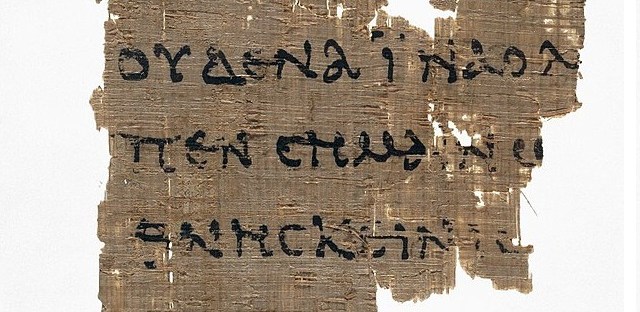
Below, we have a picture of papyrus 52, which is considered the earliest known fragment of John’s Gospel. It dates to about 125 AD, and contains John 18:31-33 on one side and John 18:37-38 on the other side.
Papyrus of John 18:31-33 Public Domain, copyright tag: PD-US
Another ancient witness of these writings includes the second century writers of Christianity, including Polycarp (a disciple of the early Apostles), Irenaeus (who was a hearer of Polycarp), Justin the Martyr, and other writers who attest to the writings of the first disciples. In about 150 AD, Tatian composed the Diatessaron, which was a compilation of all four gospels into one seamless story structured around the narrative found in the Gospel of John. It was the most widely used gospel narrative in Syria until the fifth century and was used elsewhere. There is one fragment that dates to before the mid-third century and it is quoted and referenced in numerous other early Church writings. Furthermore, the work was translated into other languages over time (some of which have survived into modern times). The details have led to its acceptance as a legitimate writing from the early Church.
Some early church writers mentioned a list of accepted writings from the early disciples. The Muratorian canon is among them. It contains a list of accepted books of the first disciples and dates to the mid to late second century.
We would have even more New Testament manuscripts from earlier times, but warfare, weather, and other factors such as persecution caused older manuscripts to be lost. For instance, the Roman Emperor Diocletian initiated a persecution which lasted approximately 10 years (303-313 AD). During it, the persecutors tried to burn Christian manuscripts. The church historian, Eusebius was a contemporary to these events. He wrote the following account:
“All these things were fulfilled in us, when we saw with our own eyes the houses of prayer thrown down to the very foundations, and the Divine and Sacred Scriptures committed to the flames in the midst of the market-places, and the shepherds of the churches basely hidden here and there, and some of them captured ignominiously, and mocked by their enemies…It was in the nineteenth year of the reign of Diocletian, in the month Dystrus, called March by the Romans, when the feast of the Saviour’s passion was near at hand, that royal edicts were published everywhere, commanding that the churches be leveled to the ground and the Scriptures be destroyed by fire, and ordering that those who held places of honor be degraded, and that the household servants, if they persisted in the profession of Christianity, be deprived of freedom” (Eusebius, Church History, 8.2.1,4).
Despite this attempt to terminate Christian documents, many fragments of the New Testament survived. This includes the source documents for the codices we described earlier. They were based upon earlier documents which scribes before them had copied from even earlier compilations.
In summation, complete manuscripts of the New Testament date much closer to the events it describes than its other counterparts. Fragments or portions of the text exist to even earlier dates. There are sections of it quoted by numerous early Church writers. All of these details put together adds to its reliability as a document of ancient events, people, and places.
Below, we have listed a summary of approximately 2,589 verses confirmed by the historical and archaeological evidence we have reviewed. Enjoy!
For each entry I list the detail from the evidence and then list the number of verses that mention that piece of evidence. I approximate the total number of verses referenced to be about 2,000 because some subjects overlap and thus a verse might count more than one time. This is a sample and a more thorough study could certainly be done on this subject. Most of the time, the greater context of the verse is not included, which would certain add more verse references.
Jesus [943 verses]: the examples are so numerous that it would take pages to list them all.
Jesus was called Christ [over 200 verses; I have only mentioned a few examples]: Matthew 1:1, 1:16, 1:18, 16:16, 20; Mark 1:1, 8:29,14:61; Luke 2:11, 26, 4:41; John 1:17, 4:42, 6:69; Acts 2:36; Romans 1:6.
Specifically, the phrase “Jesus who is called Christ” [4 verses]: Matthew 1:16, 27:17, 27:22; John 4:25.
Nazareth [29 verses]: Matthew 2:23, 4:13, 21:11, 26:71; Mark 1:9,24, 10:47, 14:67, 16:6, Luke 1:26, 2:4,39,51, 4:16,34, 18:37, 24:19; John 1:45-46, 18:5-7, 19:19; Acts 2:22, 3:6, 4:10, 6:14, 10:38, 22:8, 26:9.
Tiberius Caesar—direct references [1 verse]:Luke 3:1.
Tiberius Caesar—indirect references to him as Caesar [10 verses]: Matthew 22:17, 21; Mark 12:14, 17; Luke 20:22,25, 23:2, John 19:12, 15.
Pilate [54 verses, most of which are contained in passages]: Matthew 27:2-65; Mark 15:1-44; Luke 3:1, 13:1, 23:1-52; John 18:29-38, 19:1-38; Acts 3:13, 4:27, 13:28; I Timothy 6:13.
Jewish authorities made accusations against Jesus [well over 20 verses, some examples mentioned multiple times in a passage]: Matthew 20:18, 21:15,23, 26:3-59, 27:1-41; Mark 11:18, 14:1,10,43-55, 15:1-31; Luke 9:22, 19:47, 22:2-4, 22:52-66, 23:4-20; John 7:32-45, 18:3,35, 19:6-15,21.
Crucifixion [49 verses total, some of which are contained in passages]: Matthew 20:19, 23:34, 26:2, 27:22-44, 28:5; Mark 15:13-32; Lk. 23:21-33, 24:7, 24:26; John 19:6-41; Acts 2:23, 26, 4:10; I Cor. 1:23, 2:2, 2:8; 2 Cor. 13:4; Gal 2:20, 3:1; Heb. 6:6; Rev. 11:8.
Jesus was called wise [4 verses]: Matthew 13:54; Mark 6:2; Luke 2:40, 52.
Jesus was teacher [many verses, but 21 are listed here]: Matthew 4:23, 9:35, 11:1, 21:23, 22:16, 26:55; Mark 4:1, 6:2, 6:6, 34, 12:14, 14:49; Luke 5:17, 11:1, 13:10,22, 20:21, 21:37, 23:5; John 3:2; Acts 1:1.
Jesus and James had an earthly father named Joseph: Matthew 1:16,
Jesus had Jewish and Greek followers [about 60 verse references listed, but more are available. I also included references to Gentile followers after his death]: Matthew 4:25, 8:1,18, 9:8-10, 33-36, 11:7,12:15,21, 13:2, 34-36, 14:14-23, 15:10, 30, 20:29, 21:8-9, 21:11, 46, 22:33, 23:1; Mark 1:34, 2:2-13, 15, 3:7-9, 30-32, 6:31, 55-56, 15:41; Luke 2:32, 7:11; John 2:23, 4:39-41, 7:31, 8:30, 10:42, 11:45, 12:11, 20-25, 42; Acts 2:41, 4:4, 8:7-8, 9:42, 13:43, 14:21, 15:35, 17:12, 18:8, 19:18-19, 21:20, 28:23-31. All of the early followers were Jewish, but some were Gentiles.
Jesus was considered a prophet [14 verses]: Matthew 21:46; Mark 8:28; Luke 1:76, 7:16, 9:8,19, 24:19; John 4:19,44, 6:14, 7:40, 9:17; Acts 3:22-23, 7:37.
Jesus was considered a teacher of Truth [3 verses]: Matthew 22:16; Mark 12:14; Luke 20:21.
The Jesus movement started in Judea [43 verses mention Judaea or Judea]: The gospels Matthew, Mark, Luke, and John all confirm this as Jesus taught throughout Judea; see also Acts 1:8.
Jesus performed miracles and did good [many examples exist, but I have listed 29 verses]: Matthew 4:23, 8:7-13,14-15, 9:35, 12:15, 14:14, 15:30; Luke 7:3, 9:42, 13:14, 14:3, 22:51, John 2:11, 23, 3:2, 4:47,54, 5:13, 6:2, 11:47; Acts 2:22, 10:38.
Jesus was worshipped [9 verses]: Matthew 8:2, 9:18, 14:33, 15:25, 20:20, 28:9, 17; Mark, 5:6; Luke 24:52.
Jesus had a brother names James; in Hebrew his name was Jacob [9 verses – we listed both indirect references to Jesus’ brothers and specific references to James]: Matthew 13:55, Mk. 6:3, John 7:5, Acts 1:14, 12:17, 15:13, I Cor. 15:7, Gal. 1:19, Book of James was written by him – see James 1:1.
Jesus’ followers were called Christians [3 verses]: Acts 11:26, 26:28; I Peter 4:16.
Jesus’ disciples prayed to Him and in His name [3 verses]: Acts 1:24; James 5:14; I Peter 3:12.
Christians lived by Christ’s Words [again, many examples, but 27 verses listed]: Matthew 28:16-20, John 13:34-35; I Cor. 11:1; Eph. 5:1-2; Col. 3:13-16; I Peter 2:21-25; I John 2:1-6, 3:15-16.
Christians considered each other brothers [approx. 245 examples in the New Testament, but we have a sample of 12 verses]: Matthew 12:50; Mark 3:35; Acts 20:32; Romans 1:13, 16:7; I Cor. 1:10-11; Hebrews 3:1; James 1:2; I Peter 1:22; 2 Peter 1:10; I John 2:7; Rev. 6:11, 22:9.
The first leaders of Christianity were in Judea [Jerusalem was the headquarters for early Christianity; we have 19 verses listed]: Acts 1:4-8, 11:1-2, 11:19-22, 11:26-27, 12:24-25, 15:2, 16:4, Gal. 2:1-2.
Christians met regularly on a fixed day [many examples in the gospels, but 5 specific examples listed here]: Acts 13:13-48, Acts 15:21, Acts 16:11-20, Acts 17:1-4, 18:1-6.
Christians were taught not to curse Christ [1 verse]: I Cor. 12:3.
Christians lived morally upright and shunned evil [at least 538 verses, all referenced]: Romans 6:1-22, 8:1-8, 12:9-21, 13:1-14; I Cor. 3:16-17, 5:1-13, 6:9-20, 10:1-13, chapter 13; Gal. 5:19-26; Eph. 4:17-32, 5:1-20; Phil. 2:12-16; Col. 3:1-17; I Thess. 4:1-12; 2 Thess. 2:11-12; I Tim. 3:1-13, 4:1-13, 5:1-16, 6:3-10; 2 Tim. 3:1-9; Titus 1:5-16; 2:1-14, 3:1-8; James 1:19-27, 2:1-26, 3:1-11, 4:1-12; I Peter 1:13-22, 2:1-3, 13-17, 3:8-18, 4:1-11; 2 Peter chapter 2, 3:11-13, I john 2:9-17, 3:1-24, 4:7-21, 5:1-5,13-21, Jude 3-22, Rev. chapters 2 and 3.
Christians were taught to shun idols [30 verses]: Acts 15:20, 15:29, 21:25; I Cor. 5:10-11, 6:9, 8:1-10; I Cor. 10:7,14,19; 2 Cor. 6:16; Gal. 5:20; Eph. 5:5; Col. 3:5; I Thess. 1:9; I Peter 4:3; I John 5:21; Rev. 2:14, 20, 21:8, 22:15.
Christians were persecuted and told that they would suffer for the faith [over 40 verses, but sample listed]: Matthew 10:34-38, 24:9-13; Luke 21:16; Acts 5:41, 7:54-60, 8:1, 9:16, 11:19, 13:50, 14:22; Romans 5:3, 8:17-18; Eph. 3:13; Phil. 1:29, 3:10; Col. 1:24; I Thess. 1:6, 2:2, 2:14; 2 Thess. 1:5; 2 Tim. 1:8-12, 2:3-9, 3:11; Hebrews 10:32-34, 13:3; James 5:10; I Peter 1:6-7, 2:19-21, 3:14-17, 4:15-19, 5:9-10; Rev. 2:10.
There were early believers in Rome [several verses]: Acts 28:14-18; Romans 1:1-15 (the entire letter of Romans was written to these believers).
Females had important roles in early Christianity [at least 16 verse references]: Acts 18:2,18, 24-26, 21:9; Romans 16:1-16; I Cor. 16:19; Phil. 4:2-3; Col. 4:15; 2 Tim. 4:19.
Christians believed in immortality [over 36 verses]: Matthew 25:31-46; Mark 10:30; Luke 20:34-36; John 3:15-16, 4:36, 5:36, 6:54, 6:68, 10:28, 11:24-26, 12:25; Acts 13:48, 24:15; Romans 2:7, 5:21, 6:5,22-23; I Cor. 15:20-55; Phil. 3:10-11; I Thess. 4:11-18; I Tim. 6:12,19; 2 Tim. 1:10; Titus 1:2, 3:7; I John 1:2, 2:25, 5:11-13, 5:20; Jude 1:21; Hebrews 6:2; Rev. 20:4-5.
Christians believed in giving [there are many references, but 18 specific verses and two whole chapters on this subject, which include 39 verses]: Matthew 6:1-4; Acts 2:44-45, 4:32-34; I Cor. 16:1-3; 2 Cor. chapters 8-9; Phil. 4:15; Eph. 4:28; I Tim. 6:17-19; Heb. 13:16.
Claudius removed Jews from Rome [1 verse]: Acts 18:2.
People of all ranks and ages were Christians [61 total verses, including passages about how the younger and older believers should interact with each other. More verses on this could be included, but this gives us a good sample]: People in royal households (Luke 8:3, Phil. 4:22); Priests (Acts 6:7); Chief Rulers (John 12:42); A Eunuch (Acts 8:26-38); A Weaver (Acts 16:11-15); Chief Women in a city (Acts 17:4); Fishermen (Matthew 4:18-19); Tax Collectors (Matthew 10:3); Ruler of synagogue (Acts 18:8); Erastus, a city chamberlain (Romans 16:23); People from all sorts of backgrounds famous or infamous who repented of their sins joined the early community (see I Cor. 1:26-28). The old and the young were part of this community (Acts 20:9, I Tim. 4:12, 5:1-18, Titus 2:4-6, I Peter 5:5, I John 2:13-14). Entire households joined the faith together (Acts 16:30-34, 18:8, I Cor. 1:16, 2 Tim. 4:19). They early Christian leaders taught in the Temple and in homes (Acts 5:42).
Bibliography Davis, H. Grady , Faherty, Robert L. , Sander, Emilie T. , Sarna, Nahum M. , Stendahl, Krister , Rylaarsdam, J. Coert , Cain, Seymour , Bruce, Frederick Fyvie , Fredericksen, Linwood , Grant, Robert M. and Flusser, David. “biblical literature”. Encyclopedia Britannica, 26 Feb. 2021, https://www.britannica.com/topic/biblical-literature. Accessed 28 November 2021.
Eusebius, Church History, 8.2.1, 4. Translated by Arthur Cushman McGiffert. Nicene and Post-Nicene Fathers, Second Series, Vol. 1. Edited by Philip Schaff and Henry Wace. Buffalo, NY: Christian Literature Publishing Co., 1890. pp 324-325.
Hurtado, Larry W. “Archaeological Views: Early Christian Dilemma: Codex or Scroll?” Biblical Archaeology Review 44.6 (2018): 54, 56, 66.
Josephus. Jewish Antiquities. Translated by Ralph Marcus, vol. 6, Harvard University Press, 1958, pp vii-ix.
Lucian. The Passing of Peregrinus. Translated by A.M. Harmon, vol. 1, Harvard University Press, 1961. pp ix-xiv.
Mendell, C.W. Tacitus: The Man and His Work. Yale University Press/Oxford University Press, 1957.
Nongbri, Brent. “How Old Are the Oldest Christian Manuscripts?” Biblical Archaeology Review 46.3 (2020): 38–45.
Reynolds, L.D. Texts and Transmission: A Survey of the Latin Classics. Clarendon Press, Oxford (1983). pp 316-322, 406-411.
Rolfe, John C. Suetonius and His Biographies. Proceedings of the American Philosophical Society (April 1913). pp 206-225.
Tacitus. The Histories translated by Clifford H Moore. The Annals translated by John Jackson, vol. 1, Harvard University Press, 1962. pp xiv-xvi.
In this article, we will examine the archaeological evidence that relates to the life of Jesus. Archaeological evidence includes concrete findings from the time Jesus lived including pottery, coins, or other physical findings. Our focus will be on four main subjects: Pontius Pilate, Crucifixion, Nazareth, and the James Ossuary.
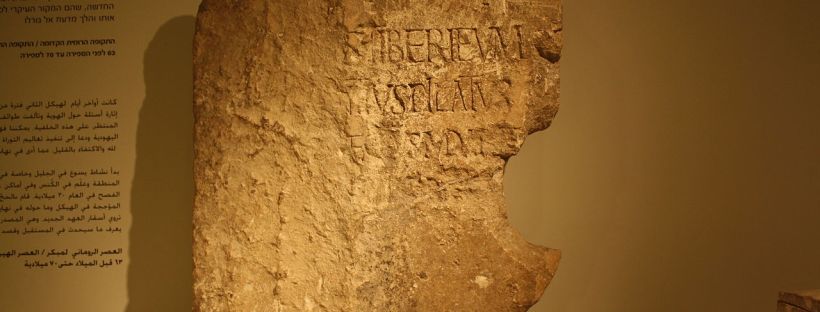
Pontius Pilate The Pilate Stone In June 1961, an inscription was discovered on an expedition at Caesarea Maritima. This was the administrative capital of Judea during the early first century AD. While excavating a theater, an inscription was found on one of the steps. The inscription was written in Latin on a block that is 82 cm high, 68 cm wide, and 20 cm in thickness.
Some of the letters are missing, but a rough transcription is listed below (letters in brackets are either most likely or certainly part of the inscription).
The confirmed translation of the text is “Tiberius, Pontius Pilatus, Praefectus of Judea” (there was no J in Latin). The letter E is the only letter legible on the last line. Some historians and archeologists think it is proper that the word DEDICAVIT, meaning dedicated, would have been included in the original inscription. This word implies that Pilate dedicated the building to Tiberius.
The finding confirms the official title of Pontius Pilate as Prefect. This means that he was mainly a military magistrate. In our first article on the historical evidence for Jesus, we examined Tacitus’ account of Pilate where he used the term “proconsul.” This term was an anachronism on Tacitus’ part; it was not used until the reign of Claudius (about 44 AD). Tacitus simply used the term that was common in his day rather than the older term Prefect. A picture of the Pilate Stone is found below:
The Pilate Stone (wikimedia commons)
Other findings confirm Pontius Pilate’s name, including coins made during this time and the famous ‘Pilato Ring’. To read more about these findings, download our free booklet: “How Do We Know Jesus Lived?”
The Crucifixion In the historical accounts discussed in the last two articles, we learned that Jesus was put to death through a form of execution called crucifixion. This cruel punishment existed for approximately 1,000 years before the time of Christ, so it was already in use by the first century. It was practiced by the Persians and even the Greeks. The Romans utilized it as well. Ancient literature provides many examples of how this method of punishment was carried out. This includes such as they fact that they mostly took place outside of a city.
Until modern times, no archaeological evidence had been found providing specific concrete examples of this execution method. This cannot be surprising since most people who were crucified were criminals or enemies of the state. This means they were buried in the graves of the infamous or poor, which were often in the ground.
In fact, to call for someone to be crucified may have been a common form of cursing. An inscription from the time of Pompeii reads: “May you be nailed to the cross!” Other ancient writings attest to this usage.
In 1968, Vassilios Tzaferis was exploring burial chambers not far from Jerusalem. In the burial chamber were ossuaries (a small box containing the bones of a deceased person). This was a practice typically used by prominent people due to its cost. In Jerusalem they found the remains of a man whose heel had a 4.5 inch iron nail driven through it. A small piece of wood was still attached to the nail. In the 1980s, Joseph Zias and Eliezer Sekeles resumed examination of this finding and provided clarification to it.
The site dates to the first century before the destruction of Jerusalem (70 AD). This means the man was crucified at a time remarkably close to Jesus’ time. Further analysis brought forth a fuller picture of how he was crucified. The arms of this particular man were tied to the cross rather than nailed to them. The right heel was nailed to the right side of the cross and the left heel nailed to the left side.
The name of the man was also inscribed on the ossuary: “Yehohanan, the son of Hagakol.” Most people who were crucified would not have been wealthy enough to afford an ossuary. On another ossuary in the same chamber, we learn that one of his family members worked on Herod’s Temple. This family may have been well known in their time.
Crucifixion Inscriptions This revolutionary finding is evidence to help us understand more about the practice of crucifixion among the Romans in the first century AD. Another source of information on this punishment is found among graffiti depicting someone being crucified. We have two examples from this time.
One is called the Alexamenos graffito. It was found on a wall in Rome. It depicts the backside of a crucified person with the head of a donkey. The cross was a capital T shape. The inscription on it reads “Alexamenos worships god.” Of course, the inscription was intended to mock Alexamenos. The dating ranges from between the late first century and mid-third century. The Romans typically thought of the Jewish people and some early Christians as worshipping the head of a donkey (see Josephus, Against Appion, 2.7-8; Tacitus, The Histories, 5.4-5; Tertullian, Apology, 16 and Against the Nations, 1.11, 1.14). This archaeological finding connects historical accounts of the death of Jesus and common Roman thought about Jews and Christians.
A second graffito finding was discovered in Puteoli (Pozzuli), Italy and likely dates to the second century. It shows the backside of a person being crucified. The back of the person has marks on it, which signify the flogging that he took before being put on the cross. Both heels are nailed into the cross in a similar manner to Yehohanan (discussed above). The cross is also a capital T shape.
These examples provide us with more details involved with Jesus’ crucifixion and corroborates with the New Testament account that he was flogged first (Matthew 27:26, Mark 15:15, Luke 23:22, John 19:1).
Nazareth In the New Testament, Nazareth is mentioned about 29 times. It is described where Jesus was brought up (Luke 4:16). It must have been a humble little town because some people questioned whether anyone like Jesus could come from such a place (John 1:45-46). Major archaeological breakthroughs have occurred in this small town within the last fifteen years.
In 2009, a first-century courtyard house was discovered by archaeologist Yardenna Alexandre. The initial digs included water sources and burial sites. At that time, archaeologists estimated that about fifty houses or so were in this small village in the first century.
Ken Dark, who has worked the site since 2006, found another first century AD courtyard house near Yardenna’s discovery. In 2020, he released a book with his findings entitled The Sisters of Nazareth-Convent: A Roman-period, Byzantine, and Crusader Site in central Nazareth.
Today, the Sisters of Nazareth Convent is situated in central Nazareth. It was built on top of a Byzantine-era church that dates to about the fifth century AD. A separate cave church was discovered under that church, which dates to the prior century. Near this cave church was found a courtyard house of the first century which was very similar to the one Yardenna found.
The Byzantines were known for building churches near important religious sites. What is fascinating and particularly different about this situation is that the Byzantines only built churches over two houses. This house in Nazareth is one and the other house is believed to have belonged to the Apostle Peter.
This courtyard house was carved out of rock and the work had to be done by someone who was skilled at stone working. Joseph, Jesus’ earthly father, is described as a carpenter. However, the Greek word is tekton (Mark 6:3, Matthew 13:55). In ancient times, it referred to a person skilled in several areas including stone working. A Jewish burial site was found nearby, but it was separated from the house by some quarrying. This means that the house was abandoned or in disuse by the time the burial site was utilized. Jewish people do not inhabit areas this close to burial sites.
Limestone vessels were used, which indicate that it was once inhabited by Jewish people. Other indications, such as cooking pottery, also reflect its former occupation. No pottery from before the early Roman period or after it was found. This indicates that it was not occupied after this time and it was well preserved by those who built on top of the site. Some of the original flooring has survived as well.
The pottery and other findings do not reflect Roman cultural influence in Nazareth. The city of Sepphoris, which is about five miles away, was an administrative center in the Roman period. Communities nearer to Sepphoris embraced Roman culture, which is evident from the findings there.
According to Dark, this particular courtyard house was inhabited starting in the late BC or early first century AD time period. This is consistent with the New Testament accounts of Joseph, Mary, and Jesus dwelling in Nazareth after a time of living in Egypt (Matthew 2:19-23). The findings of Nazareth reflect the simple Jewish life that we would expect from the background of Jesus.
Dark’s findings confirm the occupation of the city by Jewish inhabitants during the time of Jesus. Specifically, the house he found was either the early home of Jesus or a home Jesus would have been familiar with during life.
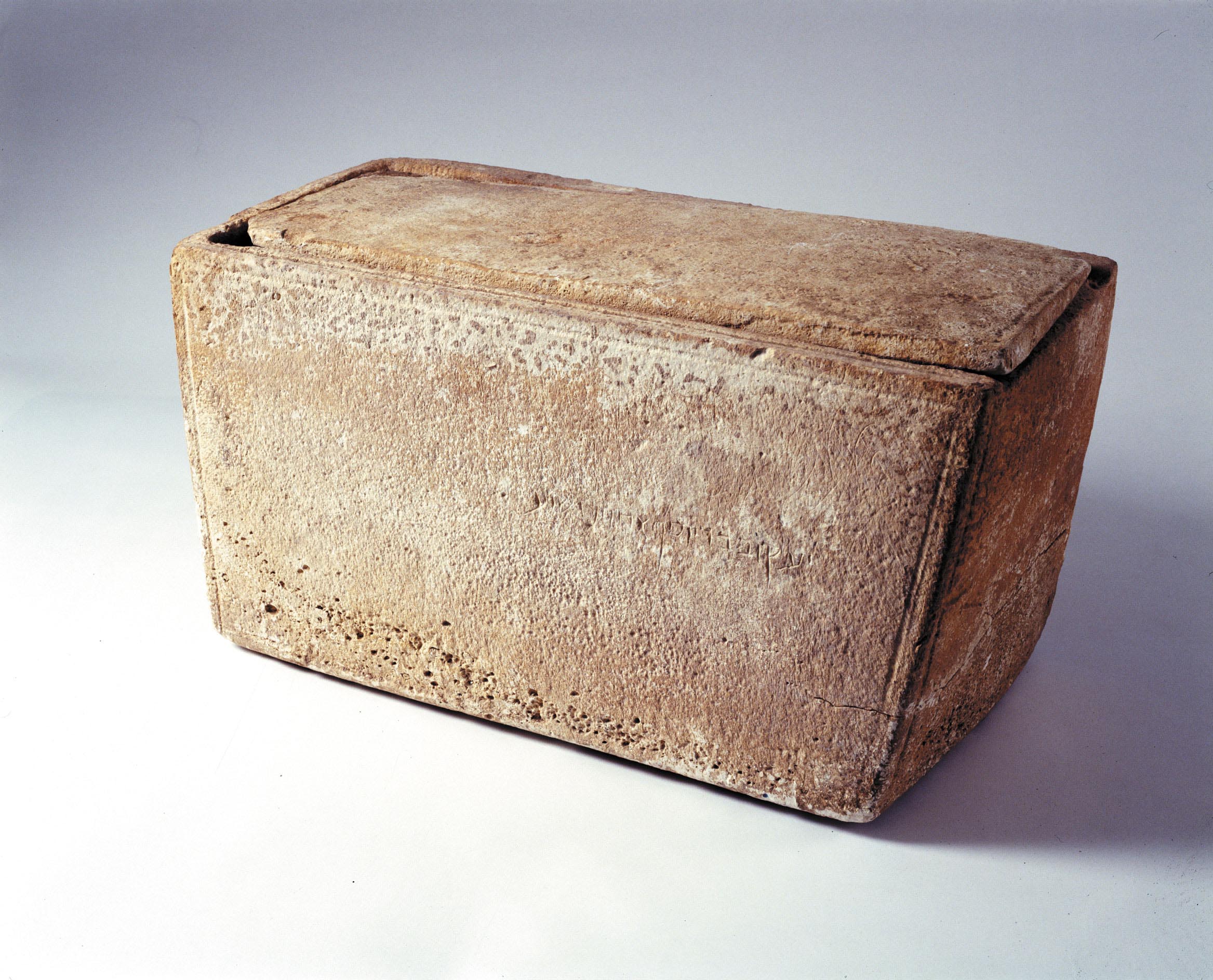
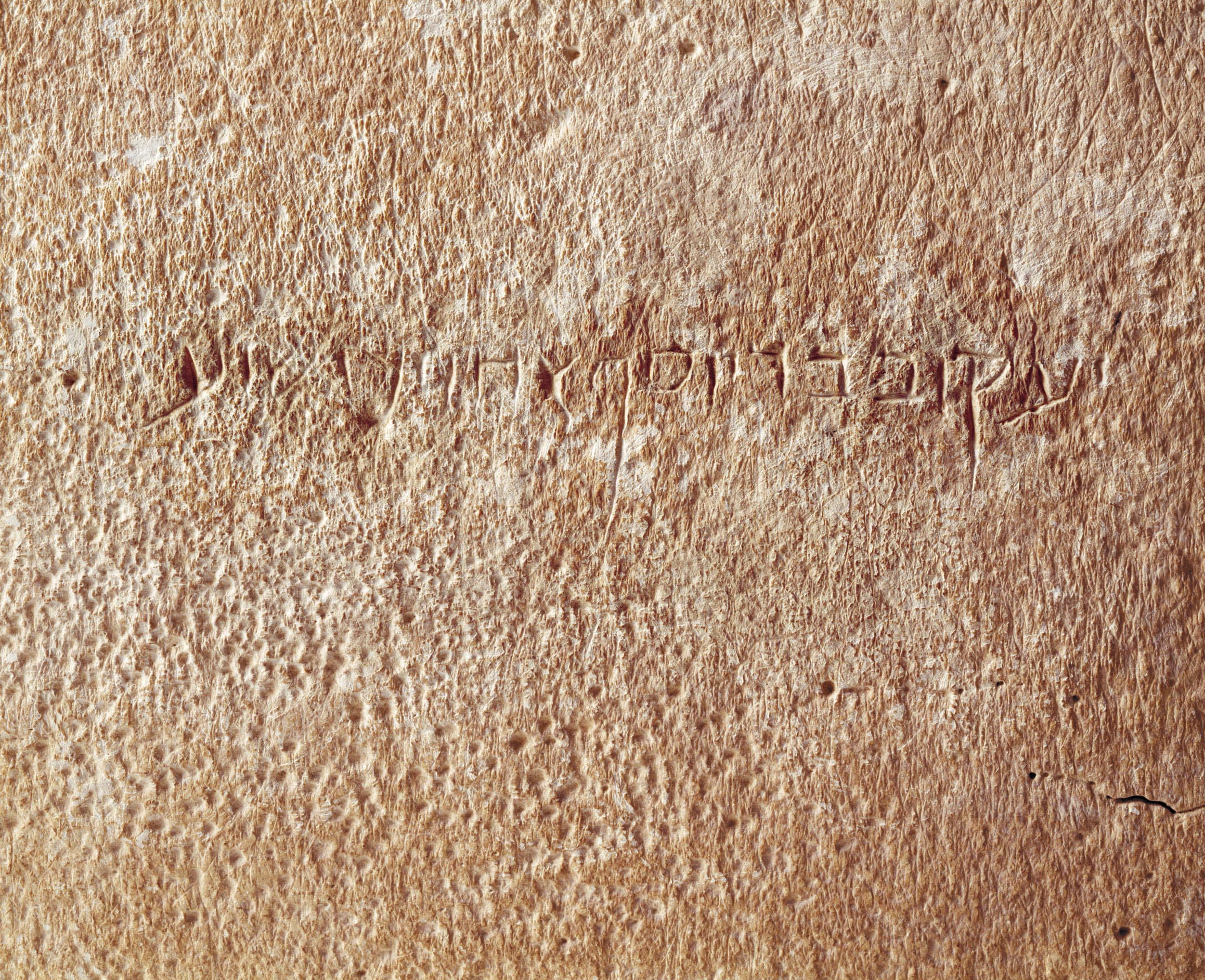
The James Ossuary The last archaeological finding we will examine in this article is the James Ossuary. In 2002, an ossuary was released to the public with the Aramaic inscription “Ya‘aqob son of Yosef brother of Yeshua” or “James, Son of Joseph, Brother of Jesus.” It was acclaimed at the time as one of the most important archaeological discoveries in history. It was not without controversy.
Not long after the discovery was displayed to the public, the owner of the ossuary, Oded Golan, was accused of forging at least some of this inscription. After a trial of seven years, which involved over 100 witnesses and 12,000 pages of testimony, Oded was found not guilty of forgery.
Not only was he found not guilty, but the trial resulted in experts verifying the authenticity of the object! This included the inscription, which was verified by world-renowned paleographers André Lemaire and Ada Yardeni. A paleographer is someone who examines inscriptions for their authenticity. To date, no paleographer has presented evidence against its’ authenticity. A picture of the ossuary is located below:
Attribution:The James ossuary was on display at the Royal Ontario Museum from November 15, 2002 to January 5, 2003.A closer look at the inscription on the James Ossuary. The James ossuary was on display at the Royal Ontario Museum from November 15, 2002 to January 5, 2003.
Subsequent studies, such as that by Rosenfeld, Feldman, Krumbein found that the mineral content of the ossuary (including the inscription) are authentic (see Bibliography for full reference on this study). The ossuary dates to the first century AD before the destruction of the Temple (which occurred in 70 AD).
Is it the Ossuary for the brother of Jesus? What are the chances that an inscription which reads “Jacob, son of Joseph, brother of Jesus” could belong to more than one person? First of all, we must understand that ossuaries typically did not list any other family members other than the father of the deceased. So, the finding is extremely rare. To date, only one other ossuary has been found which mentioned another family member. This indicates the brother of James was an important person. Was it Jesus?
In 2005, Camil Fuchs released a study which analyzed the statistical chances of how many people in first century (pre-70 AD) Jerusalem could have been named Jacob with a father named Joseph and brother named Jesus. He found to a 95% statistical probability that there were 1.71 males that fit such a description in first century Jerusalem. Josephus mentioned James, that Jesus was his brother, and that he was put to death by the Jewish authorities in about 62 AD. We have an excerpt below:
“…as Festus was not dead, and Albinus was still on the road, so he assembled the Sanhedrin of judges, and brought before them the brother of Jesus who was called Christ, whose name was James, and some others, and having accused them as breakers of the law, he delivered them over to be stoned” (Antiquities of the Jews, 20.9).
Once we compare the location of the ossuary, its age, the rarity of mentioning the brother of the deceased, and the statistical chances of how many people named Jacob had a father named Joseph and brother named Jesus, it appears most likely to belong to the Biblical James.
As we consider the archaeological and historical evidence for the life of Jesus, it becomes very clear that He is indeed an authentic person. The evidence we have reviewed in the last few weeks confirms much of the New Testament record.
Next week, we will look at whether or not we can trust the New Testament record.
Dark, Ken. “Has Jesus’ Nazareth House Been Found?” Biblical Archaeology Review 41.2 (2015): 54–63.
Josephus. Antiquities of the Jews, 20.9. Whiston’s Translation revised by Rev. A.R. Shilleto, Vol. 3, London: George Bell and Sons, York Street, 1889. p 405.
Shanks, Hershel. “Scholars’ Corner: New Analysis of the Crucified Man,” Biblical Archaeology Review 11.6 (1985): 20–21.
Shanks, Hershel. “‘Brother of Jesus’ Inscription Is Authentic!” Biblical Archaeology Review 38.4 (2012): 26–33, 62–64.
Shanks, Hershel. “Predilections—Is the ‘Brother of Jesus’ Inscription a Forgery?” Biblical Archaeology Review 41.5 (2015): 54–58.
“In our time, it’s becoming ever more difficult to know how to be an authentic, Bible-advised, Christian. Just about every aspect of the Christian faith is under attack by someone. Satan is launching broadside after broadside against the Church. As the Church continues to take hits parts of it are crumbling.
As a Christian writer, it’s hard to know what to write about anything. Virtually every word penned is controversial to someone. For example, some will take exception to the idea I presented in the first paragraph above: that Satan is launching broadsides against the Church. Many Christians no longer believe that Satan is a literal being. To them, he is just “the personification of evil” – or a literary symbol or figure of speech.
Writing about Israel is another minefield. Hatred for Israel, or Jews, seems a near-universal phenomenon, even within parts of the Church. To write anything supportive of Israel instantly brings the anti-Semites and Israel-haters out of the woodwork….”
In the first part of this series (CLICK HERE to read part 1), we looked at the writings of Josephus and Tacitus, who both attested to the existence of Jesus and His followers. In this article, we will look at three other authors: Pliny the Younger, Suetonius, and Lucian. At the end of this article, we will summarize our findings from these ancient authors!
Pliny the Younger
The third ancient writer we will review is Pliny the Younger. He was a magistrate in Asia Minor (modern-day Turkey) during the reign of the Emperor Trajan, who ruled from 98-117 AD. He was a contemporary of Tacitus. In 110/111 AD, Pliny wrote a letter to Trajan asking him how he should handle accusations and trials against Christians. Letters 97-98 reveal this exchange.
“From Pliny the Younger to Trajan the Emperor: ‘It is my invariable rule, Sir, to refer to you in all matters where I feel doubtful; for who is more capable of removing my scruples or informing my ignorance? Having never been present at any trials concerning those who profess Christianity I am unacquainted not only with the nature of their crimes, or the measure of their punishment, but how far it is proper to enter into an examination concerning them. Whether, therefore, any difference is usually made with respect to ages, or no distinction is to be observed between the young and adult; whether repentance entitles them to a pardon; or if a man has been once a Christian, it avails nothing to desist from his error; whether the very profession of Christianity, unattended with any criminal act, or only the crimes themselves inherent in the profession are punishable; on all these points I am in great doubt…”
“In the meanwhile, the method I have observed towards those who have been brought before me as Christians is this: I asked them whether they were Christians; if they admitted it, I repeated the question twice, and threatened them with punishment; if they persisted, I ordered them to be at once punished…There were others also brought before me possessed with the same infatuation, but, being Roman citizens, I directed them to be sent to Rome…”
“But this crime spreading (as is usually the case) while it was actually under prosecution, several instances of the same nature occurred. An anonymous information was laid before me containing a charge against several persons, who upon examination denied they were Christians, or had ever been so. They repeated after me an invocation to the gods, and offered religious rites with wine and incense before your statue (which for that purpose I had ordered to be brought, together with those of the gods), and even reviled [cursing] the name of Christ: whereas there is no forcing, it is said, those who are really Christians into any of these compliances: I thought it proper, therefore, to discharge them…”
“Some among those who were accused by a witness in person at first confessed themselves Christians, but immediately after denied it; the rest owned indeed that they had been of that number formerly, but had now (some above three, others more, and a few above twenty years ago) renounced that error. They all worshipped your statue and the images of the gods, uttering imprecations at the same time against the name of Christ…”
“They affirmed the whole of their guilt, or their error, was, that they met on a stated (fixed) day before it was light, and addressed a form of prayer to Christ, as to a divinity, binding themselves by a solemn oath, not for the purposes of any wicked design, but never to commit any fraud, theft, or adultery, never to falsify their word, nor deny a trust when they should be called upon to deliver it up; after which it was their custom to separate, and then reassemble, to eat in common a harmless meal. From this custom, however, they desisted after the publication of my edict, by which, according to your commands, I forbade the meeting of any assemblies. After receiving this account, I judged it so much the more necessary to endeavor to extort the real truth, by putting two female slaves to the torture, who were said to officiate in their religious rites; but all I could discover was evidence of an absurd and extravagant superstition…”
“I deemed it expedient, therefore, to adjourn all further proceedings, in other to consult you. For it appears to be a matter highly deserving your consideration, more especially as great numbers must be involved in the danger of these prosecutions, which have already extended, and are still likely to extend, to persons of all ranks and ages, and even of both sexes. In fact, this contagious superstition is not confined to the cities only, but has spread its infection among the neighbouring villages and country. Nevertheless, it still seems possible to restrain its progress. The temples, at least, which were once almost deserted, begin now to be frequented; and the sacred rites, after a long intermission, are again revived; while there is a general demand for the victims, which till lately found very few purchasers. From all this it is easy to conjecture what numbers might be reclaimed if a general pardon were granted to those who shall repent of their error…”
Trajan’s reply to Pliny: “You have adopted the right course, my dearest Secundus, in investigating the charges against Christians who were brought before you. It is not possible to lay down any general rule for all such cases. Do not go out of your way to look for them. If indeed they should be brought before you, and the crime is proved, they must be punished; with the restriction, however, that where the party denies he is a Christian, and shall make it evident that he is not, but invoking our gods, let him (notwithstanding any former suspicion) be pardoned upon his repentance. Anonymous information ought not to be received in any sort of prosecution. It is introducing a dangerous precedent, and is quite foreign to the spirit of our age.”
In the exchange, Trajan congratulates Pliny on his handling of the situation. He informed Pliny not to purposefully track down those who are Christians, but only prosecute those who were reported to belong to that group. Anonymous accusations were not allowed, but specific accusations were investigated. Those brought forth upon such charges were asked that they honor images of the emperor and the Roman gods or be punished.
What do we learn?
– We learn that Christians lived in early second century Asia Minor (about 110/111 AD).
– We learn that large numbers of people were influenced by Christianity in both city and country areas. Pliny said that the pagan Temples were nearly empty before the accusations started; after they were initiated the temples were visited again. This also testifies to the length of time that Christianity was in the area. It was not an overnight phenomenon.
– Accusations were made of people from all walks of society and of all ages. This also attests to Christianity’s prevalence and appeal to all people.
– There was a difference between a real Christian, who refused to worship the image of the emperor and make sacrifices, and those who confessed the name of Jesus in public but denied Him in private.
– They received the name Christian from this Christ.
– They met before sunrise (in context this was to avoid being captured or reported as a believer).
– They were committed to live morally upright: “binding themselves by a solemn oath, not for the purposes of any wicked design, but never to commit any fraud, theft, or adultery, never to falsify their word, nor deny a trust when they should be called upon to deliver it up”
– Their assemblies were forbidden by the magistrate.
– Females officiated at Christian services. This detail testifies to the active role of women in the early church.
– Their beliefs were called an “extravagant superstition.”
Pliny’s account provides more information about the early disciples rather than Jesus. However, Jesus is mentioned as the focus of their religious practice. The fact that they prayed to Christ likely reflects their view of Jesus’ divinity. This would have contributed to the separation of synagogue and early disciples.
Suetonius Suetonius was a Roman historian who lived in the early second century. His writings include one possible reference to Christians and another certain reference.
Speaking of the Emperor Claudius, he wrote that: “He banished from Rome all the Jews, who were continually making disturbances at the instigation of one Chrestus” (Life of Claudius, 25.4).
The Latin word translated as Chrestus is Chresto. It can be used in a generic or specific sense. Chresto simply means “good.” This quote does corroborate with Acts 18:2. It is entirely possible and very likely that disputes about Jesus caused conflict among Jewish people in Rome. The book of Acts records many conflicts between Jewish people and early Christians. Does that mean Suetonius is referring to Jesus’ followers? Some scholars affirm this quote is a reference to Jesus while others are not so sure. It is entirely possible that Suetonius meant to write “Christus” instead of “Chresto”, but we cannot be totally certain.
Suetonius also described the suffering of Christians under Nero, but in a much briefer account than Tacitus. “He likewise inflicted punishments on the Christians*, a sort of people who held a new and impious superstition” (Life of Nero, 16.2). *Latin word is Christiani.
Suetonius does not add much more to the discussion of this topic than what we have already learned.
Lucian Lucian was a satirist who lived from 115-200 AD. He wrote a work called “the Passing of Peregrinus.” Peregrinus was a former Christian who later became a cynic and revolutionary. He died in 165 AD. As we look at the quote from Lucian, we must keep in mind that he is a satirist, so he mocks Christians and other groups. However, we can still glean some important information from his quotes.
“It was then that he learned the wondrous lore of the Christians*, by associating with their priests and scribes in Palestine. And – how else could it be? In a trice he made them all look like children; for he was a prophet, cult-leader, head of the synagogue, and everything, all by himself. He interpreted and explained some of their books and even composed many, and they revered him as a god, made use of him as a lawgiver, and set him down as a protector, next after that other, to be sure, whom they still worship, the man who was crucified in Palestine because he introduced this new cult into the world” (Passing of Peregrinus, 11).
*The Greek word used for Christian is Christianon.
“Then at length Proteus was apprehended for this and thrown into prison, which itself gave him no little reputation as an asset for his future career and the charlatanism and notoriety-seeking that he was enamoured of. Well, when he had been imprisoned, the Christians, regarding the incident as a calamity, left nothing undone in the effort to rescue him…” (ibid, 12).
“Indeed, people came even from the cities in Asia, sent by the Christians at their common expense, to succor and defend and encourage the hero (Peregrinus). They show incredible speed whenever any such public action is taken; for in no time they lavish their all. So it was then in the case of Peregrinus; much money came to him from them by reason of his imprisonment, and he procured not a little revenue from it. The poor wretches have convinced themselves first and foremost, that they are going to be immortal and live for all time, in consequence of which they despise death and even willingly give themselves into custody, most of them. Furthermore, their first lawgiver persuaded them that they are all brothers of one another after they have transgressed once for all by denying the Greek gods and by worshiping that crucified sophist himself and living under his laws” (ibid, 13).
What do we learn?
– Those who followed Christ were called Christians.
– They had religious leaders in Judea (called Palestine at that time).
– Christ was thought of as a prophet and worshipped.
– Jesus explained their books and composed many Himself (this is likely a reference to the New Testament and possibly the Old Testament).
– Christ was crucified in Judea (Palestine).
– Christians thought they would receive immortality.
– They were not afraid of death.
– They considered each other brothers.
– They refused to worship Greek gods.
– They lived by Christ’s words.
– They were known for their generosity.
Lucian’s focus is more on the followers of Jesus, but he does reiterate some details we learned from earlier writers such as Josephus and Tacitus.
To conclude this two-part series, let’s put together the total of all these details to see what kind of picture we receive about Jesus and His followers.
“Jesus was considered a wise man who did extraordinary deeds. He was known as a teacher of truth. He was also considered a prophet and worshiped. He won over many Jews and Greeks. He taught out of their books and even composed many Himself. During the reign of Tiberius Caesar, a regional ruler named Pilate heard accusations against Him by the highest Jewish authorities. Due to these accusations, Jesus was crucified. Those who loved him formed a group known as Christians, who were named after him. They still existed during the time Josephus composed his work (93 AD). Some people called Jesus the Christ; he had a brother named James.
The group started in Judea and eventually became established in Rome where it found a significant following. They may have contributed to the expulsion of Jews from Rome during the reign of Claudius. During the reign of Nero, they were blamed for setting fire to the city. They were tortured terribly during that time.
During the reign of the Emperor Trajan (early second century AD), large numbers of Christians dwelt in Asia Minor. There was a difference between a real Christian, who refused to worship the image of the emperor and make sacrifices, and those who only confessed the name of Jesus. Christians met on a specific day every week (Sabbath). They met before sunrise (in context this was to avoid being captured or reported as a believer). Christians directed prayers to Christ and committed their lives to moral principles such as those found in the Ten Commandments. Females officiated at Christian services.
Christians were not afraid of death and believed in immortality. They considered each other brothers (family). They did not worship idols or pagan deities. They lived by Christ’s words and were know for their generosity. There were books composed about Jesus. They were witnessed as an active group in the days of Lucian, who wrote about 165.
These few historical accounts provide us with significant historical information about Jesus and His early followers.
Next week, we will look at Archaeology and the life of Jesus!
Bibliography Lucian. The Passing of Peregrinus, 11-13. Translated by A.M. Harmon, vol. 5, Harvard University Press, 1962. pp 11-15. McDonald Jr., Kelly. Prevalence of the Sabbath in the Early Roman Empire. Bible Sabbath Association. 2020. pp 40-42. Pliny the Younger. Letters 97, 98. Translated by Melmoth. Revised by Rev. F. C. T. Bosanquet, London: George Bell and Sons, 1905. pp 393-397. Suetonius. The Life of Claudius, 25.4; The Life of Nero, 16.2. Translated by Alexander Thomson. Revised by T. Forester, London: G. Bell and Sons, LTD, 1911. pp 318, 347.
Imagine for a moment that you did not have a Bible to learn about Jesus. How would you know that He ever lived on earth? Would it be possible to prove His existence? In modern times, there has been skepticism about the historical validity of Jesus’ existence.
But what about history that is outside of the New Testament? Do any ancient authors discuss Jesus? In this multi-part series, we will review non-Biblical historical sources concerning the existence of Jesus of Nazareth and His earliest followers.
Consider for a moment: millions of people lived in the Middle East during the first century AD. We do not know much if anything about most of them. They lived their lives, died, and became lost to time. Archeologists occasionally dig up some artifact with a name on it from that time, but we rarely learn anything about these people.
Of the people we learn about in ancient records and archaeological finds, many of them either did something famous or infamous or they held some position of importance in a kingdom or empire. Said another way, the people mentioned in history did something significant enough to be remembered by others who lived in that time period.
To ascertain whether Jesus lived on earth, we will begin by examining the historical record to see if He is mentioned and what these records say about Him. Documentation about His followers are also important, as they may contain helpful information.
Josephus Josephus lived from about 37-100 AD. He belonged to the Jewish priestly lineage and through a series of events came to serve the Romans. He wrote some of the most valuable works on Jewish history in existence, including one called Antiquities of the Jews (likely composed about 93 AD). It provides us with two references to Jesus, which are listed below:
“Now about this time lived Jesus, a wise man. For he was a doer of wonderful works, a teacher of men who receive truth with pleasure; and drew over to him many of the Jews and many of the Gentiles. And When Pilate, at the information of the leading men among us, had him condemned to the cross, those who had loved him at first did not cease to do so. And the tribe of Christians, so named from him, are not extinct at this day” (idem, 18.3).*
*In my quote I have removed the parts of Josephus that are considered later additions to the original text (called interpolations).
“…as Festus was not dead, and Albinus was still on the road, so he assembled the Sanhedrin of judges, and brought before them the brother of Jesus who was called Christ, whose name was James, and some others, and having accused them as breakers of the law, he delivered them over to be stoned” (ibid, 20.9).
What do we learn from these quotes?
– Jesus was considered a wise man who did surprising deeds, and was known as a teacher of truth.
– He won over many Jews and Greeks.
– A ruler named Pilate heard accusations against Jesus by the highest Jewish authorities.
– Jesus was condemned to be crucified.
– Those who loved him formed a group known as Christians, who were named after him (implying that Jesus was called Christ by them). They still existed during the time Josephus composed his work (later first century AD).
– Jesus had a brother named James.
– Some people called Jesus the Christ.
Tacitus The next author we will review is the Roman historian Tacitus, who lived from approximately 55-118 AD. The Annals is an historical work he composed that chronicled events from 14 AD through 68 AD. This included the reigns of various Emperors, including Nero.
In book 15, we learn that Nero wanted to build a city named Neronia (named after himself). One problem is that a section of the old city of Rome stood in the way of this plan. Perhaps not surprisingly, part of the old city of Rome burned down.
The Roman people demanded that the source of this crime be revealed. In their minds, someone had to pay the price for this damage. Nero tried offering sacrifices to the Roman gods and even giving gifts to the people, but these actions did not appease them. People still suspected that Nero intentionally burned the city to make room for new project. Somehow Christians were blamed for the disaster and subsequently punished. Tacitus wrote the following:
“But all human efforts, all the lavish gifts of the emperor, and the propitiation of the gods, did not banish the sinister belief that the conflagration was the result of an order. Consequently, to get rid of the report (that he started the fire), Nero fastened the guilt and inflicted the most exquisite tortures on a class hated for their abominations, called Christians by the populace. Christus, from whom the name had its origin, suffered the extreme penalty during the reign of Tiberius at the hands of one of our procurators, Pontius Pilatus, and a most mischievous superstition, thus checked for the moment, again broke out not only in Judea, the first source of the evil, but even in Rome, where all things hideous and shameful from every part of the world find their centre and become popular. Accordingly, an arrest was first made of all who pleaded guilty; then, upon their information, an immense multitude was convicted, not so much of the crime of firing the city, as of hatred of mankind. Mockery of every sort was added to their deaths. Covered with the skins of beasts, they were torn by dogs and perished, or were nailed to crosses, or were doomed by the flames and burnt, to serve as a nightly illumination, when daylight had expired. Nero offered his gardens for the spectacle, and was exhibiting a show in the circus, while he mingled with the people in the dress of a charioteer or stood aloft on a car. Hence, even for criminals who deserved extreme and exemplary punishment, there arose a feeling of compassion; for it was not it seemed, for the public good, but to glut one man’s cruelty, that they were being destroyed” (idem, 15.44).
What do we learn from this text?
– Christians were a religious sect existing in Rome during the reign of Nero. This was about 64 AD or a little over 30 years from the time Jesus is believed to have died.
– They were hated by the populace for their abominations. (Side note: This is similar language that Tacitus uses of Jewish people; the concept of an abominable religion likely came from the rejection of the Roman pantheon – see The Histories, 5.4-5). Because they are mentioned as a separate class of people, they had distinctive beliefs from pagan Romans (so they could be identified as different).
– They were named Christians after their founder Christus. This is the Latin term for Christ.
– Christus suffered the extreme penalty (crucifixion) during the reign of Emperor Tiberius Caesar.
– When this occurred, Pontius Pilate was the regional ruler in Judea (called procurator by Tacitus, which is a detail we will review in a future article).
– The movement of Christus started in Judea and eventually came to Rome.
– Tacitus mentions that “an immense multitude was convicted” of being a Christian. This means Christianity had spread considerably in Rome and the surrounding areas. The movement could not be considered insignificant nor was it new in the city of Rome. In other words, it existed for some time prior to Nero’s persecution.
– Christians suffered terribly in this persecution.
Bibliography Josephus. Antiquities of the Jews, 18.3, 20.9. Whiston’s Translation revised by Rev. A.R. Shilleto, Vol. 3, London: George Bell and Sons, York Street, 1889. pp 274-275, 405. Tacitus. Annals, 15.44. Translated by Alfred John Church and William Jackson Brodribb, MacMillan and Co., 1894, pp 304-305.
Sabbath Meditation #34 – The Mystery of Lawlessness
“For the mystery of iniquity doth already work: only he who now letteth will let, until he be taken out of the way” (2 Thess. 2:7).
“Six days thou shalt do thy work, and on the seventh day thou shalt rest: that thine ox and thine ass may rest, and the son of thy handmaid, and the stranger, may be refreshed” (Exo 23:12).
“Make me to go in the path of thy commandments; for therein do I delight” (Psalm 119:35).
“If thou turn away thy foot from the sabbath, from doing thy pleasure on my holy day; and call the sabbath a delight…” (Isa. 58:13).
There are many mysteries discussed in the New Testament. One of them is the mystery of lawlessness. The underlying Greek word translated as lawlessness or iniquity in I Thess. 2:7 is anomias, which means “without God’s law” or “transgression of God’s law”.
Why is lawlessness considered a mystery? The commandments of God, especially the Sabbath, were given by God for our benefit. The commandments are supposed to bring us joy/happiness as we obey them. In particular, the Sabbath is a delight because it gives us freedom from work and other labor. In Exodus 23:12, God promised that we would be refreshed when we rest on the seventh day. In our busy go-go world, who does not need that? There is a special spiritual connection to God available to us on this day (CLICK HERE to read more).
The verses mentioned at the beginning of this article help explain why lawlessness is a mystery. Why would we not want to do them and honor God? Why would we want to miss out on all these blessings? “Where there is no vision, the people perish: but he that keepeth the law, happy is he” (Prov. 29:18). In the last meditation, we reviewed thirteen precious promises available to us through the Sabbath (CLICK HERE to read the last month’s meditation).
Jesus said: “I am come that they might have life, and that they might have it more abundantly” (John 10:10b). With Jesus as our Savior and the indwelling of His Holy Spirit, observance of the Sabbath has an even greater fulfillment than it did in the Old Covenant. We must set aside ourselves to receive it. The Sabbath is a day of life, and it provides spiritual satisfaction for us.
“Then said Jesus unto them, ‘I will ask you one thing; is it lawful on the Sabbath days to do good, or do to evil? To save life, or to destroy it?’” (Luke 6:9)
For those of us who have “tasted and seen that the Lord is good” (Psalm 34:8) on Sabbath, the attitude of lawlessness will always be a mystery. It certainly is to the God who gave it.







 The Sabbath Sentinel
You must be logged in to post a comment.