Did Jesus Break the Sabbath?

Did Jesus Break the Sabbath?

by Rod Reynolds

“Practically anyone who has been exposed to Christianity knows that Jesus Christ grew up in an environment steeped in Old Testament scriptures; He knew them, quoted them and lived by them.

Or did He? Some believe that Jesus kept the law so that others after Him would no longer need to. Others say that He revealed new meaning through old laws. Many, however, believe that Jesus made a “break” with the old Law, and in breaking the law established a new pattern of living for His followers.

Nowadays, even many who call themselves friends of Jesus say that He broke the law. Originally, however—during His lifetime on earth—it was His enemies who made that accusation.

Because Jesus performed miracles of healing on the Sabbath, some Pharisees accused Him of breaking the Sabbath (Matthew 12:10; Mark 3:2, John 9:14–16). John records that Jesus performed a healing during one of the festivals in Jerusalem. John’s gospel records what happened next, when Jesus confronted His accusers: “Jesus answered them, ‘My Father has been working until now, and I have been working.’ Therefore the Jews sought all the more to kill Him, because He not only broke the Sabbath, but also said that God was His Father, making Himself equal with God” (John 5:17–18). From this, many assume that the Pharisees’ accusation— that Jesus broke the Sabbath—was correct, and that Christians as a result are free to do so…”

(this article is an excerpt from the Sept-Oct 2005 edition of the Sabbath Sentinel)

To read the rest of this article, which starts on page 4, click this link: https://biblesabbath.org/tss/515/tss_515.pdf

New Book for Free Download: The New Testament and History (Vol. 2)

New book for Free Download: The New Testament and History (Vol. 2)

To download, just click the picture below!

In modern times, there are people who view the New Testament as a compilation of fabricated tales about Jesus and the early disciples. Nothing could be farther from the truth. In this work, we connect the New Testament text with the historical and archaeological record. This work will deepen your understanding and appreciation for the written record of Jesus and His earliest disciples.

Sabbath Meditation #43 – The Sabbath Parables of Jesus (Part 2 of 2)

Sabbath Meditation #43 – The Sabbath Parables of Jesus (Part 2 of 2)

By Kelly McDonald, Jr.

In part two of this series, we will talk about another parable Jesus gave on the Sabbath. Remember, everything Jesus did was with proper intent and on purpose.

In Luke 14:1-6, Jesus was eating at the house of a prominent Pharisee on the Sabbath. He healed a man and told him to go on his way. Right after this event, Jesus had their attention. He proceeded to teach a lesson and share a parable.

“15 When one of those at the table with him heard this, he said to Jesus, ‘Blessed is the one who will eat at the feast in the kingdom of God.’ 16 Jesus replied: ‘A certain man was preparing a great banquet and invited many guests. 17 At the time of the banquet he sent his servant to tell those who had been invited, ‘Come, for everything is now ready.’ 18 But they all alike began to make excuses. The first said, ‘I have just bought a field, and I must go and see it. Please excuse me.’ 19 ‘Another said, ‘I have just bought five yoke of oxen, and I’m on my way to try them out. Please excuse me.’ 20 Still another said, ‘I just got married, so I can’t come.’ 21 The servant came back and reported this to his master. Then the owner of the house became angry and ordered his servant, ‘Go out quickly into the streets and alleys of the town and bring in the poor, the crippled, the blind and the lame.’ 22 ‘Sir,’ the servant said, ‘what you ordered has been done, but there is still room.’ 23 Then the master told his servant, ‘Go out to the roads and country lanes and compel them to come in, so that my house will be full. 24 I tell you, not one of those who were invited will get a taste of my banquet.’”

In this parable, we learn more truths about the Kingdom of God, but also about the Sabbath.

Over the centuries, many people have been invited to join the Kingdom of God. It started through people’s examples, word of mouth, and written literature. These methods have continued to the present, but in modern times, people have heard about it through radio, TV and internet. The ones we would expect to accept it did not.

In the parable, we learn about three kinds of excuses given for not accepting the Kingdom message. For one it was the land he bought; for another it was the yoke of oxen he purchased for working land; and for another it was his wife. We learn three categories of things that keep people from the Kingdom of God: possessions, work, and family.

And so we each know people who placed the things of this world as more important than the Kingdom. And so, God keeps calling people in to find those who are willing.

In a like manner, there are people who know about the Sabbath, but they do not apply it. The cares of this age – possessions, work, family, and other items – cloud their spiritual vision. They simply miss it.

The Sabbath is an invitation to meet with God and His people (click here to learn more). Because of God’s nature, He can meet with all believers simultaneously on the Sabbath. We also gather with each other. But there are many people who refuse the invitation. He will continue to call people into the Kingdom who will apply this truth so that the spiritual banquet is full – even people who may not meet a man-made check list of qualities that they want to see.

The Kingdom of God is a huge responsibility for those who receive the invitation to enter in it. But some people don’t place the importance on it as they should. They same is true of the Sabbath.

God is more concerned about our availability than our ability.

Let us make sure that we are not just hearers of the word, but doers of it as well.

“Do not merely listen to the word, and so deceive yourselves. Do what it says” (James 1:22).

Selah.

Kelly McDonald, Jr.

Bible Sabbath Association (www.biblesabbath.org)

Profaning the Sabbath Day (Part 2)

Profaning the Sabbath Day (Part 2)

by Jonathan Sjørdal

Part II: The Money

“As a Sabbath day keeper, if your chosen profession involves necessary work and you work in rotation with others so that periodically you work on the Sabbath day, what about the money you receive for working? Should you refuse to be paid for the work that you do on the Sabbath day? Should you donate it to charity? What could you, should you, must you do with the money?

One possibility goes like this: “If you work on the Sabbath day, you should give the money away. You’re not supposed to work on the Sabbath day. After all, Jesus did not get paid to heal people on the Sabbath day.”

There are not very many biblical examples on this particular subject. It appears that our Messiah indeed did not get paid to heal people on the Sabbath day. But we do have a few examples from ancient Israel regarding those who worked on the Sabbath day: Levitical priests, midwives, and the farmers…”

(this article is an excerpt from the Nov-Dec 2006 edition of the Sabbath Sentinel)

To read the rest of this article, which starts on page 8, click this link: https://biblesabbath.org/tss/522/tss_522.pdf

The Oldest Papyrus that Mentions the Sabbath

The Oldest Papyrus that Mentions the Sabbath

by Kelly McDonald, Jr.

The oldest papyrus (outside of the Bible) which mentions the Sabbath dates to about 250 years before the time of Jesus! It is an amazing archaeological find. In this article, we share details about this find.

Background
Papyrus is a water plant in Egypt that was used to make many materials. Among them was a paper that is called by the same name (Papyrus is the singular form, papyri is the plural). It was used for centuries before, during, and after the time Jesus. This special paper has survived in parts of Egypt due to the dry conditions. It can serve as a window to examine ancient history.

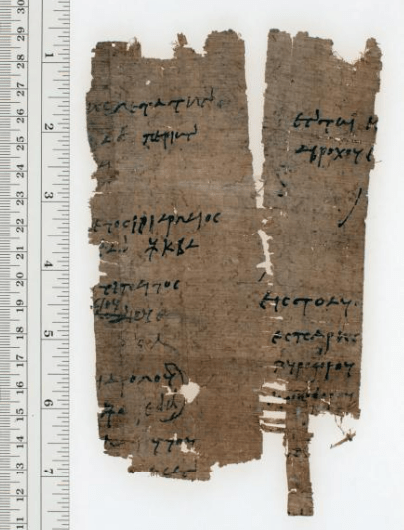
The Zenon Papyri are an archive that was found in Egypt in 1914. They date to the mid-third century BC (about 250) and provide for us the earliest evidence of daily life for people under the rule of the Ptolemies. They were originally owned by an official in the Greek-Egyptian kingdom.

Above: A papyrus found at Zenon. Public Domain.

One papyrus in this archive contains an account of the quantities of bricks received every day from the 5th to the 11th of Egyptian month called Epeiph. This ancient month would correspond to late June into late July on our current calendar. 

The writer was apparently a Jewish man who observed the Sabbath. On the seventh day, no bricks were delivered. The day was simply marked with the Greek word Sabbata, meaning Sabbath.

We have the text from this papyrus below:

Epeiph. 
5thI have on hand bricks from Phileas 920
6th1000
7thSabbath (Sabbata)
8th1000
9th1000
10th2000, of which Demetrios has brought 100 those of Tanis 1000
11th936; of which Demetrios has brought 888 those from Tanis 48

While the text does not provide much information, it serves as the oldest ancient papyrus to mention the Sabbath. It is also an ancient witness of observance of the seventh-day Sabbath.

As discussed in other articles, there were Jewish people, but also Gentiles who were drawn to the Sabbath. CLICK HERE to learn more about this subject.

God Bless!

Kelly McDonald, Jr.
Bible Sabbath Association (BSA)
www.biblesabbath.org


Bibliography
Corpus Papyrorum Judaicarum. Edited by Victor A. Tcherikover and Alexander Fuks. Vol. 1. The Magnes Press, The Hebrew Universirty. Cambridge, Massachusetts. 1957. pp 136-137.

Edgar, Campbell Cowan. Zenon Papyri. Vol. 4. New York: Georg Olms Verlag, 1971. pp 190-191.

Encyclopedia Britannica. Zenon Papyri.

“P.Mich.inv. 3645; Recto.” https://quod.lib.umich.edu/a/apis/x-2028/3645r_a.tif. University of Michigan Library Digital Collections. Accessed January 11, 2023.

Profaning the Sabbath Day (Part 1)

Profaning the Sabbath Day (Part 1)

by Jonathan Sjørdal

Part I: The Work

“The fourth commandment is clear: we are to abstain from doing our labor on the seventh day of the week—the Sabbath day. For those who wish to heed the words of our Father in heaven who gave us his Laws, the following discussion pertains to how to obey the seventh day Sabbath command of our Creator, not how to replace or ignore it.

The Sabbath day command is for the master as well as the servant. The master is commanded to cease from his labors, and not to compel his servants nor even his beasts to labor on the Sabbath day. It is a day to devote to our Creator, the one day in seven that we give to our Father, as he commanded us.

Abstaining from work on the Sabbath day can cause employment difficulties. You may lose your job, or not even get hired in the first place. But persistence will pay off, and in our modern society, you can find a way to make a living that allows you not to work on the seventh day. Yet this was not always so….”

(this article is an excerpt from the Sept-Oct 2006 edition of the Sabbath Sentinel)

To read the rest of this article, which starts on page 9, click this link: https://biblesabbath.org/tss/521/tss_521.pdf

Old Testament Verses That Mention the Sabbath

Old Testament Verses That Mention the Sabbath

(86 total verses – the entire passage is included when several references are group together)

Genesis 2:1-3 – Thus the heavens and the earth were finished, and all the host of them.  2 And on the seventh day God ended his work which he had made; and he rested on the seventh day from all his work which he had made. 3 And God blessed the seventh day, and sanctified it: because that in it he had rested from all his work which God created and made.

Exodus 16:23 – And he said unto them, This is that which the LORD hath said, To morrow is the rest of the holy sabbath unto the LORD: bake that which ye will bake to day, and seethe that ye will seethe; and that which remaineth over lay up for you to be kept until the morning.

Exodus 16:25 –  And Moses said, Eat that to day; for to day is a sabbath unto the LORD: to day ye shall not find it in the field.

Exodus 16:26 – Six days ye shall gather it; but on the seventh day, which is the sabbath, in it there shall be none.

Exodus 16:29 – See, for that the LORD hath given you the sabbath, therefore he giveth you on the sixth day the bread of two days; abide ye every man in his place, let no man go out of his place on the seventh day.

Exodus 16:30 – So the people rested on the seventh day.

Exodus 20:8-11 – 8 Remember the sabbath day, to keep it holy. 9 Six days shalt thou labour, and do all thy work: 10  But the seventh day is the sabbath of the LORD thy God: in it thou shalt not do any work, thou, nor thy son, nor thy daughter, thy manservant, nor thy maidservant, nor thy cattle, nor thy stranger that is within thy gates: 11  For in six days the LORD made heaven and earth, the sea, and all that in them is, and rested the seventh day: wherefore the LORD blessed the sabbath day, and hallowed it.

Exodus 23:12 – Six days thou shalt do thy work, and on the seventh day thou shalt rest: that thine ox and thine ass may rest, and the son of thy handmaid, and the stranger, may be refreshed.

Exodus 31:13-17 –13 Speak thou also unto the children of Israel, saying, Verily my sabbaths ye shall keep: for it is a sign between me and you throughout your generations; that ye may know that I am the LORD that doth sanctify you. 14 Ye shall keep the sabbath therefore; for it is holy unto you: every one that defileth it shall surely be put to death: for whosoever doeth any work therein, that soul shall be cut off from among his people. 15  Six days may work be done; but in the seventh is the sabbath of rest, holy to the LORD: whosoever doeth any work in the sabbath day, he shall surely be put to death. 16  Wherefore the children of Israel shall keep the sabbath, to observe the sabbath throughout their generations, for a perpetual covenant. 17  It is a sign between me and the children of Israel for ever: for in six days the LORD made heaven and earth, and on the seventh day he rested, and was refreshed.

Exodus 34:21 – Six days thou shalt work, but on the seventh day thou shalt rest: in earing time and in harvest thou shalt rest.

Exodus 35:2-3 – 2 Six days shall work be done, but on the seventh day there shall be to you an holy day, a sabbath of rest to the LORD: whosoever doeth work therein shall be put to death. 3  Ye shall kindle no fire throughout your habitations upon the sabbath day.

Leviticus 19:2-3 – 2 Speak unto all the congregation of the children of Israel, and say unto them, Ye shall be holy: for I the LORD your God am holy. 3 Ye shall fear every man his mother, and his father, and keep my sabbaths: I am the LORD your God.

Leviticus 19:30 – Ye shall keep my sabbaths, and reverence my sanctuary: I am the LORD.

Leviticus 23:3 – Six days shall work be done: but the seventh day is the sabbath of rest, an holy convocation; ye shall do no work therein: it is the sabbath of the LORD in all your dwellings.

Leviticus 23:11 –  And he shall wave the sheaf before the LORD, to be accepted for you: on the morrow after the sabbath the priest shall wave it.

Leviticus 23:15-16 – And ye shall count unto you from the morrow after the sabbath, from the day that ye brought the sheaf of the wave offering; seven sabbaths shall be complete: 16  Even unto the morrow after the seventh sabbath shall ye number fifty days; and ye shall offer a new meat offering unto the LORD.

Leviticus 23:38 – Beside the sabbaths of the LORD, and beside your gifts, and beside all your vows, and beside all your freewill offerings, which ye give unto the LORD.

Leviticus 24:8 – Every sabbath he shall set it in order before the LORD continually, being taken from the children of Israel by an everlasting covenant.

Leviticus 26:2 – Ye shall keep my sabbaths, and reverence my sanctuary: I am the LORD.

Numbers 15:32 – And while the children of Israel were in the wilderness, they found a man that gathered sticks upon the sabbath day.

Numbers 28:9-10 – 9 And on the sabbath day two lambs of the first year without spot, and two tenth deals of flour for a meat offering, mingled with oil, and the drink offering thereof: 10  This is the burnt offering of every sabbath, beside the continual burnt offering, and his drink offering.

Deuteronomy 5:12-15 –  12 Keep the sabbath day to sanctify it, as the LORD thy God hath commanded thee. 13  Six days thou shalt labour, and do all thy work: 14  But the seventh day is the sabbath of the LORD thy God: in it thou shalt not do any work, thou, nor thy son, nor thy daughter, nor thy manservant, nor thy maidservant, nor thine ox, nor thine ass, nor any of thy cattle, nor thy stranger that is within thy gates; that thy manservant and thy maidservant may rest as well as thou. 15  And remember that thou wast a servant in the land of Egypt, and that the LORD thy God brought thee out thence through a mighty hand and by a stretched out arm: therefore the LORD thy God commanded thee to keep the sabbath day.

2 Kings 4:23 – And he said, Wherefore wilt thou go to him to day? it is neither new moon, nor sabbath. And she said, It shall be well.

2 Kings 11:5, 7, 9 – And he commanded them, saying, This is the thing that ye shall do; A third part of you that enter in on the sabbath shall even be keepers of the watch of the king’s house;..7  And two parts of all you that go forth on the sabbath, even they shall keep the watch of the house of the LORD about the king…:9  And the captains over the hundreds did according to all things that Jehoiada the priest commanded: and they took every man his men that were to come in on the sabbath, with them that should go out on the sabbath, and came to Jehoiada the priest.

2 Kings 16:18 – And the covert for the sabbath that they had built in the house, and the king’s entry without, turned he from the house of the LORD for the king of Assyria.

1 Chronicles 9:32 –  And other of their brethren, of the sons of the Kohathites, were over the shewbread, to prepare it every sabbath.

1 Chronicles 23:4, 8 – This is the thing that ye shall do; A third part of you entering on the sabbath, of the priests and of the Levites, shall be porters of the doors…8  So the Levites and all Judah did according to all things that Jehoiada the priest had commanded, and took every man his men that were to come in on the sabbath, with them that were to go out on the sabbath: for Jehoiada the priest dismissed not the courses.

1 Chronicles 23:31 – And to offer all burnt sacrifices unto the LORD in the sabbaths, in the new moons, and on the set feasts, by number, according to the order commanded unto them, continually before the LORD:

1 Chronicles 2:4 – Behold, I build an house to the name of the LORD my God, to dedicate it to him, and to burn before him sweet incense, and for the continual shewbread, and for the burnt offerings morning and evening, on the sabbaths, and on the new moons, and on the solemn feasts of the LORD our God. This is an ordinance for ever to Israel.

2 Chronicles 8:13 – Even after a certain rate every day, offering according to the commandment of Moses, on the sabbaths, and on the new moons, and on the solemn feasts, three times in the year, even in the feast of unleavened bread, and in the feast of weeks, and in the feast of tabernacles.

2 Chronicles 31:3 – He appointed also the king’s portion of his substance for the burnt offerings, to wit, for the morning and evening burnt offerings, and the burnt offerings for the sabbaths, and for the new moons, and for the set feasts, as it is written in the law of the LORD.

Nehemiah 9:14 – And madest known unto them thy holy sabbath, and commandedst them precepts, statutes, and laws, by the hand of Moses thy servant:

Nehemiah 10:31 – And if the people of the land bring ware or any victuals on the sabbath day to sell, that we would not buy it of them on the sabbath, or on the holy day: and that we would leave the seventh year, and the exaction of every debt.

Nehemiah 10:33 – For the shewbread, and for the continual meat offering, and for the continual burnt offering, of the sabbaths, of the new moons, for the set feasts, and for the holy things, and for the sin offerings to make an atonement for Israel, and for all the work of the house of our God.

Nehemiah 13:15-19 – In those days saw I in Judah some treading wine presses on the sabbath, and bringing in sheaves, and lading asses; as also wine, grapes, and figs, and all manner of burdens, which they brought into Jerusalem on the sabbath day: and I testified against them in the day wherein they sold victuals. 16  There dwelt men of Tyre also therein, which brought fish, and all manner of ware, and sold on the sabbath unto the children of Judah, and in Jerusalem. 17  Then I contended with the nobles of Judah, and said unto them, What evil thing is this that ye do, and profane the sabbath day? 18  Did not your fathers thus, and did not our God bring all this evil upon us, and upon this city? yet ye bring more wrath upon Israel by profaning the sabbath. 19  And it came to pass, that when the gates of Jerusalem began to be dark before the sabbath, I commanded that the gates should be shut, and charged that they should not be opened till after the sabbath: and some of my servants set I at the gates, that there should no burden be brought in on the sabbath day.

Nehemiah 13:21-22 – Then I testified against them, and said unto them, Why lodge ye about the wall? if ye do so again, I will lay hands on you. From that time forth came they no more on the sabbath. 22  And I commanded the Levites that they should cleanse themselves, and that they should come and keep the gates, to sanctify the sabbath day. Remember me, O my God, concerning this also, and spare me according to the greatness of thy mercy.

Psalm 92:1 – A Psalm or Song for the sabbath day. It is a good thing to give thanks unto the LORD, and to sing praises unto thy name, O most High:

Isaiah 56:1-7 –  Thus saith the LORD, Keep ye judgment, and do justice: for my salvation is near to come, and my righteousness to be revealed.  2  Blessed is the man that doeth this, and the son of man that layeth hold on it; that keepeth the sabbath from polluting it, and keepeth his hand from doing any evil. 3  Neither let the son of the stranger, that hath joined himself to the LORD, speak, saying, The LORD hath utterly separated me from his people: neither let the eunuch say, Behold, I am a dry tree.  4  For thus saith the LORD unto the eunuchs that keep my sabbaths, and choose the things that please me, and take hold of my covenant;  5  Even unto them will I give in mine house and within my walls a place and a name better than of sons and of daughters: I will give them an everlasting name, that shall not be cut off.  6  Also the sons of the stranger, that join themselves to the LORD, to serve him, and to love the name of the LORD, to be his servants, every one that keepeth the sabbath from polluting it, and taketh hold of my covenant;  7  Even them will I bring to my holy mountain, and make them joyful in my house of prayer: their burnt offerings and their sacrifices shall be accepted upon mine altar; for mine house shall be called an house of prayer for all people. 

Isaiah 58:13-14 – If thou turn away thy foot from the sabbath, from doing thy pleasure on my holy day; and call the sabbath a delight, the holy of the LORD, honourable; and shalt honour him, not doing thine own ways, nor finding thine own pleasure, nor speaking thine own words:  14 Then shalt thou delight thyself in the LORD; and I will cause thee to ride upon the high places of the earth, and feed thee with the heritage of Jacob thy father: for the mouth of the LORD hath spoken it. 

Isaiah 66:22-23 – 22 For as the new heavens and the new earth, which I will make, shall remain before me, saith the LORD, so shall your seed and your name remain. 23 And it shall come to pass, that from one new moon to another, and from one sabbath to another, shall all flesh come to worship before me, saith the LORD.

Jeremiah 17:19-27 – 19  Thus said the LORD unto me; Go and stand in the gate of the children of the people, whereby the kings of Judah come in, and by the which they go out, and in all the gates of Jerusalem; 20  And say unto them, Hear ye the word of the LORD, ye kings of Judah, and all Judah, and all the inhabitants of Jerusalem, that enter in by these gates:  21 Thus saith the LORD; Take heed to yourselves, and bear no burden on the sabbath day, nor bring it in by the gates of Jerusalem;  22  Neither carry forth a burden out of your houses on the sabbath day, neither do ye any work, but hallow ye the sabbath day, as I commanded your fathers.  23  But they obeyed not, neither inclined their ear, but made their neck stiff, that they might not hear, nor receive instruction.  24  And it shall come to pass, if ye diligently hearken unto me, saith the LORD, to bring in no burden through the gates of this city on the sabbath day, but hallow the sabbath day, to do no work therein;  25  Then shall there enter into the gates of this city kings and princes sitting upon the throne of David, riding in chariots and on horses, they, and their princes, the men of Judah, and the inhabitants of Jerusalem: and this city shall remain for ever. 26  And they shall come from the cities of Judah, and from the places about Jerusalem, and from the land of Benjamin, and from the plain, and from the mountains, and from the south, bringing burnt offerings, and sacrifices, and meat offerings, and incense, and bringing sacrifices of praise, unto the house of the LORD. 27  But if ye will not hearken unto me to hallow the sabbath day, and not to bear a burden, even entering in at the gates of Jerusalem on the sabbath day; then will I kindle a fire in the gates thereof, and it shall devour the palaces of Jerusalem, and it shall not be quenched. 

Lamentations 1:7 – Jerusalem remembered in the days of her affliction and of her miseries all her pleasant things that she had in the days of old, when her people fell into the hand of the enemy, and none did help her: the adversaries saw her, and did mock at her sabbaths.

Lamentations 2:6 – And he hath violently taken away his tabernacle, as if it were of a garden: he hath destroyed his places of the assembly: the Lord hath caused the solemn feasts and sabbaths to be forgotten in Zion, and hath despised in the indignation of his anger the king and the priest.

Ezekiel 20:12-24 – Moreover also I gave them my sabbaths, to be a sign between me and them, that they might know that I am the LORD that sanctify them. 13 But the house of Israel rebelled against me in the wilderness: they walked not in my statutes, and they despised my judgments, which if a man do, he shall even live in them; and my sabbaths they greatly polluted: then I said, I would pour out my fury upon them in the wilderness, to consume them. 14 But I wrought for my name’s sake, that it should not be polluted before the heathen, in whose sight I brought them out. 15 But I wrought for my name’s sake, that it should not be polluted before the heathen, in whose sight I brought them out. 16 Because they despised my judgments, and walked not in my statutes, but polluted my sabbaths: for their heart went after their idols. 17 Nevertheless mine eye spared them from destroying them, neither did I make an end of them in the wilderness.  18 But I said unto their children in the wilderness, Walk ye not in the statutes of your fathers, neither observe their judgments, nor defile yourselves with their idols:  19 I am the LORD your God; walk in my statutes, and keep my judgments, and do them; 20 And hallow my sabbaths; and they shall be a sign between me and you, that ye may know that I am the LORD your God. 21  Notwithstanding the children rebelled against me: they walked not in my statutes, neither kept my judgments to do them, which if a man do, he shall even live in them; they polluted my sabbaths: then I said, I would pour out my fury upon them, to accomplish my anger against them in the wilderness. 22 Nevertheless I withdrew mine hand, and wrought for my name’s sake, that it should not be polluted in the sight of the heathen, in whose sight I brought them forth.  23 I lifted up mine hand unto them also in the wilderness, that I would scatter them among the heathen, and disperse them through the countries; 24 Because they had not executed my judgments, but had despised my statutes, and had polluted my sabbaths, and their eyes were after their fathers’ idols….”

Ezekiel 22:8 – Thou hast despised mine holy things, and hast profaned my sabbaths.

Ezekiel 22:26 – Her priests have violated my law, and have profaned mine holy things: they have put no difference between the holy and profane, neither have they shewed difference between the unclean and the clean, and have hid their eyes from my sabbaths, and I am profaned among them.

Ezekiel 23:38 – Moreover this they have done unto me: they have defiled my sanctuary in the same day, and have profaned my sabbaths.

Ezekiel 44:24 – And in controversy they shall stand in judgment; and they shall judge it according to my judgments: and they shall keep my laws and my statutes in all mine assemblies; and they shall hallow my sabbaths.

Ezekiel 45:17 – And it shall be the prince’s part to give burnt offerings, and meat offerings, and drink offerings, in the feasts, and in the new moons, and in the sabbaths, in all solemnities of the house of Israel: he shall prepare the sin offering, and the meat offering, and the burnt offering, and the peace offerings, to make reconciliation for the house of Israel.

Ezekiel 46:1-4, 12 – Thus saith the Lord GOD; The gate of the inner court that looketh toward the east shall be shut the six working days; but on the sabbath it shall be opened, and in the day of the new moon it shall be opened. 2  And the prince shall enter by the way of the porch of that gate without, and shall stand by the post of the gate, and the priests shall prepare his burnt offering and his peace offerings, and he shall worship at the threshold of the gate: then he shall go forth; but the gate shall not be shut until the evening. 3 Likewise the people of the land shall worship at the door of this gate before the LORD in the sabbaths and in the new moons. 4  And the burnt offering that the prince shall offer unto the LORD in the sabbath day shall be six lambs without blemish, and a ram without blemish…12  Now when the prince shall prepare a voluntary burnt offering or peace offerings voluntarily unto the LORD, one shall then open him the gate that looketh toward the east, and he shall prepare his burnt offering and his peace offerings, as he did on the sabbath day: then he shall go forth; and after his going forth one shall shut the gate.

Amos 8:5 – Saying, When will the new moon be gone, that we may sell corn? and the sabbath, that we may set forth wheat, making the ephah small, and the shekel great, and falsifying the balances by deceit?

The Quartodeciman Controversy (Part 2)

The Quartodeciman Controversy (Part 2)

By Kelly McDonald, Jr.

In part one of this series, we looked at the first phase of the Quartodeciman Controversy. It started when the Church of Rome decided to depart from the celebration of the Biblical Passover (also called Pascha) under the influence of Gnostic heresies. As its replacement, they enacted a resurrection service on the Sunday after Passover. This change was an uphill battle as Christians even in Rome resisted this move for decades. In the second century, many Christians in the East still observed Passover as they received it from Jesus and the first disciples.

In part two of this series, we will discuss the next two phases of the Quartodeciman Controversy, which are often overlooked.

Confusion Abounds

The second phase of the Quartodeciman Controversy is confusion. Because the new ‘Roman Pascha’ mixed some human reason with some Biblical reasoning, variations of practice were developed by Christians in other areas. Pascha might be observed in a different way or date depending on the city or region.

An important early writing on this subject was composed by Anatolius of Alexandria. He was the bishop of Syrian Laodicea in the mid to late third century. In The Paschal Canon, he discussed the variation of calculations concerning the Paschal date.

Anatolius reasoned that Pascha should be celebrated anytime between the 14th day through the 20th day of the first lunar month so long as it was held on Sunday (which he called the Lord’s Day). Other variations existed. One group he described might keep Pascha as late as the 22nd or 23rd day of the first month, which he found unacceptable. He also disagreed with another group who commemorated Pascha on the 21st day of the first month (or as late as the 21st day). Another source tells us that some Christians kept March 25 as Pascha every year (Epiphanius, Panarion, 50.1.6).

Moreover, he reasoned that it was necessary to calculate a range of dates on the Roman Calendar that Passover should fall within. According to his calculations, Pascha should always occur between March 27 and April 23. This cycle was not accepted by certain believers in north Africa. They asserted that Pascha had to occur between March 22 and April 21. Why did this discrepancy exist?

In ancient times, the spring equinox was recognized as a different day in different places. The Roman Julian Calendar established March 25 to be the day of the equinox, but the Alexandrian Calendar viewed the equinox as March 21. Both groups thought Passover should fall after the equinox, but they disagreed as to which day was the equinox. So there were also differing views as to which dates on the Roman Calendar were acceptable to keep Pascha. To this day, the Catholic and Eastern Orthodox churches disagree on the calculation for Pascha.

If this wasn’t confusing enough, there were also disagreements as to how many years into the future that the Pascha feast should be calculated. For instance, Anatolius argued for a nineteen-year time cycle. Hippolytus had a sixteen-year cycle, and Dionysius had an eight-year cycle (Eusebius, Church History, 6.22.1, 7.20). There is also the famous Hippolytus statue. On it is inscribed a 112-year cycle for keeping Pascha. According to the Catholic Encyclopedia, an 84-year time cycle was also utilized in the early church (article: Easter Controversy).

The following were variables that resulted in numerous ways to keep Pascha in the second, third, and fourth centuries:

1) Different view of which range of dates the Pascha could fall upon (or if a specific date were needed)

2) Differing view of the equinox

3) Different view of yearly cycles

At the very least, the writings of Anatolius and others give us an idea of the confusion initiated by the first phase of the controversy. No one could really agree on when to keep the new Pascha introduced by the Roman Church. In his discourse about this subject, Anatolius also mentioned the Quartodeciman Christians. He claimed that they did not have any difficulty with their observance.We have a quote from him below:

“…But nothing was difficult to them with whom it was lawful to celebrate the Passover on any day when the fourteenth of the moon happened after the equinox. Following their example up to the present time all the bishops of Asia—as themselves also receiving the rule from an unimpeachable authority, to wit, the evangelist John…were in the way of celebrating the Paschal feast, without question, every year, whenever the fourteenth day of the moon had come, and the lamb was sacrificed by the Jews…”

Why did the Quartodeciman Christians not have difficulty? Because they obeyed the Bible, not the commandments and doctrines of men. When the Bishops of Rome and other leaders tried to change the Scriptures, it caused confusion. “For God is not the author of confusion, but of peace…” (I Cor. 14:33).

Forced Conformity

The third phase of the Quartodeciman Controversy is Forced Conformity. In the fourth and fifth centuries, people were coerced to comply with the Roman Church practice concerning Pascha. Four methods were used in these efforts: 1) Church Councils, 2) Polemic Writings, 3) Roman Law, and 4) Force.

Constantine became Western Roman Emperor in 312 AD. The next year, he gave freedom of worship to all religions with the Edict of Milan; this included Christianity. During his reign, an opportunity arose for the Roman Church to assert its reckoning of Pascha above all others – but not in the way you might think.

Disputes erupted between the Roman Church and other Christian groups in the early fourth century regarding other issues. Church Councils were convened to resolve them. As part of this process, these groups appealed to Constantine to settle the disagreements. After all, he was the highest civil authority in the Western Roman world. This led to a series of unforeseen consequences that favored the Roman Church Pascha.

Church Councils

Arles (314 AD) – The Council of Arles was held in 314 AD. It was the third council convened to resolve the dispute between Donatists and the Roman Church. Arles was also the first Church Council with wide representation from across Western Europe. The first judgment issued by the Council was to impose upon all other regions the same Pascha observance as the Roman Church (canon one). This helps us understand its importance to their leaders. They desired to end the confusion by imposing their view on others.

Nicaea (325 AD) – In 324 AD, Constantine became ruler of the entire Roman Empire. The next year, he was again asked to resolve a dispute between the Roman Church and two other groups: the Meletians and Arians. The Council of Nicaea was convened to resolve these issues and others. At its conclusion, Constantine directed that a letter be sent to church leaders and compelled them to follow, among other things, the Roman reckoning for Pascha. It was left up to Church leaders to enforce its contents. This letter did not have the force of imperial law; Quartodeciman practice still existed in some areas of the east.

While these church councils were initially convened to resolve disputes, Roman Church leaders utilized them to force other groups to follow their Pascha practice. Other councils were held after Constantine’s reign that increased the marginalization of Quartodeciman Christians. We have summarized three of them below.

Antioch (341 AD) – The first canon or decision of the council excommunicated from fellowship Quartodeciman Christians.

Laodicea (363/364 AD) – One of the goals of this council was to pronounce condemnation on Christians who practiced celebrations considered Jewish. In canon seven, Quartodecimans and other groups were pronounced as heretics. In canon twenty-nine, Christians were condemned for keeping the Sabbath. In canon thirty-seven, Christians were denounced for keeping feasts with Jewish people or heretics. This council expressed the views of the Roman Church and did not have the force of law behind it.

Constantinople (381 AD) – In canon seven, heretical groups were required to perform certain actions to be accepted back into fellowship with the ‘Catholic’ Church. Some were required to write down a renunciation of their beliefs and then be anointed by a priest. Others had to be rebaptized. Quartodeciman Christians could fall into either category.

Polemic Writers

Roman Church leaders also composed polemic writings and sermons against Quartodecimans. These works condemned them in various ways. For instance, Epiphanius (late 300s AD) and Theodoret (early to mid 400s AD) both denounced Quartodeciman practices as false doctrine (Panarion, 70.10.1-5; Compendium of Heretical Tales, 3.4). John Chrysostom (late 300s AD) pronounced eternal condemnation on those Christians who kept feasts such as Passover (Eight Homilies Against the Jews, 3.4.1, 3.5.6, 4.3.5, 4.4.1, 6.7.9). He was also very anti-Semitic.

Roman Laws

Another development which started during the reign of Constantine was the gradual intertwining of Roman Empire and Roman Church. Laws were enacted which favored and codified Roman Church practices, including their Pascha feast. By the end of the fourth century, this religious system became the preferred religion of Roman Emperors. Thus, Roman law became another method by which the Roman Pascha was imposed on others. There were two categories of laws pertaining to this subject.

The first category of laws curbed or prohibited public activities on the Roman Pascha. This granted their version of the feast recognition by the imperial government and throughout the empire. This forced the average person to be aware of the Roman Church Pascha because their activities were restricted. The bulk of these laws were enacted between 389-425 AD (see CT: 2.8.19, 2.8.21, 2.8.24, 9.35.4, 9.38.3-4, 9.38.8, 15.5.5).

The second category of Roman laws related to this subject were those which condemned heretics. As previously discussed, various fourth-century Church Councils started to define certain beliefs, practices, and groups as ‘heretical.’ As the Roman Church and Roman Empire became intertwined, punishments against groups deemed ‘heretical’ became codified into Roman law.

In 380 AD, the Roman Emperor Theodosius enacted a law that commanded all to follow the teachings of the Bishop of Rome (CT: 16.1.2). Those who did were called ‘Catholic Christians’; all other groups were pronounced as heretical and insane. Other Theodosian laws relating to religion were fanatical.

For instance, non-Roman Church groups were banned from owning church buildings or assembling. Sometimes they chose the Paschal season to perform these confiscations! (CT: 16.5.12 [383 AD]) Theodosius tried to intimidate people into conformity.

Other laws, both during and after his reign, prescribed exile and confiscation of goods upon non-conformist groups (see CT: 16.6.6, 16.10.24). In 425 AD, heretics were banned from the city of Rome (CT: 16.5.62). Anyone caught assisting non-conformist groups were fined and could be severely punished (CJ: 1.5.5 [428 AD]). This second category of laws took civil protections away from groups considered heretical.

Force

The early Christian historian Sozomen wrote that Theodosius chose not to enforce the harshest laws against non-conformist groups (Church History, 7.12). He hoped to persuade people to the Roman Catholic cause through intimidation rather than force. Despite this laxity in enforcement, his laws established a dangerous precedent. After his reign, we have at least two recorded instances where certain punishments prescribed by Roman law were carried out.

The first of these came from John Chrysostom, a virulent anti-Semitic Roman Catholic leader of that time (briefly discussed above). He was also the bishop of Constantinople from 398-403. He was deposed for his violent mistreatment of non-conformist groups, including Quartodeciman Christians. Socrates Scholasticus recorded: “Others, however, asserted that John had been deservedly deposed, because of the violence he had exercised in Asia and Lydia, in depriving the Novatians and Quartodecimans of many of their churches…” (Church History, 6.19).

Another example of this violent behavior was exhibited by Nestorius, who was the archbishop of Constantinople from 428-431. His tenure started the same year that a repressive anti-heresy law was enacted (CJ: 1.5.5). He supposedly received a prophetic message from ‘God’ that the emperor would be given heaven and victory over the Persians if he purged the empire of heretics. Immediately after this message, the audience erupted into a frenzy and burned down a non-Catholic place of worship.

He also persecuted Quartodeciman Christians in Asia Minor. Apparently, he caused people in other cities to be put to death! His aggressive rhetoric may have incited mob violence against them.  Socrates related the following concerning these events: “…With what calamities he visited the Quartodecimans throughout Asia, Lydia, and Caria, and what multitudes perished in a popular tumult of which he was the cause at Miletus and Sardis, I think proper to pass by in silence…” (ibid, 7.29).

While unconscionable, the actions of John Chrysostom and Nestorius followed established Roman Law towards non-conformists. Other such incidences may have occurred. These violent acts were a by-product of the intertwining of Roman Church and Roman State.

Another point to be emphasized from these sources is that Quartodeciman practice still existed in the fifth century. This means that the group did not instantly disappear during previous times. Due to the pressure from Church Councils, Polemic Writings, Roman Law, and Force, Quartodeciman Christians were reduced to a small minority. Their civil rights were taken from them. Being involved with or connected to the group became dangerous.

Quartodeciman Christians were thus scattered to the wind. Various groups have held to this practice off and on from that time until the present.

To read about this subject in more depth, download our free book “The Quartodeciman Controversy” – CLICK HERE to download.

Bibliography

To view the Bibliography, see The Quartodeciman Controversy, pp 109-113.

References to God in the Text of Each U.S. State Constitution

References to God in the Text of Each U.S. State Constitution

“Want to represent God and share your faith in the public square? Afraid you’ll be accused of “religious intolerance” by the politically correct thought police? Tired of your free-speech rights being abridged, just because you are a Christian?

No Problem! Present the Theistic world-view, and illustrate the Judeo-Christian presuppositions upon which America is based, simply by reading from your state’s founding documents!

FACT: All 50 states acknowledge God in their constitutions. FICTION: Conventional wisdom held by many today (a presupposition drilled into the public consciousness by organizations like the ACLU, People for the American Way, and others) is that America was organized as a strictly secular nation.

FOR INSTANCE: Alabama (Date admitted to the union: December 14, 1819): Preamble. “We the people of the State of Alabama, invoking the favor and guidance of Almighty God, do ordain and establish the following Constitution.”

Alaska (Date admitted to the union: January 3, 1959): Preamble. “We, the people of Alaska, grateful to God and to those who founded our nation and pioneered this great land….”

Arizona (Date admitted to the union: February 14, 1912): Preamble. “We, the people of the State of Arizona, grateful to Almighty God for our liberties, do ordain this Constitution….”

Arkansas (Date admitted to the union: June 15, 1836): Preamble. “We, the people of the State of Arkansas, grateful to Almighty God for the privilege of choosing our own form of government….” California (Date admitted to the union: September 9, 1850): Preamble. “We, the People of the State of California, grateful to Almighty God for our freedom….”

(this article is an excerpt from the March-April 2007 edition of the Sabbath Sentinel)

To read the rest of this article, which starts on page 7, click this link: https://biblesabbath.org/tss/524/tss_524.pdf

Fix my Kid

Fix my Kid

By Al Menconi

“Train up a child in the way he should go, and when he is old, he will not depart from it.” This verse from Proverbs 22:6 is the desire of most of the parents to whom I have ever talked. The question I am usually asked is, “How is it done? How can we train our children to love God and live for Him?”

I’m sorry to say, the majority of Christian parents that I have encountered believe this verse means that we should lecture our children about Jesus and that we should send them to church and Sunday school. “Here’s my child, Mr. Bible class teacher/youth leader. Fix my kid and teach him about Jesus.” I have talked to literally hundreds of parents who have tried this and they don’t understand why their children have no desire to live for Jesus.

The majority of children raised by Christian parents will not live for Jesus as adults. In fact, research has shown that as many as 70-75 percent of children raised by Christian parents will NOT live for Jesus as adults. How can this be? Either we don’t have the Truth of Jesus or we are conveying this Truth improperly. I believe the latter is the case…”

(this article is an excerpt from the May-June 2008 edition of the Sabbath Sentinel)

To read the rest of this article, which starts on page 13, click this link: https://biblesabbath.org/tss/531/tss_531.pdf