A Church of Busy Believers

by Sandra Doran


“Question: I am on the board of a 150-member church that seems to be in a Laodicean state. While we get a pretty decent attendance at church each week, whenever we schedule mid-week meetings and other activities, only the same small handful of people show up. How can we get the saints to realize that church membership should be more than just sitting in the pew each week?

Answer: I am wondering whether you are asking the right question. Rather than judging a group of people as Laodicean, perhaps those in leadership at your church should be asking, “How can we better meet the needs of our congregation?” If your programs aren’t working, it may be that they are not a match for those whose lives demand…”

(This article is an excerpt from the Jan-Feb 2005 edition of The Sabbath Sentinel)

To read the rest of this article, which starts on page 9, click the link below:


http://biblesabbath.org/tss/511/tss_511.pdf

History of the Waldenses

WaldensesSm

History of the Waldenses

By JA Wylie

This important history book details the history of the Waldensian people (also called the Vaudois). They dwelt in the Piedmont Valley, which is in the Swiss Alps on the border of Italy and France. They were Sabbath keepers who were persecuted because of their faith. They refused to accept the doctrines of Rome. God did amazing miracles to protect these people.

1487 Pope Innocent VIII issued a decree or bull of extermination against these people. An army was organized and sent to destroy them. As they marched up to the Piedmont Valley, a mighty miracle occurred. Here is an excerpt from pages 50-51:

“A White Cloud, no bigger than a man’s hand…was seen to gather on the mountain’s summit, about the time the army would be entering the defile. That cloud grew rapidly bigger and blacker. It began to descend. It came rolling down the mountain’s side, wave on wave, like an ocean tumbling out of heaven – a sea of murky vapor. It fell right into the chasm in which was the papal army, sealing it up, and filling it from top to bottom with a thick, black fog. In a moment the host were in night. They were bewildered, stupefied, and could see neither before nor behind, could neither advance nor retreat. They halted in a state bordering terror. The Waldenses then tore up huge stones and rocks, and sent them thundering down the ravine…The papal soldiers were crushed where they stood….some [of the papal army] were trodden to death; others were rolled over the precipice and crushed on the rocks below or drowned in the torrent, and so perished miserably.”

To read the incredible, full history of these people, order this book by clicking the link below!

https://biblesabbath.org/shopping/pgm-more_information.php?id=5&=SID


The Mick

The Mick

By Lenny Cacchio

Every boy needs a hero, and mine was Mickey Mantle, the great Yankee slugger of the 1950s and 60s. That’s why I enjoyed the great summertime read The Mick, which is his autobiography.

Written in 1985, long after his baseball career had ended and after his admirers had grown to adulthood, it was a good, light read for this former Yankee fan, a sin for which I long ago repented.

Though Mantle softens some of the more raucous experiences of his baseball years, he does paint a portrait of himself as a flawed human being who did many foolish things, but a man who loved the game of baseball and loved being a New York Yankee. His carousing and barroom brawls with his buddies Billy Martin and Whitey Ford make for great story telling, but the Mick is clear that his exuberance for living was fun at the time but foolish in the long run.

I was hoping for a redemption moment in his story, and after a manner there was one. Mantle’s last few chapters discuss the strain his career and antics placed on his family, and that he never grasped that until after he had hung up his bat and glove.  The regret of not being there for his wife and boys from March to October during some very critical years was a palatable regret, but I was looking for more from this man that I idolized in my youth.

Mantle was clearly a religious skeptic. He says that he began to doubt God when his father was diagnosed with cancer and given no hope.  The Mick had virtually no religious instruction as a youth and thus had no context in which to place the trials of life.

Later in the book he speaks of Bobby Richardson, the great Yankee second baseman well-known for his deep faith and commitment to that faith. Richardson conducted Bible studies for his Yankee teammates, and Mantle not only attended but recruited several of his fellow Yankees.  Then Bobby Richardson made a mistake.  Intentionally or not (I’m guessing not), Richardson embarrassed Mantle in front of his teammates by asking him if he would conclude their worship time by reciting the Lord’s Prayer.  Mantle did not know the Lord’s Prayer!  Feeling humiliated, he never went back.

This is an object lesson in how fragile people can be and the need to be sensitive to their unseen hurts and pains. Psychological and spiritual injuries are every bit as real as a broken arm, but with a broken arm we can immediately recognize the injury.  You can’t tell that someone is hurting inside just by looking at them, nor can we always know what will act as a trigger.  Those who are in a position of encouraging and teaching others need a special bit of wisdom, a discernment that can only come from God.

Posted 20th June 2016 by Lenny Cacchio

Lenny Cacchio has a blog on the Bible Sabbath Association website. You can follow him at the following weblink: http://biblesabbath.org/index.php?pr=Lenny_Cacchio_Blog

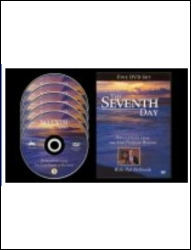
The Seventh Day (DVD set)

Products-TheSeventhDayDvd191


The Seventh Day (DVD set)


This is a five-part DVD set that documents the history of the Sabbath, with a special focus on the time of Jesus to now. This series was hosted by award-winning actor Hal Holbrook. This is perfect for public evangelism or Sabbath enrichment.

Please Note: Each Part can be purchased separately off of the website for a suggested donation of $18.00

Part 1: Introduction

Part 2: Jesus to 4th Century

Part 3: Patrick of Ireland through Wycliffe

Part 4: Reformation and the Revival of the Sabbath

Part 5: Explosion of Sabbath-keeping in the Modern Era


To learn more about this product, just click the link below!

https://biblesabbath.org/shopping/pgm-more_information.php?id=37&=SID


Choice Stories For Children

Choice Stories for Children

Choice Stories For Children

by Ernest Lloyd

This book contains nearly 40 short stories written during the late 1800s. Every story has an important lesson to build good character. The stories were selected from four out of print books; Scrap Book Stories; Golden Grains vol. 1 and vol. 3 and Lost Jewels.

Stories will convey character traits such as how to avoid temptation and respecting property rights. They are great reads to children and grandchildren!

You can use these stories as a template to come up with more to teach your children.


To order this book, just click the link below:

https://biblesabbath.org/shopping/pgm-more_information.php?id=46&=SID

Benefits of the Sabbath

Benefits of the Sabbath

by Richard C. Nickels


“When you search for a job, you look for a company with attractive compensation and benefits. In fact, in some cases the benefits may be even more important to an employee than the salary he receives. Employees are interested in company-paid pension or retirement plans, medical insurance, as well as paid vacation and sick days. In the United States, company employee benefit costs are typically 30-40% of salaries. It is surprising that some employees do not avail themselves of company-paid benefits. For example, a relative of mine has a good job for a stable company, yet he does not participate in the company’s 401-k retirement plan, foregoing the company match of his tax-free contributions to his retirement savings account. The Sabbath has much more valuable benefits than any employer can provide. However, most of the world does not participate in the Sabbath Benefit Plan.


They opt out of the best benefits in the universe. Jesus said, “The Sabbath was made for man” (Mark 2:27). Or, in other words, “The Sabbath was made for the benefit of man.” Let us examine some of the many benefits of the Sabbath, and see how we can fully participate. The Sabbath is a family day, a day of joy, a meeting with God, a day of equality, a day of freedom, a day of remembrance, a palace in time, a service day, and even, if you understand it correctly, a day of work. Family Day The daily grind causes us to rush to get the kids off to school in the morning, get to work through rush hour traffic, work a hard day, return in rush hour traffic, rush to shop and prepare meals, and often rush to a game or school activity in the evening. We meet our family members in passing, and quickly conduct the necessary business of family affairs during the week. The Sabbath ends all rush hours. It allows us to take quality time with our loved ones. Our sons and our daughters are to keep the Sabbath with us (Exodus 20:10). On Sabbath, the family takes time out to get to know each other, to eat together, to talk and engage in quality activities together, such as…”


(This article is an excerpt from the March-April 2004 edition of the Sabbath Sentinel)


To read the rest of this article, which starts on page 4, click this link:

http://biblesabbath.org/tss/506/tss_506.pdf

The Morality of the Sabbath

MoralityOfTheSabbath

The Morality of the Sabbath

By D.M. Canright

In this book, you will learn about the absolute morality of the Sabbath. It will provide a different perspective on the importance of the Sabbath. You will learn about the physical and spiritual aspects of the Sabbath that prove it is just as much apart of God’s spiritual law as the rest of the Ten Commandments. The body was designed for rest; in our fast-pace world, Godly rest will produce a harvest of results. Here’s an excerpt from pages 24-25:

Pages 24-25

“Thomas Sewell, M.D., professor of pathology and the practice of medicine in the Columbian College, Washington, D.C. says: ‘While I consider it the more important design of the institution of the Sabbath to assist in religious devotion and advance man’s spiritual welfare , I have long held the opinion that one of its chief benefits has reference to his physical and intellectual constitution; affording him, as it does, one day in seven for the renovation of his exhausted energies of body and mind – a proportion of time small enough, according to the results of my observation, for the accomplishment of this object…..I have no hesitation in declaring it as my opinion that, if the Sabbath were universally observed as a day of devotion and of rest from secular occupations, far more work of body and mind would be accomplished, and be better done; more health would be enjoyed, with more of wealth and independence, and we should have far less of crime and poverty and suffering…”

To order this thought-provoking book, click the link below:

https://biblesabbath.org/shopping/pgm-more_information.php?id=88&=SID


The Jerusalem Council of Acts 15 (Part 2 of 2)

The Jerusalem Council of Acts 15 (Part 2 of 2)

By Kelly McDonald Jr.

This week we are going to continue looking at the Jerusalem Council of Acts 15.

Last week, we reviewed that the ‘yoke of bondage’ in Acts 15 had nothing to do with the law of God, but instead referred to man-made rules. This week, we will break down the conclusion of the council.

At the end of the council, the disciples concluded that “…we should not make it difficult for the Gentiles who are turning to God. Instead, we should write to them, telling them to abstain from food polluted by idols, from sexual immorality, from the meat of strangled animals and from blood. For Moses has been preached in every city from the earliest times and is read in the synagogues on every Sabbath” (Acts 15:20-21).

Notice that four things are mentioned as requirements for Gentiles: abstain from food polluted by idols, from sexual immorality, from the meat of strangled animals, and from blood. These were the minimum standards for Gentiles to obey so that they could attend the Synagogue and learn the law on the Sabbath. Notice that the Apostles even specify what they want Gentile converts to learn (Moses), where they want them to learn it (Synagogue), and when they want them to learn it (Sabbath)!

Some teachers have insinuated that these four requirements are the only four things Gentile believers in Jesus should be required to obey. This interpretation has serious problems because lying, stealing, murder, coveting, idol worship, and a host of other sins are not listed either. Paul said thieves, coveters, and drunkards will not enter the Kingdom (I Cor. 6:9-10). He gave a similar list in Galatians 5:19-21. So Paul clearly taught more than these four things, which confirms that they were not the only standard of obedience for Christians. We cannot support an interpretation of the Bible that hinders people from entering the Kingdom of God.

When we read Acts chapter 15 in context, we can understand that the apostles were establishing a minimum level of conduct for Gentiles so they could attend synagogue and hear the Word of God. The Gentiles of that time were caught up in a host of sins, and this simplification was so that they had a starting place for their obedience, not an end-place.

You must remember that circumcision was the sign of the covenant. This was why this became a big issue in the early church. Requiring mew converts to be circumcised might have made them think that salvation came by works.  In fact, many Gentiles might have been discouraged by this.

It takes time to learn God’s ways and walk them out. Realizing this, the apostles made the initial requirements simple; there had to be some minimum level of commitment to show that they were serious and wanted to grow. As new believers walk in the power of God’s Spirit, obedience to the commandments will manifest. As Paul wrote:

“Do we then make void the law through faith? God forbid: yea, we establish the law.” (Romans 3:31).

“1 There is therefore now no condemnation to them which are in Christ Jesus, who walk not after the flesh, but after the Spirit. 2 For the law of the Spirit of life in Christ Jesus hath made me free from the law of sin and death. 3 For what the law could not do, in that it was weak through the flesh, God sending his own Son in the likeness of sinful flesh, and for sin, condemned sin in the flesh: 4 That the righteousness of the law might be fulfilled in us, who walk not after the flesh, but after the Spirit…7 Because the carnal mind is enmity against God: for it is not subject to the law of God, neither indeed can be. 8 So then they that are in the flesh cannot please God” (Romans 8:1-8).

For Gentile converts, the only way to hear the Word of God was to go to a Synagogue and the only day for them to hear it is on the Sabbath. It is clear that Acts chapter 15 does not contradict the Ten Commandments, but reinforces it.

To learn more about this subject, click here to read our article: “Did the Resurrection change the Sabbath?”

Kelly McDonald, Jr.
BSA President www.biblesabbath.org