Choice Stories For Children

Choice Stories for Children


Choice Stories For Children

by Ernest Lloyd

This book contains nearly 40 short stories written during the late 1800s. Every story has an important lesson to build good character. The stories were selected from four out of print books; Scrap Book Stories; Golden Grains vol. 1 and vol. 3 and Lost Jewels.

Stories will convey character traits such as how to avoid temptation and respecting property rights. They are great reads to children and grandchildren!

You can use these stories as a template to come up with more to teach your children.


To order this book, just click the link below:

https://biblesabbath.org/shopping/pgm-more_information.php?id=46&=SID

Torah, the Law, and Legalism

Torah, the Law, and Legalism

by Ken Ryland

(This article is an excerpt from the Sept-Oct 2003 edition of the Sabbath Sentinel)

“To many Protestants the idea that Christians should “keep the Law” is equal to suggesting that they should become Pharisees. The theology of most Protestant denominations is based on the rejection of any obligation derived from the Hebrew Scriptures—the Old Testament. That view, of course, paints us who have a high regard for all the laws of God as legalistic in the eyes of those who believe that grace has supplanted the law. Many Sabbatarians, on the other hand, fall into the ditch on the opposite side of the same road with the belief that after accepting Christ as Savior, Christianity consists of living by God’s code of conduct, His law, and nothing else matters. To such people, all matters of life and love are ultimately judged by the question, “Does it conform to God’s law?”

Both of these points of view are based on a misunderstanding of the meaning of “Torah,” the Hebrew word most often translated as “law” in English and “nomos” in Greek. Years ago a Hebrew scholar friend of mine impressed upon me the fact that “Torah” has a much broader meaning than the word “law.” Neither “law” nor “nomos” comes close to conveying the depth and breadth of meaning carried by the word “Torah.” My friend always admonished me to think of Torah as “instruction” rather than law, and this definition has served me well over the years in helping me understand the mind of God and the meaning of His Word. “Instruction” has many connotations and nuances, similar to the word “Torah.” Besides conveying the idea of teaching, it also implies an obligation to obey the instruction, but the meaning is much deeper than that. Torah instruction also brings into play the “relationship” between the instructor and the one instructed (shall we say, between teacher and disciple)…”


To read the rest of this article, which starts on page 3, click this link:

http://biblesabbath.org/tss/503/tss_503.pdf


Loving God

Loving God

By Royce Mitchell

Often I hear preachers proclaim that we need to love the Lord because of His loving kindness for us. I find myself wondering whether or not these preachers even know what it means to love the Lord. There is no doubt from scripture that we are to love God above all. Jesus Himself quoted from the Hebrew scriptures affirming that the great Commandment was to love God above all. Since we all can agree that we must love God above everything, the next question must become “How can we love God above all other things?”

Most preachers when faced with a reference to the Commandments of God resort to a claim that keeping of the Commandments is legalism, that all those Commandments were nailed to the Cross. They seldom seem to see the logical fallacy of that statement. That is to say, if the Commandments were nailed to the Cross then how it is that John, Peter and Paul were writing about sin decades after the death of Jesus on that cross? The fact is that it was not the Commandments that were nailed to the cross at all, but the ordinances that were against us, that convicted us.

So, how exactly DO we show our love for God? Is it enough to make a public proclamation of love for God, to say “I love God above all?” Is that the “proof” of our love for God that He seeks? We ought to be careful because, as the scripture says, God is not mocked.

This matter came under discussion in the early days of the Church. Jesus said that if we love Him that we would keep His Commandments. He goes on to say that if we love Him then we will be loved by the Father, also. What’s important to grasp is that showing love for Jesus requires doing something, in this case keeping His Commandments. Some want to say that His Commandment was to love. To be satisfied with this answer is an exercise in pretzel logic worth of the Deceiver himself! You can’t say that to love Jesus you have to keep his Commandment and His Commandment is to love—at least not if you want to understand the Truth.

Jesus discussed which Commandments He envisioned the keeping of which would show our love for Him and the Father. In Matthew 19 we find listed which Commandments bring life, the keeping of which show our love for Jesus and the Father. That listing is part of the Commandments found in Exodus 20 of the Hebrew scriptures. It is clear that we need to not have false gods, not to bow down to other gods, not to take the name of God for a vain reason and finally to keep holy His Sabbath days if our goal is to show love for God.

We see in Luke 18 that Jesus lists the same Commandments and tells us that we “know them.”

Yes, Jesus cited the two great Commandments of the Hebrew scriptures one of which was that we are to love God above all. However, we can’t use the command to love as the proof of love. There must be actions. It is clear that the keeping of the Commandments handed down at Sinai is the way that we show love for God and Jesus.

The apostle John makes this clear to us. In 1 John 5 we read in John’s words that if we love Him then we will keep His Commandments—and that they are not burdensome.  In 2 John 1:6 we find John writing to us that they were the Commandments from the beginning. He is describing the Commandments of God as stated in Exodus 20!

Not only can we not say that we love God if we don’t keep His Commandments. We can’t even say that we know Him! In 1 John 2:4 John tells us that we are liars if we say we know Him and don’t keep His Commandments.

The only conclusion to which we can arrive is that if we want to show God that we love Him then we must keep His Commandments—all of them. That includes God’s Sabbath Days. Failing to keep any of those Commandments is tantamount to telling God to His face that we do NOT love Him.

God has created all things through Jesus. God is recreating us through birth in Jesus, giving us a chance to be a part of His ever living family. He is doing all of this because He loves us and wants us with Him forever. Is it really too much to ask to keep His Commandments?

All we need to do is to repent, to quit breaking those Commandments, and to ask God to forgive us by covering us with the blood of His Son, the slain Lamb of God. The adoption as sons awaits us. All we have to do is love God who first loved us. The invitation is on our plate and has been since the foundation of the world.


Royce Mitchell is a member of the BSA Board and the editor for the print copy of The Sabbath Sentinel.


How to Get Off Work on the Sabbath


How to Get Off Work on the Sabbath

How can you get off work so you can enjoy this glorious time of rest? The fact of the matter is that we live in a fallen world. The world at large does not keep the Sabbath. This means we have to request to get the Sabbath off. There are some ways to do this.

The first and easiest way is to see if you can trade shifts with someone else. Let’s say a friend of yours wants off on Sunday to go to church. You want Friday sunset to Saturday sunset off, so you offer to work their Sunday shift as long as they agree to work your shift. Some people might want another day of the week off of work. In this scenario, you just have to find the right person with whom to make a trade.

Always remember that the Sabbath begins and ends at sunset . This means you can work from Friday up until sunset and then again on Saturday after sunset. You might be able to re-arrange your schedule and get the Sabbath off that way. You can always try to find another position at your company that would allow you such freedom. Or, you can look for a different shift within your same position.

If this does not work, then you will need to talk to your supervisor. Thankfully, we have laws to protect our religious beliefs in America. There are links on the BSA website with legal resources (biblesabbath.org). You can meet with your manager or boss and tell them that you need the Sabbath off from Friday sunset to Saturday sunset. You can offer to make up the work on other time – say Sunday afternoon – or perhaps come in earlier or work later on a day. In the summer months, sunset is later. You can offer to work later on Friday. In the winter, sunset is earlier. You can offer to work on Saturday after the sun sets.

When you talk to your employer, you want to show the employer how important it is that you work for their company and how you enjoy working for them. During the conversation, you can say something such as: “Company ABC has been really good to me. I have thoroughly enjoyed being a part of the team here, and I would love to continue to do so. I have recently come into a religious conviction where I need to be off from Friday sunset through Saturday sunset to observe the Sabbath. I am willing to work a little earlier or later on other days to make up any hours, even if it means working on Sunday. I desire to remain part of the team here at Company ABC.”

This kind of conversation can be adjusted when you are applying for a new job. It would be great to show enthusiasm about the job and the type of work you will be doing. You may have to “sell it”.

If, for some reason, you cannot get through to the employer in any of these ways, then it would be time to find a new job!

This is a web link to help you understand your legal rights to have the Jewish Sabbath and Feast Days off from work: http://www.jlaw.com/LawPolicy/accommodation.html

If you are ever discriminated against because of your religious beliefs, call the local EEOC – the Equal Employment Opportunity Center – or a local lawyer to file a suit. There are laws that protect your religious liberties in this nation.

Kelly McDonald, Jr.

BSA President – www.biblesabbath.org

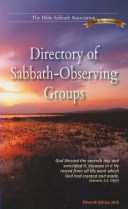
Directory of Sabbath-Observing Groups

directory-11

Directory of Sabbath-Observing Groups

The directory of Sabbath-Observing Groups is now available for FREE online!

Just click the link below!

https://biblesabbath.org/find-a-church/

This directory lists hundreds of Sabbath Keeping churches all over North America and even the rest of the world! There are seven categories of churches in this directory:

  • Seventh-Day Baptists
  • Seventh-Day Adventists
  • Church of God (Seventh Day)
  • World Wide Church of God Successor Movements
  • The Sacred Names Movement
  • The Messianic Movement
  • Non-Aligned Groups (Independent)

We no longer offer this in print form. We apologize for this inconvenience, but we were no longer able to do this as an organization. The link to the online directory is more up to date and is constantly adjusted for new churches or changes in addresses for old churches.

God Bless!
– BSA board directors

Tiger And Tom And Other Stories For Boys

Products-TigerTom125

Tiger And Tom And Other Stories For Boys

By J.E. White

This book is available to order through the Bible Sabbath Association. In it, you will find character-building stories for boys.

Read one of the recommendations of this book:

“I have spent literally $1,000.00’s on educational and character building materials for our son… and none have been as encouraging, nor as influential as your old time stories.”

These stories were compiled from orphanage stories used in the United States many years ago. Fortunately, Godly character does not have a time period attached to it. These timeless stories will encourage boys to choose right from wrong. Read them to your children and even grandchildren!


To order this book, just click the link below:

https://biblesabbath.org/shopping/pgm-more_information.php?id=48&=SID

I Love Sabbath: Embracing Righteousness

I Love Sabbath: Embracing Righteousness

by Kelly Vonner

And he believed in the Lord, He accounted it to him for righteousness.

Genesis 15:6

If we are looking to please someone special, let’s try God. Embracing truth forces us to do what is right, and doing what is right in the sight of God engages us to embrace righteousness. Honoring the Sabbath is righteous. Resting when the Creator of heaven and earth rest in righteous. Doing that which pleases God is righteous; it is faith lived out loud. But without faith it is impossible to please Him, for he who comes to God must believe that He is, and that He is a rewarder of those who diligently seek Him (Hebrews 11:6).

It should be every Christian’s desire to be in right standing with God. For me, it meant embracing truth and walking in the righteousness of God. When I embraced the Sabbath, pleasing Him become my priority. When we aligned our lives by God’s standard, we embrace righteousness. When we leave behind the traditions of men to follow the I AM, we embrace righteousness. When we let go of the very things of the world that we once clung to take on the character of God, we embrace righteousness. I have learned to love the Sabbath and to wrap myself in the righteousness that comes from God for honoring it.

I have not hidden Your righteousness within my heart; I have declared Your faithfulness and Your salvation; I have not concealed Your loving-kindness and Your truth from the great assembly.

Psalm 40:10

History of the Waldenses

WaldensesSm

History of the Waldenses

By JA Wylie

This important history book details the history of the Waldensian people (also called the Vaudois). They dwelt in the Piedmont Valley, which is in the Swiss Alps on the border of Italy and France. They were Sabbath keepers who were persecuted because of their faith. They refused to accept the doctrines of Rome. God did amazing miracles to protect these people.

1487 Pope Innocent VIII issued a decree or bull of extermination against these people. An army was organized and sent to destroy them. As they marched up to the Piedmont Valley, a mighty miracle occurred. Here is an excerpt from pages 50-51:

“A White Cloud, no bigger than a man’s hand…was seen to gather on the mountain’s summit, about the time the army would be entering the defile. That cloud grew rapidly bigger and blacker. It began to descend. It came rolling down the mountain’s side, wave on wave, like an ocean tumbling out of heaven – a sea of murky vapor. It fell right into the chasm in which was the papal army, sealing it up, and filling it from top to bottom with a thick, black fog. In a moment the host were in night. They were bewildered, stupefied, and could see neither before nor behind, could neither advance nor retreat. They halted in a state bordering terror. The Waldenses then tore up huge stones and rocks, and sent them thundering down the ravine…The papal soldiers were crushed where they stood….some [of the papal army] were trodden to death; others were rolled over the precipice and crushed on the rocks below or drowned in the torrent, and so perished miserably.”

To read the incredible, full history of these people, order this book by clicking the link below!

https://biblesabbath.org/shopping/pgm-more_information.php?id=5&=SID

Learning Not to Become Offended

Learning Not to Become Offended

by Tommy Willis


(This article is an excerpt from the Aug-Sept 2002 edition of the Sabbath Sentinel)


“As a student of human nature I always try to examine why we do the things we do and why we react the way we do. It’s important to know ourselves and the danger of the human nature we were born with, and why we become offended. Scripture tells us that many Christians will become offended and hate one another as the end of the age draws near (Matt 24:10-13). This relates to the problem of not knowing ourselves and the danger of our human nature. Think about it: if the many Christians that become offended (that this Scripture talks about) would have seen the danger of their human nature, they would have seen more of the need to pray and draw close to God so that His Spirit would be there to help them react with mercy and forgiveness towards those who have done them wrong. If we will study the above verses, we will see that after Jesus says that many will hate one another and become offended, He then states “but he that endures till the end will be saved.”

This shows the connection between not becoming offended and enduring till the end! Many of the things that happen will be testing points to see how much we are going to seek out God so that we can stay with His love and forgiveness—to stay focused on the narrow road. The problem is, we take things in the personal hurt the way the world does when others react badly to-wards us. We get our feelings hurt and often become offended. This is why Jesus said in the same Olivet prophecy that if we would “watch and pray always,” we would have His strength to endure through all these things. “Great peace have they which love thy law and nothing shall offend them” (Ps 119:165). This does not mean just to know the doctrines and laws of the Bible intellectually. One must build up a close personal relationship with Christ, the Living Word, and have enough of His Spirit…”

To read the rest of this article, which starts on page 5, click this link:

http://biblesabbath.org/tss/496/tss_496.pdf