Sabbath Meditation #2 – The Image of God

Sabbath Meditation #2 – The Image of God

by Kelly McDonald, Jr.

“So God created man in his own image in the image of God created he him; male and female created he them” (Gen. 1:27).

“2 And on the seventh day God ended his work which he had made; and he rested on the seventh day from all his work which he had made. 3 And God blessed the seventh day, and sanctified it: because that in it he had rested from all his work which God created and made” (Gen. 2:2-3, KJV).

Humans were made in the image of God. In other words, God left an imprint of Himself in us. This important truth has an interesting relationship to the Sabbath. After God made mankind, He rested on the Sabbath. This makes humans inseparably connected to this special day. Since we are made in His image, every human is made with the innate need to rest on the seventh day.

It also means that the physical, emotional, mental, and societal problems prevalent among humanity can be linked in some degree to a lack of Sabbath observance. As aforementioned, our Creator endowed us with traits similar to Himself. The need for the Sabbath rest is a special part of God placed within us. We need it as part of a fully functioning life.

On His special day, we have the opportunity to make a unique, special connection to Him that is not available at any other time during the week. No creature God made can connect to Him in the same way that we can – we are made in His image. The desire to connect to Him in this way calls out from within the deepest parts of our being. Sabbath observance aids us in our journey to reflect His image on earth.

Consider the 1,000 year reign of Christ on earth. One of the reasons that this time period will be so abundant and successful is because every human alive will have a collective consciousness of the true Sabbath. In other words, humanity will have the collective effort of the image of God working in total harmony and unity to properly represent that image. This will enable the entire world to experience the full force of a six-day work week followed by the full effect and influence of the seventh-day rest. This is a synergy that will generate more productivity and more rest than man’s ways ever hoped to accomplish.

The Sabbath completed creation. We are not complete without it.


Selah.


Kelly McDonald, Jr

BSA President

www.biblesabbath.org

The Ten Commandments Twice Removed

Ten Commandments

The Ten Commandments Twice Removed

By Danny Shelton and Shelly Quinn

Has the church been guilty of discarding the Decalogue?

A backlash of attention to the Ten Commandments–unleashed by recent U.S. court rulings–rallied Christians in defense of its public display. Amid the cresendo of concern, a lone voice vies for attention, “If you love Me, keep my commandments” (John 14:15).

Is our defense of the Ten Commandments triggered simply by a sentimental interest of Christian culture? Is it posssible the Church stands before God as guilty as our government for discarding the Decalogue? With unflinching conviction, the authors join their voices with great Christian leaders like Billy Graham, D. L. Moody, John Wesley, and Charles Spurgeon, to trumpet the truth– God never revoked His Ten Commandments!

This book answers critical questions with compelling clarity and Bible evidence. Did the Ten Commandment exist before Mt. Sinae? Were they nailed to the cross? How do we de-mystify Paul’s writings about the Law? Does man have authority to change God’s law?

Click the link below to order this book!

https://biblesabbath.org/shopping/pgm-more_information.php?id=28&=SID

Why the BSA?

Why the BSA?

by Richard C. Nickels

 The objectives of the BSA are two-fold: to promote the Sabbath, and to promote co-operation among Sabbath keepers. Let’s focus on the second of these two objectives.

It is not merely “nice” for Sabbath keepers to get to know of each other, occasionally work together, and (perish the thought!) dialog and share information with each other. Seriously, co-operation is critical, it is necessary, to the survival of Sabbatarians. This is true whether you are in a large organization or are an independent Sabbath keeper.

Never before has the Sabbath been under such a sustained attack from so many different sources. Current attacks on the family structure by homosexual activists are also attacks on the Sabbath. God’s seventh-day Sabbath is, after all, a family fellowship day, Exodus 20:10. The media, which includes most newspapers, television, music, movies, and the Internet, are laden with attacks on God and His Holy Sabbath…”

(this article is an excerpt from the January-February 2004 edition of the Sabbath Sentinel)

To read the rest of this article, which starts on page 4, click this link: http://biblesabbath.org/tss/505/tss_505.pdf

Sabbath Keepers In Government (Part 2 of 2)

Sabbath Keepers In Government (Part 2 of 2)

By Bill Lussenheide


Sabbath Observers Who Have Held Political Office

Many believers of the seventh day Sabbath have held political office. Here is a short list of recent office holders who are associated with the Seventh Day Adventist Church…

– Sir Patrick Allen – Governor-General of Jamaica (2009—)

– Roscoe Bartlett – 6th district representative from Maryland

– Percival Austin Bramble Former – Chief Minister of Montserrat British West Indies (1970–1978)

– William Henry Bramble First – Chief Minister of Montserrat British West Indies

– Sir James Carlisle – Governor General of Antigua and Barbuda (1993–2007)

– Nelson Castro – New York State Assemblyman, 86th District, 2008-Present

– Sheila Jackson Lee – U.S. Representative, 18th congressional district of Texas (Houston)

– Sherman McNichols – Chief Magistrate, Trinidad and Tobago.

– Floyd Morris – Jamaican senator and minister of state

– Sam Ongeri – Kenyan Minister for Education

– Desley Scott – Australian politician

– John F. Street – Mayor of the City of Philadelphia (2000–2008)

– Marianne Thieme – A Parliamentary leader in the Dutch House of Representatives

– Jorge Talbot Zavala – Ecuadorian Representative and Secretary of the Camara de Diputados, Quito, Ecuador, 1950-1955.

The Seventh Day Baptists, besides the historic service of Samuel Ward mentioned above, also can lay claim to the service of Jennings Randolph.  Born in Salem WV, in 1902, and a descendant of colonist William Randolph, both his grandfather and father were mayors of Salem. His family line can claim many famous relatives including Robert E. Lee.

Jennings Randolph served in Congress for six consecutive terms from 1933 to 1947. At his death in 1998, he was the last surviving House member from the infamous “100 days” of the first Franklin Roosevelt administration. His legislation includes a bill, which advocated for and provided jobs for the blind, the creation of the Civil Air Patrol, and a bill proposing the creation of a “Department of Peace” after the conclusion of World War II.

In 2016, Seventh Day Adventist Ben Carson was a candidate for the US Presidency, and for a short period of time led the polls and received significant votes in many State Primaries.

The Churches of God from the Armstrong heritage have historically been adverse to service in political office. In spite of this, there have been a few who have served as Alderman, City Council Members, and a couple who have served as Mayors.

In 2010, this article’s author, Bill Lussenheide, a long time Church of God member from those traditions, was a candidate for US Congress in the 45th District of California.  He received the highest percentage vote for a third party candidate for any office in the nation for the Constitution Party, while serving on the Executive Committee Board of that party nationwide. His platform was one of Pro-Life, Pro-Traditional marriage, Faith/Family and Freedom.  Lussenheide has also served twice as a Presidential Elector for the United States electoral college. Lussenheide is the first candidate for major office from his religious heritage.

From The Church of God 7th Day, in a statement received from Calvin Burrell, editor of the church’s magazine, The Bible Advocate and the President of the North American ministerial counsel wrote “I’m happy to assure you that 99% of us in CoG7 have no scruples against public service, including running for and holding elective office.  In fact, we recommend it!”

Sabbath Keeping Ministerial Influence In The United States Senate 

The Chaplain of the United States Senate opens each session of the United States Senate with a prayer, and provides and coordinates religious programs and pastoral care support for Senators, their staffs, and their families. The Chaplain is appointed by a majority vote of the members of the Senate on a resolution nominating an individual for the position. This position was created on the advice of Benjamin Franklin and has existed since 1789.

Chaplain Barry C. Black, a Seventh Day Adventist, is the current Chaplain of the Senate. Prior to his appointment, Black served as Chief Chaplain for the United States Navy, and also served as a Rear Admiral. As Rear Admiral, his personal decorations included the Navy Distinguished Service Medal, the Legion of Merit Medal, Defense Meritorious Service Medal (two medals), Meritorious Service Medals (two awards), Navy and Marine Corps Commendation Medals (two awards), and numerous unit awards, campaign, and service medals.

The Sabbath In The Supreme Court  

There are minimally 14 depictions of the 10 commandments to be found in the Supreme Court building. Several are depicted as in hand with Moses, and others as just the tablets alone. Minimally, it can be stated that the Fourth Commandment is also to be found in the Judicial Branch of government of the United States in the Supreme Court!

Conclusion 

Sabbath keepers can take proper pride in the fact that throughout our history they have served with character, integrity and faith at many levels of government. They have contributed in civic duty to their communities and nations. In the saga of America we also see the hand of commandment keeping, Sabbath observing Christians contributing to its rich history.


Bill Lussenheide has been a first generation Sabbath keeper for 42 years. He and his wife Terri reside in Menifee, CA.


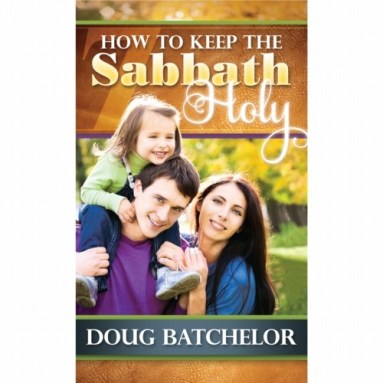
How to Keep the Sabbath Holy

How to Keep Sabbath

How to Keep the Sabbath Holy

by Doug Batchelor
What does it really mean to keep the Sabbath holy? How should we prepare for it in our homes, keep it in our churches, and live it fully in our hearts? Do our attitudes about the Sabbath matter to God as much as our actions?

Pastor Doug Batchelor invites you on an inspiring and practical Bible journey that will help you learn how to capture all the blessings God has packaged into the fourth commandment. A small book packed with a lot of wisdom.

To order this practical book on honoring the Sabbath, click the link below:

https://biblesabbath.org/shopping/pgm-more_information.php?id=108&=SID

Sabbath Keepers In Government (Part 1 of 2)

Sabbath Keepers In Government (Part 1 of 2)

By Bill Lussenheide

Currently the newswires and the media are abuzz about the Presidential election in the United States to be held in 2016. Speculation abounds about the candidates  and what will be their platforms. As Christians serving as God’s ambassadors, we face interesting questions in regards to what level of participation we should have in regards to political activity, voting, and serving in office.

Should Sabbatarians be serving in civil government? It is a question that many seventh day observing groups have attempted to tackle over the last century, with differing opinions on the appropriateness of doing so. The issue has been debated down to the point of whether or not Christians should even vote.

This article will take an overview of Sabbatarians who have served in office, or have been involved in politics over history. We will discover that seventh day observers have a long history of serving in a Godly fashion in secular government, and in being very effective in doing so.   

Political Service In The Bible

Early in the Bible we can take note of Lot. In Genesis 19:1 we can see that Lot is sitting at the city gates. This was a position of honor and rulership according to most commentators. We can take note of Proverbs 31:23 for insight on this. It reads “Her husband is known in the gates, where he sits among the elders of the land”.  Lot is regarded as “righteous Lot” in 2Peter 2:7. Although Sodom itself was wicked, there is no evil report of Lot serving in a civil capacity from scripture.

Joseph rose to be in virtual power over the leading state of its era, Egypt. Joseph considered his position in Egypt’s government to be a direct result of God’s will. As he tried to calm his brothers’ fears after their father’s death, he said to them, “God hath made me lord of all Egypt” (Gen. 45:9). He “[sent] me before you to preserve life” (verse 5). Obviously God can, and does work through righteous Sabbath observers in political office.

Likewise, Moses was a chief prince in Egypt as well. Daniel and his three Hebrew companions were selected from among captives in Babylon for training in government. There is no inference of them refusing this task, or being reluctant about it.

After Daniel was promoted to “ruler over the whole province of Babylon, and chief of the governors over all the wise men of Babylon,” he asked that his three friends might be “set . . . over the affairs of the province of Babylon,” and Daniel’s request was granted (Dan. 2:48, 49). He volunteered for the task! The three companions were promoted again after going through the amazing trial of the fiery furnace (chap. 3:30). Again, they did not refuse to serve.

When Belshazzar became ruler of Babylon, he made Daniel an important ruler after he interpreted the handwriting on the banquet wall, and just hours before Belshazzar was defeated by Darius (chap. 5:29). Darius, the Mede, recognized leadership in Daniel and made him first of three rulers of the whole kingdom (chap. 6:2).

Even after Daniel’s ordeal in the lions’ den, and his meeting of this test successfully, he “prospered in the reign of Darius” (verse 28). Yet again, Daniel did not refuse civil responsibility when he was called upon to serve.

In the book of Esther is the story of Mordecai the Jew, who “sat in the king’s gate” and was one of King Ahasuerus’ “servants” (Esther 2:19; 3:3). The king’s gate was a place where the affairs and business of the kingdom was carried on. When Haman was hanged, Mordecai did not refuse the chance to replace him. In Esther 10:3 we see that Mordecai was placed right next to the king in power.

A Sabbath Keeping American Founding Father

Samuel Ward was born in Newport, Rhode Island, May 27, 1725. Newport Rhode Island is the location of the first Sabbatarian church in America, which was founded by Stephen Mumford in 1671.  Both of Ward’s parents were keepers of the Seventh Day Sabbath, and his father was governor of Rhode Island and a descendant of Roger Williams through both his paternal and maternal family lines. He also can lay claim in his lineage to John Ward, a Calvary officer in the service of Oliver Cromwell, who fought against the tyranny of the English crown. On his parent’s tombstones is carved the testimony of their faith to the Sabbath day.

The lineage of Samuel Ward, through Roger Williams gives another strong clue into who he was. Williams the founder of Rhode Island, was a maverick pioneer of religious freedom in America who we owe much. He was one of the first advocates of the concept of “separation of church and state” and for religious freedom. An Anabaptist, Williams can be thanked for creating the first colony that practiced religious freedom. The first Jewish synagogue in America can also trace its history to Newport Rhode Island and only existed because of the freedoms found there.

With this rich bloodline of faith, Samuel Ward served in many political offices in Rhode Island and like his father, was elected to the office of governor in 1762.  These were pivotal times for America, and in 1765 the infamous Stamp Act tax was thrust upon the colonies. Of all the governors in the colonies, there was only one who had the courage to refuse an oath to enforce and sustain this law. Samuel Ward, a man of conviction of the scriptures, was also a man of conviction in the secular world. He refused to swear an allegiance to either the crown, nor to enforce the stamp act, at great personal peril to himself.

Through the early 1770’s, Ward was a key man in the organization of the Continental Congress. In fact the first delegates to the Continental Congress came from fellow Rhode Islander Stephen Hopkins and Ward himself. Yes, a Sabbath keeper can lay claim to being a “Founding” –“Founding Father” of the greatest nation in human history!

He had many works to help forge the freest country in the history of the world. Only in America could God find a place where the Sabbath could find free practice and blossom and to be an exporter of that truth to the world. Samuel Ward was the one who nominated George Washington to be the Commander of the Continental Army. Before Ward’s untimely death in 1776, he helped collaborate with Thomas Jefferson in the writing of the “Declaration of Independence”.

His legacy and influence includes his son Samuel Ward Jr., who was a Lieutenant Colonel in the Revolutionary army, a grandson who was the President of the New York stock exchange and his great granddaughter, Julia Ward Howe, who was the composer of the well known, historic and beloved “Battle Hymn of the Republic” in 1862. Like many Sabbatarians of that era, she was a staunch anti-slavery abolitionist. In later years, she was instrumental in creating the first “Mothers Day” as a reaction to the carnage of both the Civil War and the Franco-Prussian war.

We will finish this two-part series next week!

Bill Lussenheide has been a first generation Sabbath keeper for 42 years. He and his wife Terri reside in Menifee, CA.

The New World Order in the Weekly Cycle

New World Order
The New World Order in the Weekly Cycle

Although in the United States few may realize it, already many of the countries of the world use calendars in which Sunday is on the seventh day of the week. Even some dictionaries identify Sunday as the seventh day instead of the first day of the week. This documentary systematically dissolves the global deception and clarifies the confusion that is enshrouding “God’s Holy Day” and what is “His” seventh day of the week. Experience has already shown that this DVD is a very valuable tool worldwide and without a doubt its relevancy and value will only increase as the battle over the claims and sacredness of Sabbath vs. Sunday intensifies.

To order this insightful documentary, click the link below!

https://biblesabbath.org/shopping/pgm-more_information.php?id=96&=SID

The No-stress Zone

The No-stress Zone

by Lenny Cacchio


Another harrowing week on the job leaves me drained, and I know that I am not unique. The strain of our on-the-run culture is robbing us of our freedom and the quality in our lives. A recent article in the Kansas City Star poignantly pointed out that our information age has linked us to our offices 24/7, not only from home but from virtually anywhere in the world. Our cell phones and laptops make it next to impossible to escape the yoke of our employment’s reach.

And the age of just-in-time inventory, instant messages, and overnight delivery are symptoms of a culture that demands what it wants and demands it now. The luxury of taking one’s time is no longer afforded us, let alone a full escape from the pressures of daily living.

(this article is an excerpt from the January-February 2003 edition of the Sabbath Sentinel)


To read the rest of this article, which starts on page 8, click this link: http://biblesabbath.org/tss/499/tss_499.pdf

Thou Shall Not Steal

Thou Shall Not Steal

By Jim O’Brien

“Thou shalt not steal.” (Exodus 20:15) It’s a simple statement, a clear command and a fundamental principle for any nation that ever hopes to be free.

This morning I went into the branch bank where I normally do business. The manager has become a friend; after all, she knows more about my financial condition than most of my friends. She is from Chile and speaks with a heavy accent. I had not seen her for the past two weeks so she happily filled me in on her trip to Europe with her sister.

The conversation led to international events. In almost secretive terms she told me about her close friend who lives in Venezuela, which is about to erupt in civil war. There was an assassination attempt against the president this week as he was delivering a campaign speech. He is a socialist. The government confiscated large multinational businesses and now there is poverty. Let’s be clear-the government stole the property of corporations and now is stealing from the citizens.

Maria talked about her wealthy friend in Venezuela who told her, “It’s not that I don’t have money to buy things, but there’s nothing to buy! People stand in long lines to buy one chicken. I had to fly to Belize to buy medicine for my mother.”

Maria’s friend owned two homes-one in the city and one on the beach. She had to put one of the homes in her brother’s name because the government would seize the second home and give it to someone else. “You can’t own two houses!” reported her friend.

Maria grew up in Chile as the Pinochet regime took control of the country. It was also socialist. Sometimes Maria’s conversation would drift from today in Venezuela to 1973 in Chili and it was difficult to delineate the difference because the circumstances were the same-just the date and people are different.

In Chile as a young girl Maria said you could not have two of anything. “The government would come into your house and if you had two tubes of toothpaste they would take one.”

The police would come into your house and turn everything upside down. They knew people would hide things so they looked everywhere. There was nothing you could do. Your house did not belong to you-it belonged to the government even if you paid for it.

“A friend of my parents was an outspoken lawyer,” said Maria. “One night the police came to their house and took him away. They never saw him again. I went to school with the children. They never saw their father after the government took him away.”

She was talking nonstop, “You go to the grocery and you could not buy two sticks of butter. So you stuff two sticks into one wrapper.” The black market was inevitable so people could feed their family.

The consequences of sin are disastrous-even when the government is the sinner; no, especially when the government sins. If the government steals from citizens the entire system breaks down.

But such governments exist because citizens are willing to break a second law. “Thou shalt not covet thy neighbour’s house, thou shalt not covet thy neighbour’s wife, nor his manservant, nor his maidservant, nor his ox, nor his ass, nor any thing that is thy neighbour’s. (Exodus 20:17)

Most of us recoil at the thought of taking a neighbor’s house-or anything that belongs to him. It’s theft! Does a government exist by a different set of laws?

One of the principles that led to establishing the United States of America was the right of individual citizens to own private property. It was the basis for the Magna Carta, the Declaration of Independence and the U.S. Constitution.

Socialism, at its core is evil. It masquerades as benevolent to those who ignore the history of its destructive consequences. It is evil because it breaks at least two of the commandments of the Creator of the Universe as well as violating the principles for maintaining a free country.

When the citizens of any country are seduced by politicians to covet their neighbor’s property, those citizens will ultimately become the slaves of the politicians that seduced them.


Until next time,


Jim O’Brien

http://www.cogcincinnati.org/index.html

(this article was originally published on August 10, 2018 on Jim’s Pastor’s page)

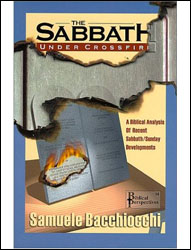
The Sabbath Under Crossfire 

Sabbath Under Fire

The Sabbath Under Crossfire
Analysis of recent Sabbath/Sunday controversy

Dr. Samuel Bacchiocchi


This work examines the recent attacks against the Sabbath within the larger historical context of the origin and development of the anti-Sabbath theology. An understanding of how the abrogation view of the Sabbath began and developed through the centuries, is essential for comprehending why the Sabbath is still under crossfire today.

The book analyzes in a systematic way the most common arguments used to negate the continuity and validity of the Sabbath for today. With compelling Biblical reasoning, it unmasks the fallacies of the attempts made to reduce the Sabbath to a Mosaic institution, fulfilled by Christ and condemned by Paul.

Most important of all, this book will enrich your understanding of how the Sabbath can enable you to experience the Saviors presence, peace, and rest in your life.

Click the link below to order this powerful work:

https://biblesabbath.org/shopping/pgm-more_information.php?id=17&=SID