How can we know when the Sabbath is? (Part 2 of 2)

How can we know when the Sabbath is? (Part 2 of 2)

By Kelly McDonald, Jr.

How can we know which day of the week the Sabbath is on?

From the time that the manna was given in Exodus 16, the Jewish people have preserved this day. In the Bible and the Jewish culture, the Sabbath is the only day of the week that is named. The other days of the week are named “first day”, “second day”, “third day”, etc. This is why no day of the week except Sabbath is named in the Bible.

This is one reason why it has been easy for the Jewish people to keep up with the day of the week that the Sabbath falls upon from Exodus 16 until now. It is the same day kept in Jesus’ time and the same day kept by them today. Despite the persecution of the Babylonians, Greeks, Romans, Muslims, Catholic Inquisitions, and Nazi Germany, they have held on to the Sabbath. But there is more evidence that we can rely on to come to the same conclusion.

In the third century, The Roman Historian Cassius Dio tells us that the Jewish people rested on the day that the Romans called “the day of Saturn” (Cassius Dio, Roman History, 37.16.1-4). Saturn is the name the Romans gave to the day of the week we presently call Saturday.

In over 100 current and ancient languages, the word for Saturday is sanbat, sabatu, saptu, sabado, sabato, or a variation thereof. A chart below gives you a short list. Let’s take one example. In Spanish, sabado is the word for Saturday. The foundations for the Spanish language were formed starting in 711 AD when the Moors conquered Spain. From then to now, the name for Saturday has been unchanged.

Indonesian – Sabtu

Tagalog (Philippines) – Sabado

Latin – Sabbatum

Spanish – Sabado

Portuguese – Sabado

Russian – Subota

Arabic – Al Sabt

Somali (East Africa) – Sabti

Mandingo also called Mandinka (West Africa) – Sibiti

Ormo or Galla (East Africa) – Sanbata tenna

Kisii, also called Gusii or Ekegusii (Africa) – Esabato

God mentions the Sabbath over 140 times in the Bible. God never mentions a requirement in the Bible without giving us a way to understand how to obey it. The Way of God is easier than the burdensome ways of man (Deut. 30:11-15, John 5:1-5, and James 1:25-27). He has left us a witness through history, language, and the example of the Jewish people. He made provision for us; He made sure that we would know when the Sabbath is today.

Jesus said that the Sabbath was made for man, not man for the Sabbath (Mark 2:27). He did not say the Sabbath was made just for the Jewish people. They have preserved the Sabbath, but the Sabbath is for all mankind!

Kelly McDonald Jr.

BSA President – http://www.biblesabbath.org

Sabbath Evening (Erev Shabbat) Family Service

Sabbath Evening (Erev Shabbat) Family Service

(also Called “Erev Shabbat”, Hebrew for Evening of the Sabbath)

Throughout the week, we are all running to and fro. We are going to ballgames, work, school, and other events. The Erev Shabbat Service is a special service performed by the Jewish people for over 2,000 years. It would have been performed in the time of Jesus. It is a great way to welcome in the Sabbath as a family and make the dividing line between Holy Time of the Sabbath and the common time of the week we are leavening behind.

While it is mostly performed by Sabbath keepers with a Messianic background, it is a great learning tool for all Sabbath keepers. It is a way to speak life and blessing into your family. It is a great way to spend interactive time with your family.

Just click the link below to access this FREE resource!

https://kellymcdonaldjr.com/erev-shabbat-ceremony/

Why Study the History of Sabbath Keepers?


Why Study the History of Sabbath Keepers?

by Richard Nickels

(This article is an excerpt from the March – April 2009 edition of the Sabbath Sentinel)

Giving and Sharing Study No. 264

“An Indian proverb states, “A people without history are like the blowing wind.” Today there is an abysmal lack of knowledge among Sabbath keepers of their own history. This dearth has motivated me to write a couple of books on the fascinating subject of church history. Why should we study church history? Because we cannot understand what is happening today in the Sabbath-keeping Churches without a background of what has happened in the past. Unless we learn the lessons of the past, we are destined to repeat the mistakes of our ancestors. The history of God’s Church is both thrilling and educational. “He that hath an ear to hear, let him hear what the Spirit saith unto the churches” (Revelation 2:7, 11, 17, 29; 3:6,13, 22). I have long been interested in the history of Sabbath keepers. Not knowing one’s history is like starting to watch a movie in the middle. You don’t know what happened before and have difficulty understanding what is happening now. When you look into the history of Sabbath keepers, you see striking examples of the maxim, “history repeats itself.” You see the relationship between different groups and appreciate more fully how they arrived at their position today. You find characters such as John James, Dr. Peter Chamberlen, Gilbert Cranmer, and many others with whom you can identify. You can appreciate their work for the Master, their problems, and their trials.”

To read the rest of this article, which starts on page 11, click this link:

http://biblesabbath.org/tss/536/tss_536.pdf


How can we know when the Sabbath is? (Part 1 of 2)

How can we know when the Sabbath is? (Part 1 of 2)

By Kelly McDonald, Jr.

One of the lingering questions regarding the Sabbath is: How can we know when it is?

This is a great question. To answer it, we must start with how the Bible defines a day. Biblical days begin and end at sunset.

Genesis 1:5b reads, “…And there was evening, and there was morning—the first day.” Sunset is the beginning of one day and the ending of another day. Below I have listed a few more examples in the Bible:

Leviticus 23:32b – referring to the Day of Atonement

“From the evening of the ninth day of the month until the following evening you are to observe your sabbath.”

Deut. 24:14-15

14 Do not take advantage of a hired worker who is poor and needy, whether that worker is a fellow Israelite or a foreigner residing in one of your towns. 15 Pay them their wages each day before sunset, because they are poor and are counting on it.

2 Samuel 3:35

35 Then they all came and urged David to eat something while it was still day; but David took an oath, saying, “May God deal with me, be it ever so severely, if I taste bread or anything else before the sun sets!”

We can see from these examples that a day in the Bible begins and ends at sunset. Night time is the beginning portion of a day and day time is the concluding portion. Perhaps God did this to show us that He brings our lives out of darkness and into His marvelous light. This helps us define a Biblical day.

As far as which day of the week is the Sabbath, we again want to start with the beginning of the Bible.

In Genesis chapters 1 and 2, we learn about the creation of the heavens and the earth. In six days, God formed the face of the earth and fashioned it with animals and other living creatures. During these six days He created. On the seventh day, He rested.

This seven-day cycle was established and later spread throughout the whole world. One evidence of this is that Noah understood the seven-day cycle established at creation. “10 He waited yet another seven days; and again he sent the dove out of the ship. 11 The dove came back to him at evening and, behold, in her mouth was a freshly plucked olive leaf. So Noah knew that the waters were abated from the earth. 12 He waited yet another seven days, and sent out the dove; and she didn’t return to him any more.” (Gen. 8:10-12).

Later in Genesis, we learn something very important about Abraham. The Bible tells us that Abraham “…obeyed my voice, and kept my charge, my commandments, my statutes, and my laws” (Genesis 26:5). The Sabbath is listed as a commandment in Exodus 16:28, Exodus 20:8-11, and other places. By inference, we can learn that Abraham kept the commandments of God; this means he kept the Sabbath as well! He did so without having a Bible. He just trusted God and obedience was the result.

When the Israelites went down to Egypt, they lost the Sabbath. The Egyptians had a ten-day work week (Fagan, 202). After God brought them out of Egypt in Exodus chapters 12-14, one of His first acts in the desert was to reveal to them the true Sabbath.

In Exodus 16, the Bible records the miraculous giving of the manna from Heaven. God told the Israelites to gather manna for five days and on the sixth day to gather twice as much. On the seventh day, they were not to gather any. He even said in Exodus 16:29, “Bear in mind that the Lord has given you the Sabbath; that is why on the sixth day he gives you bread for two days.” Many people have heard the story of the manna in the desert. Very few know that the entire lesson of the manna was to show them the true Sabbath day!

We will continue this conversation next time by showing which day of the week is the Sabbath!

Bibliography

Fagan, Brian M. ed. The Oxford Companion to Archaeology. Oxford University Press. New York, 1996. Page 202.

Kelly McDonald Jr.

BSA President – http://www.biblesabbath.org

The Seventh Day (DVD set)

Products-TheSeventhDayDvd191

The Seventh Day (DVD set)


This is a five-part DVD set that documents the history of the Sabbath, with a special focus on the time of Jesus to now. This series was hosted by award-winning actor Hal Holbrook. This is perfect for public evangelism or Sabbath enrichment.

Please Note: Each Part can be purchased separately off of the website for a suggested donation of $18.00

Part 1: Introduction

Part 2: Jesus to 4th Century

Part 3: Patrick of Ireland through Wycliffe

Part 4: Reformation and the Revival of the Sabbath

Part 5: Explosion of Sabbath-keeping in the Modern Era


To learn more about this product, just click the link below!

https://biblesabbath.org/shopping/pgm-more_information.php?id=37&=SID


52 Sabbath Activities for Teen Groups

52 Sabbath Activities


52 Sabbath Activities for Teen Groups

By Don Pate

Here are 52 proven, surefire, guaranteed ─ fun activities to make Sabbath really special for teens! Each activity section gives you step-by-step instructions for making it happen and tells you what preparation and materials you’ll need and the minimum time required for the activity. Whether you’re a youth leader, teacher, or pastor, you’ll find this book a valuable resource for creating Sabbaths that bring teens exciting fellowship with God and Christian friends.

To order this book, just click the link below:

https://biblesabbath.org/shopping/pgm-more_information.php?id=104&=SID

An Ancient Sabbath Keeping King

An Ancient Sabbath Keeping King

By Kelly McDonald, Jr.

As we have reviewed in other Sabbath history segments, Arian Christians had Sabbath-keeping tendencies. They were a group who seem to have practiced the commandments of God. Between 341 and 380 AD, an Arian minister named Ufilas went to the region known as Germany and Poland today. He evangelized the Germanic and Gothic tribes just on the outskirts of the Roman Empire. He converted many Gothic tribes to Arianism. Among his incredible works was to create an alphabet for the Gothic language and then translate the Bible into that language. Up until his time, the Gothic language was only spoken. Eventually, 8 of the 10 major tribes including the Visigoths, Burgundians, Vandals, and Lombards would claim some form of Arian belief.

By the mid-400s AD, the Western Roman Empire was overrun by the Gothic/Germanic tribes. Because most of these were Arian, Sabbath keeping was also diffused in the area. Sidonius Apollinaris, who was a writer and Christian of this time period, tells us about one particular Visigothic King, Theodoric, who ruled southern France and Spain from 453-466 AD.

450s/460s AD
“On ordinary days, his table resembles that of a private person…. What need for me to describe the pomp of the Sabbath?” (Sidonius Appollinarius Book 1, Letter 2, Section 6.)

If you were to read the full context of this quote, Sidonius explains that Theodoric ate like a common man during the week, but on the Sabbath he ate with great pomp. This shows that Sabbath keeping was revered even by kings in this time period. To learn more about the connection between Sabbath keeping and Arianism, CLICK HERE. To learn more about Sabbath keeping in this era of time, CLICK HERE.

God Bless!

Kelly McDonald, JR.

BSA President www.biblesabbath.org

How I Learned About the Sabbath


How I Learned About the Sabbath

By Jacquie Chippeaux

My husband, Bob, and I were happily attending a traditional Sunday congregation with a lot of my family members back in the early 1990’s.  One day Bob approached me with a pamphlet that he had found on our front door.  There was going to be a Bible Prophecy seminar in our area, and he wanted us to go and check it out.  I was not thrilled with the idea, thinking it could be some type of cult, but I went while practically digging my heels into the ground.

When we arrived at the big convention center the parking lot, it was packed full of vehicles and church buses.  We thought this must really be something.  As we were walking up to the doors, several people were walking back saying that it was sold out.  I was a bit relieved and we turned around to start leaving. Bob showed the pamphlet to a person and asked if that was what the people were being turned away from.  The man answered no, and that it was a Christian concert that was sold out.  So, my husband was excited and led me up to the front door where we found the room that we needed upstairs.

It ended up being a very interesting study that went on for at least a couple of days a week, for several weeks.  A few days into it, they revealed the Sabbath to us. We could see it right away, and we were convicted.  We couldn’t understand how it seemed like the whole world was not keeping the Sabbath and had no idea of any Sabbath-keeping congregations.  Dr. John Grosboll with Steps to Life, an offshoot of a Seventh Day Adventist congregation, was the Pastor teaching the seminar. Dr. Grosboll and some of the members in his congregation came over to our house a few times for more study after the seminar had concluded.  We really enjoyed each of them.

Soon afterwards, Bob was in the break room at his work and there was a man speaking about one co-worker being a Baptist, another person being a Methodist, and another being Catholic, etc.  Then he said, “And Max, I don’t even know what he is, he keeps the Sabbath or something.”  And let me tell you, Bob’s ears perked up!  Bob saw Max down the hall later and called down the hall, “Max, are you a Sabbath keeper?”  And Max, almost in slow motion, turned around and said, “Yes, I am.”  And we started attending church with him at Wichita Church of God Seventh Day, which came from a Church of God International background.

We attended there for about ten years and then met more of a Messianic congregation that we really enjoyed.  My husband was gifted at blowing the shofar, and our two young daughters loved the music, banners, dancing, and teachings. Now they are both involved in ministry, mostly ministering to the youth and elderly.

The Sabbath is An Opportunity for Action!

The Sabbath is An Opportunity for Action!

It can be easy to look at the Sabbath as simply a “time-out” from the common activities of our lives. We want to avoid looking at this special gift from God as simply a list of things we should not do. Instead, let’s look at the Sabbath as a divine opportunity! What should we do on the Sabbath? Or, better put, what are we free to do now that common burdens are put aside?

While our common work is put aside on the Sabbath, it is the time to take on holy work. Christ said, “Which is lawful on the Sabbath: to do good or to do evil, to save life or to kill?” (Mark 3:4). Christ taught, preached, prayed for people, and publicly read the scriptures on the Sabbath. There are entire chapters in the Gospels devoted to Christ’s holy work on the Sabbath.

The Sabbath is the perfect time to read our Bibles, pray, worship alone with the Lord. It is also a time to spend with family (we will have a future blog solely on that subject). It is a special time set apart to engage God in a way and with a focus that we could not during the week because we had work to do. Maybe there is someone in the Body we have not seen or talked to in a while. Perhaps God has even laid this person on your heart during the week. Go speak to that person; even call them. Make that effort to be an instrument for God.

The Sabbath is not a call to inaction; it is a call to action. It is a divine opportunity. When we come together, there is always an opportunity to serve. Someone has to set up the church and prepare it for services. You could always come early to pray in the sanctuary for people to be touched by the Lord. Worldly cares are set aside so that we are free to do more for God, not less.  Someone must lead the music service. Someone must lead prayer at church. Someone must preach the sermon. Someone must teach the Sabbath school classes.

Do not forget that other people in the Body need encouragement and admonishment. Fellowship is so important. We have the freedom to engage one another as our focus is on the Lord. The Sabbath is an opportunity to use the gifts of the Spirit even more.

God is working things out in our lives through our obedience to His Sabbath. There is work that needs to be done, and we are the people He has called to do it. Let’s use this powerful freedom to grow in grace and knowledge.


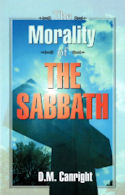
The Morality of the Sabbath

MoralityOfTheSabbath

The Morality of the Sabbath

By D.M. Canright

In this book, you will learn about the absolute morality of the Sabbath. It will provide a different perspective on the importance of the Sabbath. You will learn about the physical and spiritual aspects of the Sabbath that prove it is just as much apart of God’s spiritual law as the rest of the Ten Commandments. The body was designed for rest; in our fast-pace world, Godly rest will produce a harvest of results. Here’s an excerpt from pages 24-25:

Pages 24-25

“Thomas Sewell, M.D., professor of pathology and the practice of medicine in the Columbian College, Washington, D.C. says: ‘While I consider it the more important design of the institution of the Sabbath to assist in religious devotion and advance man’s spiritual welfare , I have long held the opinion that one of its chief benefits has reference to his physical and intellectual constitution; affording him, as it does, one day in seven for the renovation of his exhausted energies of body and mind – a proportion of time small enough, according to the results of my observation, for the accomplishment of this object…..I have no hesitation in declaring it as my opinion that, if the Sabbath were universally observed as a day of devotion and of rest from secular occupations, far more work of body and mind would be accomplished, and be better done; more health would be enjoyed, with more of wealth and independence, and we should have far less of crime and poverty and suffering…”

To order this thought-provoking book, click the link below:

https://biblesabbath.org/shopping/pgm-more_information.php?id=88&=SID