Understanding Colossians 2:15-17

Understanding Colossians 2:15-17
by Kelly McDonald, Jr.

In Colossians 2:15-17, Paul wrote “15 Having disarmed principalities and powers, He made a public spectacle of them, triumphing over them in it. 16 So let no one judge you in food or in drink, or regarding a festival [feast day] or a new moon or sabbaths, 17 which are a shadow of things to come, but the substance is of Christ.” (NKJV)

In this excerpt from Colossians, Paul proclaims our triumph over the forces of evil through Jesus Christ. He then shifts to explain that due to Christ’s victory over the enemy, we should not let anyone judge us in food and drink. The Greek word translated as food is brosis; it refers to food defined by Leviticus 11.

Paul then takes this attitude towards food and applies it to certain days. The word “regarding” in verse 16 is translated from two Greek words: en meros. En means inside of and meros means your share or participation in something. The believers in Colossae were eating and drinking during special times. Three specific kinds of times are mentioned: festival, new moon, and Sabbaths.

Some have used this verse to say that we can make any day a festival or Sabbath and no one can pass judgment on us. How do we go about understanding the terms festival, new moons, and Sabbath? How do we define them?

When we read the Bible, context is key. There are different kinds of context. One of the main forms of context is comparing all verses in the Bible on a given subject. Some people call this “using the Bible to interpret the Bible.” This type of research will generate many references and allow us to better grasp the subject.

It is imperative to understand that the entire Old Testament is the background material for the New Testament. When the apostolic authors, such as Paul, use certain terms they often are derived from their uses in the Old Testament. This is especially true with the subject matter we are considering. The Feast Days, New Moon Celebrations, and the Sabbath are mentioned together multiple times before Paul wrote Colossians 2.  I have listed three below:

I Chron. 23:31

“and at every presentation of a burnt offering to the Lord on the Sabbaths and on the New Moons and on the set feasts, by number according to the ordinance governing them, regularly before the Lord…”

Nehemiah 10:33

“…for the showbread, for the regular grain offering, for the regular burnt offering of the Sabbaths, the New Moons, and the set feasts; for the holy things, for the sin offerings to make atonement for Israel, and all the work of the house of our God.”

Ezekiel 45:17a

“Then it shall be the prince’s part to give burnt offerings, grain offerings, and drink offerings, at the feasts, the New Moons, the Sabbaths…”

Thus, we can see that these three special days are used together in the Old Testament. By the time Paul used these terms in his letter to Colossae, a context of meaning already existed. This does not allow us the opportunity to twist or change the meaning based upon what we want the verse to say, but how the Bible has already defined these terms.

The Greek words used for each of these three celebrations bears witness to this as well. The Greek word translated as festival is heorte. It is used 27 times in the New Testament; all of them reference the feast days in Leviticus chapter 23. Paul uses the verb form of heorte in I Corinthians 5:8 to instruct the Corinthians to keep Passover and Unleavened Bread.

The Greek word translated as New Moon is noumenia; it is only used once in the New Testament. It refers to the New Moon celebrations [while these are mentioned in Numbers 28:11-15, we do not have a lot of information about them]. Finally, the Greek word translated as Sabbath is sabbaton, and it is translated as Sabbath or Sabbaths.

Thus, the Colossians were partaking in Biblically approved food and drink during God’s appointed times. Other people were judging them FOR their participation in them! This is absolute proof that the early Christians celebrated them. Another question which arises in this discussion is as follows: Why were they being judged for Biblical behavior?

Colossae was a city in Asia Minor. This area of the world had been influenced by the Greek thought for centuries before Paul lived. A common philosophy among the Greeks was called asceticism. Asceticism is the belief that spirituality could only come through abstinence from things in life that were physically enjoyable – such as certain kinds of food. Thus, these enjoyable behaviors were considered morally wrong. Some ascetics treated their bodies harshly; they viewed it as a way to subdue their carnal desires as a preparation for spiritual experiences. Some thought angels could be seen through rigorous asceticism. Unfortunately, this man-made philosophy was present among the Colossian congregation.

To confirm this detail further, we will apply another kind of Biblical context. This method involves reading the rest of the chapter, which is verses 18-23: “18 Let no one cheat you of your reward, taking delight in false humility and worship of angels, intruding into those things which he has not seen, vainly puffed up by his fleshly mind, 19 and not holding fast to the Head, from whom all the body, nourished and knit together by joints and ligaments, grows with the increase that is from God. 20 Therefore, if you died with Christ from the basic principles of the world, why, as though living in the world, do you subject yourselves to regulations— 21 “Do not touch, do not taste, do not handle,” 22 which all concern things which perish with the using—according to the commandments and doctrines of men? 23 These things indeed have an appearance of wisdom in self-imposed religion, false humility, and neglect of the body, but are of no value against the indulgence of the flesh.”

These verses display obvious references to asceticism. Paul references spiritual experiences, including the worship of angels. Next, he references the doctrines and commandments of men (not the doctrines and commandments of God). Lastly, he describes their neglect of the body. The human teaching of asceticism cannot truly overcome the desires of the flesh; it temporarily restrains them.

In the Bible, the Festivals of Leviticus 23 and the seventh-day Sabbath are the most joyous times of celebration and feasting. The believers were eating the nicest foods and drinks available. The ascetics judged the Colossian believers for physical enjoyment during God’s appointed celebrations.

Paul concludes verses 15-17 by saying that these celebrations “…are a shadow of things to come, but the substance is of Christ.” The Greek word translated as substance is soma. It means body. These special times have past and future meaning [the shadow]. But a shadow only exists when light shines on a body. Paul explains that these days are more than just shadows; their true purpose belongs to Christ’s body. In other words, they are part of Him! In Leviticus 23:2, they are called the Feasts of the LORD.

In conclusion, Paul wrote that we should let no one judge us FOR celebrating these special times. Christ followed them on earth. If Peter’s shadow could heal a man, how much more can the shadow of Christ empower us and strengthen His body! This gives Christians yet another reason to celebrate them.

Kelly is President of the Bible Sabbath Association (BSA). www.biblesabbath.org
The Ten Commandments Twice Removed

Ten Commandments
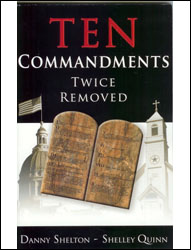
The Ten Commandments Twice Removed

By Danny Shelton and Shelly Quinn

Has the church been guilty of discarding the Decalogue?

A backlash of attention to the Ten Commandments–unleashed by recent U.S. court rulings–rallied Christians in defense of its public display. Amid the cresendo of concern, a lone voice vies for attention, “If you love Me, keep my commandments” (John 14:15).

Is our defense of the Ten Commandments triggered simply by a sentimental interest of Christian culture? Is it posssible the Church stands before God as guilty as our government for discarding the Decalogue? With unflinching conviction, the authors join their voices with great Christian leaders like Billy Graham, D. L. Moody, John Wesley, and Charles Spurgeon, to trumpet the truth– God never revoked His Ten Commandments!

This book answers critical questions with compelling clarity and Bible evidence. Did the Ten Commandment exist before Mt. Sinae? Were they nailed to the cross? How do we de-mystify Paul’s writings about the Law? Does man have authority to change God’s law?

Click the link below to order this book!
https://biblesabbath.org/shopping/pgm-more_information.php?id=28&=SID


Sabbath Meditation #8 – The Breath of God

Sabbath Meditation #8 – The Breath of God

by Kelly McDonald, Jr

“The LORD God formed man from the dust of the ground, and breathed into his nostrils the breath of life; and man became a living soul” (Gen. 2:7).

“Six days thou shalt do thy work and on the seventh day thou shalt rest. That thine ox and ass shall rest and the son of thy handmaid and the stranger may be refreshed” (Exodus 23:12).

In Genesis 2:7, we learn that God blew within man the breath of life, and he became a living soul. The Hebrew word translated as soul is nephesh. It refers to the biochemical processes that make us alive. This same word is used of the animal life (Gen. 1:20, 21, 24, 30). Even the fishes are nephesh-es!

However, God created man differently than other animals. The nephesh of mankind was initiated by a breath from Him. At this same moment, God also placed a human spirit within man. “But there is a spirit in man, and the breath of the Almighty gives them understanding” (Job 32:8). This human spirit grants us understanding and allows us to have contact with God. It sets us apart from other animal life.

In Exodus chapter 23, God reminded us to honor the Sabbath so that we may be refreshed. The Hebrew word translated as refreshed is naphash. It means to be breathed upon or refreshed (as if by a current of air). It is the root word for nephesh.

In Exodus 31:17, this same word is used in reference to God being refreshed on Sabbath: “…the LORD made heaven and earth, and on the seventh day he rested and was refreshed”. In John 4:24, Jesus told us that God is Spirit. While God is a Spiritual being, He was still ‘breathed upon’ or refreshed on the Sabbath.

As we meditate on these verses, we learn a deeper reason for the Sabbath. This special day has been empowered by God to provide a breath to refresh us physically, biochemically, and spiritually.

No other day of the week can provide this special impartation. Even God, who is Spirit and never changes, experienced this breath or refreshing.

These details grant us tremendous insight into the Sabbath commandment. We can now better understand why the instruction to honor the Sabbath is often repeated in the Bible and the gravity of honoring it.

The Sabbath is the only day with a breath from God that refreshes the breath God placed within mankind. Your nephesh and your spirit were created to receive this special current of air from God. The simple rules in the Bible that guide our observance of the Sabbath position us to receive it.

If the original breath from God in Genesis gave us life, what will His breath do for you every week on Sabbath?

Selah.

Kelly McDonald, Jr  –  BSA President www.biblesabbath.org

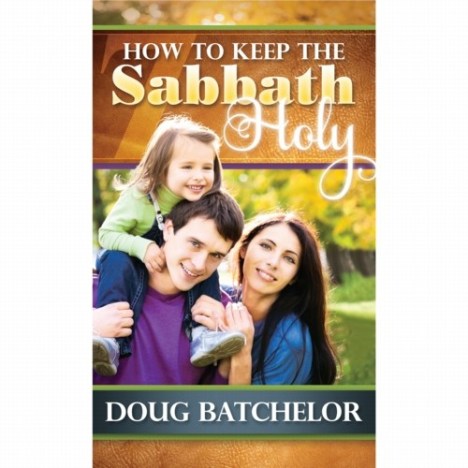
How to Keep the Sabbath Holy

How to Keep Sabbath
How to Keep the Sabbath Holy
by Doug Batchelor

What does it really mean to keep the Sabbath holy? How should we prepare for it in our homes, keep it in our churches, and live it fully in our hearts? Do our attitudes about the Sabbath matter to God as much as our actions?

Pastor Doug Batchelor invites you on an inspiring and practical Bible journey that will help you learn how to capture all the blessings God has packaged into the fourth commandment. A small book packed with a lot of wisdom.

To order this practical book on honoring the Sabbath, click the link below:

https://biblesabbath.org/shopping/pgm-more_information.php?id=108&=SID


Seventy years of BIBLE SABBATH ASSOCIATION: 1945 to 2015

Seventy years of BIBLE SABBATH ASSOCIATION

1945 to 2015

By Calvin Burrell
“The Bible Sabbath Association (BSA) has a 70-year history of bringing God’s people together across the lines of doctrinal and denominational difference that too often divide them.

The founders of BSA, George A. Main and his wife Mabel D. Main, were members of the Seventh Day Baptist Church. The first BSA office was in their home in Pomona Park, Florida, for more than ten years (1945-1955).

The longest-serving editor of BSA’s The Sabbath Sentinel magazine was Eugene Lincoln, a Seventh Day Adventist Church member from Indiana, Michigan and Maryland. His quarter-century as BSA editor was from 1960 until 1985, and he also served a term as BSA President.
The longest tenure for any BSA secretary-treasurer was a Church of God (Seventh Day) couple—Lawrence and Lottie Burrell. They served from their farm home near Fairview, Oklahoma, the national BSA office address from 1955 until 1995. The BSA service of the Mains, Lincoln, and the Burrells was mostly or all voluntary, a true labor of love.

More recently, servant leadership in the BSA has been provided by several persons who came from a Worldwide Church of God background and experience. These include Richard Wiedenheft, Ken Westby, Richard and Shirley Nickels, and others….”

(this article is an excerpt from the January-February 2015 edition of the Sabbath Sentinel)

To read the rest of this article, which starts on page 3, click this link: http://biblesabbath.org/media/TSS_2015_Jan-Feb.pdf


How to Spend More Time with the Man from Galilee

How to Spend More Time with the Man from Galilee

by Aimee Zahora


(via GIPHY)

Many know that the man from Galilee is none other than the Son of God, Jesus Christ. Some might agree that spending time with this guy brings benefits. But, how? How can we spend more time with the man from Galilee. Below are four practices that I attempt to follow. These practices have brought me unquantifiable spiritual richness.

First Thing in the Morning: Musical Meditation

For most of my life, I would bounce out of bed a millisecond after my alarm buzzed through the silence and rush around in the fast lane to get stuff done. Over the past few months, a more gentle approach debuted in my conscience, making those initial waking moments soft and serene.

Meditation through music helps me connect with God. Focusing on Him and being still — listening for His inspiration — changes the course of my day. My awareness of what truly matters and my perception of simple beauty — birds, flowers, sunshine, etc. — intensifies.

Two of my favorite musical selections that resonate with me include Give Me Jesus by Danny Gokey and Psalm 34 by Shane and Shane.

Tune in to Powerful Sermons All Day

Whether you are exercising, taking a mental break over lunch, or winding down at the end of the day, be intentional about tuning into powerful sermons throughout the day. Below are three series-style sermons that have increased my spiritual prosperity.

If series aren’t your cup of tea, here are two stellar stand-alones.

Write Down the Good Things That Happened to You Today

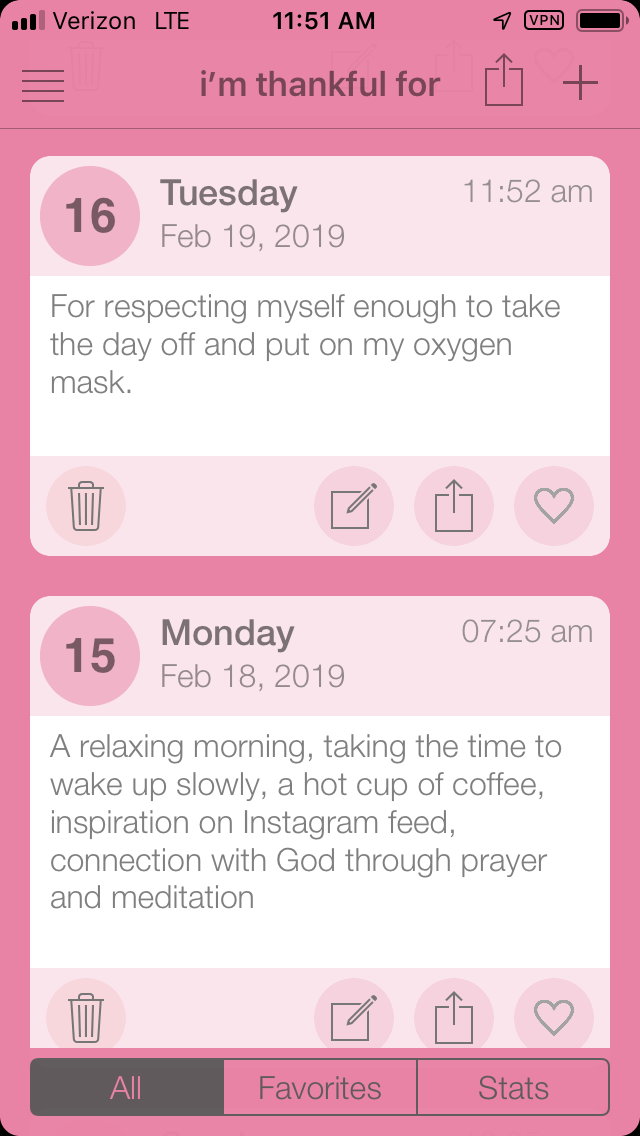
A friend recently introduced me to the Thankful app. It provides a convenient method for electronically capturing a few concepts that express gratitude on a daily basis. The practice of gratitude is a simple game-changer to transform one’s mental trajectory.

Pictured below are a couple of my recent entries. I find it refreshing to look back at my entries every couple days or weeks. Not only am I amazed at how much I would have forgotten had I not documented it, but also my spirit renews through the review process.

Pray for an Open, Loving Heart and God’s Will

Spending time with the man from Galilee in prayer and meditation changes the course of life. Whether praying for specifics or big picture items, the intimacy of prayer enables soul restoration and divine guidance.

Personally, I am in the midst of a unique time of life. I have chosen to radically alter the course of my life to follow God more passionately. That choice includes ordering my day in ways that energize rather than deplete. Besides making a cross-state physical move from the north to the south, I am embarking on a new career.

Perhaps there are few times in life where we have the opportunity to be radical. Or, maybe opportunities present themselves many times, but we have to be in tune with God’s Will to perceive those opportunities. In any case, when the awareness comes, it’s time to act. Whatever stage of life you find yourself in, I encourage you to pray fervently for an open, loving heart — one that aligns with God Will. My experience has shown it to be fulfilling beyond measure.

Aimee Zahora is a Sabbath and Holy Day keeping follower of The Way and blogger on topics that ignite the Spirit. She is a member of the United Church of God.

Tags: man from Galilee, musical meditation, inspiration, powerful sermons, thankful, gratitude, prayer, opportunity

Did the Resurrection Change the Sabbath?


Did the Resurrection have any impact on the Sabbath?

By Kelly McDonald, Jr.

Some claim that the resurrection of Christ changed the Sabbath. What does the Bible say on this subject?

First of all, there is not a single verse in the New Testament that states “The Sabbath was changed by the resurrection”. The authors of the New Testament never make a claim similar to it. The Sabbath was established in Genesis and continues into the New Heavens and New Earth (Isaiah 66:22-24).

To learn more about the relationship between the resurrection and the Sabbath, we must read the book of Acts. In it, we learn the teachings of the Apostles and the practice of their faith. This vital book will provide vital clues to resolving this issue. We have some examples below.

Acts 13:13-15
“13 Now when Paul and his company loosed from Paphos, they came to Perga in Pamphylia: and John departing from them returned to Jerusalem. 14 But when they departed from Perga, they came to Antioch in Pisidia, and went into the synagogue on the sabbath day, and sat down. 15 And after the reading of the law and the prophets the rulers of the synagogue sent unto them, saying, Ye men and brethren, if ye have any word of exhortation for the people, say on.”

Pisidian Antioch is in the region known as Galatia. Paul wrote an entire letter to the churches in this region (the letter to the Galatians). We can clearly see that Paul practiced the Sabbath; he was also asked to speak when he was there. Let’s look at the content of his message.

Acts 13:28-31
“28 And though they found no cause of death in him, yet desired they Pilate that he should be slain. 29 And when they had fulfilled all that was written of him, they took him down from the tree, and laid him in a sepulchre. 30 But God raised him from the dead: 31 And he was seen many days of them which came up with him from Galilee to Jerusalem, who are his witnesses unto the people.”

Paul focused his message on the suffering, death, and resurrection of Christ. After preaching on Christ’s death and resurrection, not once did he mention it changing the day of rest away from the Sabbath. No alternative day to Sabbath is given. How did those in attendance respond to Paul’s message?

Acts 13:42-45, 48
“42 And when the Jews were gone out of the synagogue, the Gentiles besought that these words might be preached to them the next sabbath. 43 Now when the congregation was broken up, many of the Jews and religious proselytes followed Paul and Barnabas: who, speaking to them, persuaded them to continue in the grace of God. 44 And the next sabbath day came almost the whole city together to hear the word of God. 45 But when the Jews saw the multitudes, they were filled with envy, and spake against those things which were spoken by Paul, contradicting and blaspheming.… 48 And when the Gentiles heard this, they were glad, and glorified the word of the Lord: and as many as were ordained to eternal life believed..”

After hearing the message of Jesus’ resurrection, the Gentiles wanted to hear more about Jesus on the next Sabbath.  They did not view the resurrection message as having any impact upon the Sabbath. Verse 42 also refutes another common argument which states the Sabbath was changed for Gentiles. Clearly there is no connection between the resurrection message and the Sabbath being changed. But, there is another important detail to learn from these verses.

In verse 43, Paul taught them to continue in the grace of God. In verse 44, they met on the Sabbath with Jews AND Gentiles. He taught them about grace as they obeyed the Sabbath. This proves that grace and the Sabbath are not contradictory concepts. Gentiles were present and believed in Jesus.

Acts 17:1-4
“1 Now when they had passed through Amphipolis and Apollonia, they came to Thessalonica, where was a synagogue of the Jews: 2 And Paul, as his manner was, went in unto them, and three sabbath days reasoned with them out of the scriptures, 3 Opening and alleging, that Christ must needs have suffered, and risen again from the dead; and that this Jesus, whom I preach unto you, is Christ. 4 And some of them believed, and consorted with Paul and Silas; and of the devout Greeks a great multitude, and of the chief women not a few.”

In Acts 17, Paul preached in the city of Thessalonica. The writer of Acts is clear to point out that Paul’s manner or custom was to attend the synagogue on Sabbath. Greeks also attended to hear the message – and many them believed. In fact, a larger number of Greeks believed in Jesus than the Jewish people (only some of them believed). The resurrection of Jesus was the main content of Paul’s message; the Sabbath remained unchanged.

If the resurrection had such an obvious and unmistakable impact on the Sabbath – so important that the whole world must know – then why wouldn’t the first disciples receive and spread that message? You would think that Jewish people would especially need to hear this, right? Keep in mind – there is not a single verse in the New Testament that applies the resurrection to a change in the Sabbath.

Since this content was not addressed at all in the New Testament, then the authors never intended to convey any change to Sabbath observance.

When we hear people give reasons why they think the Sabbath has been changed or is no longer relevant, none of their reasons are found in the New Testament.

When Jesus Christ, the Son of God, came to earth, He honored the Sabbath. It was His routine observance. He chose this day, above all others, to fulfill the verses in Isaiah concerning the acceptable year of the Lord (Luke 14:17-21). Jesus also said the following:

“…The sabbath was made for man, and not man for the sabbath: Therefore the Son of man is Lord also of the sabbath” (Mark 2:27b-28).

In these two verses, Christ declared that the Sabbath was made for man – not for Jews or Israelites. It was established in Genesis 2:1-3 before God made any distinction of nations. He also proclaimed that He was Lord of the Sabbath. It is the only day of the week over which He proclaimed Himself Lord.

There is ZERO evidence in the New Testament that the resurrection changed the Sabbath. 

The resurrection did not change the Sabbath!

Kelly McDonald, Jr.
BSA President – www.biblesabbath.org

The New World Order in the Weekly Cycle

New World Order
The New World Order in the Weekly Cycle

Although in the United States few may realize it, already many of the countries of the world use calendars in which Sunday is on the seventh day of the week. Even some dictionaries identify Sunday as the seventh day instead of the first day of the week. This documentary systematically dissolves the global deception and clarifies the confusion that is enshrouding “God’s Holy Day” and what is “His” seventh day of the week. Experience has already shown that this DVD is a very valuable tool worldwide and without a doubt its relevancy and value will only increase as the battle over the claims and sacredness of Sabbath vs. Sunday intensifies.

To order this insightful documentary, click the link below!

https://biblesabbath.org/shopping/pgm-more_information.php?id=96&=SID


Celtic Sabbath Keepers


Celtic Sabbath Keepers

Research by Richard Nickels

WE KNOW from several sources that Christianity entered the British Isles in apostolic times. (Colossians 1:23) Rev. Richard Hart, B. A., Vicar of Catton, says:

“That the light of Christianity dawned upon these islands in the course of the first century, is a matter of historical certainty. “Eccesiastical Records,” p. vii. Cambridge: 1846. Tertullian, about 200 A. D., included the Britons among the many nations which believed in Christ, and he speaks of places among “the Britons inaccessible to the Romans, but subjugated to Christ.”

“Answer to the Jews,” chap. vii. Dr.Ephraim Pagit, in his “Christianography,” printed in London, 1640, gives an interesting account of the early Christians in these islands. Before the church in the British Isles was forced under the papal yoke, it was noted for its institutions of learning.”

The Rev. Mr. Hart says: “That learning and piety flourished in these islands  during the period of their independence is capable of the most satisfactory proof, and Ireland in particular was so universally celebrated, that students flocked thither from all parts of the world.” – “Ecclesiastical Records,”. p. viii.

(this article is an excerpt from the January-February 2014 edition of the Sabbath Sentinel)

To read the rest of this article, which starts on page 4, click this link: http://biblesabbath.org/media/Sabbath-Sentinel_Jan-Feb-2014_565.pdf


Did Constantine Change the Sabbath?

Did Constantine Change the Sabbath?

By Kelly McDonald, Jr.

Among the commonly held beliefs in the Sabbath community is that the Roman Emperor Constantine changed the Sabbath or prohibited its observance. Those who hold this view typically claim that it occurred at the Council of Nicaea in 325 AD or laws enacted in 321.

Before we delve into this subject, it is important to understand how historical research is done.

When we undertake a scholarly review of a subject, it is best to start with the primary source material available to us. A primary source is a person or object that records historical facts about the time period being examined. If someone writes a book or article and claims “Constantine changed the Sabbath” then that claim is only valid if it is supported by primary source evidence.

From primary sources, we are able to draw a degree of certainty about events that happened in a specific time period. In general, the more primary sources we have, the greater degree of certainty that can be reached (but new evidence can always update our perspective). When it comes to Constantine and the Sabbath, the primary sources are broken down into three categories: 1) the laws of the time period, 2) preserved writings about the council of Nicea, and 3) contemporary writers who recorded Constantine’s reign.

Laws issued during the reign of Constantine are chiefly contained in two codes of Roman Law. The first is called the Codex Theodosianus, and it was issued by Theodosius II in 438. The second is the Codex Justinianus, which was issued by Justinian in the 530s. These are compilations of Roman laws categorized by subject matter. English versions of them are available (I have access to both). Among the laws issued by Constantine, none prohibit the Sabbath.

The Council of Nicaea is the second primary source usually cited in regards to this subject. To view the proceedings of this council in Latin (with some notes in Greek), one would view volume 2 of Sacrorum conciliorum nova et amplissima collection edited by Joannes Dominicus Mansi (1759). It is listed under the title “Sanctum Concilium Nicaenum Primum Generale” starting on page 635. To review details from this council in English, read A history of the Christian Councils from the Original Documents by Charles Joseph Hefele (translated into English by William R Clark, second edition from 1883). The historical background starts on page 231, but the canons or church rulings (with commentary) are found on pages 375-435. Not a single canon from Niacea referenced the Sabbath.

A third source for Constantine’s reign are the historians who lived in his time period.  Eusebius wrote a brief history about Constantine’s life and reign called The Life of Constantine. Another man named Lactantius, who was the personal tutor for Constantine’s son Crispus, also recorded some events. Neither primary sources alludes to Constantine banning or curbing Sabbath observance. New evidence from Eusebius’ writings now show that Constantine protected Sabbath observance (see the link at the bottom of this article).

Setting the Record Straight

Let’s set the record straight. Firstly, no one can change the Sabbath. Think about that assertion for a moment. The Sabbath has been and ALWAYS will be Friday sunset to Saturday sunset. No one can change that eternal truth. Secondly, primary sources from the time period indicate that Constantine did not attempt to ban or forbid Sabbath observance. New evidence shows that he protected it! How did confusion arise concerning this subject? There’s misunderstanding about it because Constantine took actions that indirectly affected the Sabbath. Let’s explore this further.

On March 7 321 AD, he approved the “day of the sun” as a rest day for the empire. Translated into English, the first part of this law reads: “All judges, city dwellers, skill workers, and the offices of all should honor the venerable day of the sun and rest. However, those placed in the country freely serve the fields of culture…” (CJ.3.12.2: Imperator Constantinus; English translation by Ayer).

In the Latin manuscript, the phrase translated as “venerable day of the sun” is venerabilis dies solis. Constantine’s decree was based upon his admiration for the celestial body we call the sun. This law appears to only apply to those in urban areas. People in the country were not bound by it. Notice that no worship is mentioned in the law. The decree did not mention God or Jesus Christ. In fact, the day after this Sun-day law, he enacted a law which allowed soothsayers to enter buildings where lightning had struck (CT: 16.10.1). This decree upheld an ancient Roman custom to pacify the ‘gods’.

On July 3 of the same year, he issued a second law which freed slaves from labor on Sunday and suspended certain legal proceedings. The language is reminiscent of protections granted to other ancient pagan celebrations. Sometime after these Sun-day laws, he ruled that the marketplaces were to be open when the special Roman market days (called nundinae) occurred on Sundays (Dessau, no. 704).

These two Sun-day laws mirror the ancient title Pontifex Maximus, which Constantine held at that time. To learn more about this subject, CLICK HERE.

What about the Council of Nicaea? He attended the gathering, but about a month into its proceedings. During it, he had a letter composed that Christians should not keep Passover like the Jewish people. Instead, he conveyed that people should follow the custom of the Roman Church, who celebrated Passover on Sunday after the 14th of Nissan (Eusebius, Life of Constantine, 3.17-18; Theodoret, Church History, 1.9). The Roman Church used this yearly gathering on Sunday as the reasoning to push Sunday gatherings every week.

This letter from Constantine had no force of law behind it. There’s no law from his reign that mentions this subject. Despite this decree, significant numbers of Christians still honored Passover with the Jewish people (see John Chrysostom’s work Eight Homilies Against the Jews).

Lastly, the historian Eusebius wrote that Constantine required all his troops to pray on Sunday (which he called the ‘Lord’s Day’ – Life of Const., 4.18-19). We have no corroborating evidence to verify this claim by the writer. Constantine continued to honor others gods decades into his reign and he was not baptized until just before his death (to learn about Constantine’s veneration for the sun, click here). Moreover, Eusebius was an ardent opponent of the Sabbath (see Odom, Sabbath and Sunday in Early Christianity, 292).

Constantine’s Sun-day laws created a government-mandated imitation day of rest beside the true Sabbath, which was still being observed. An entire generation of Christians (in urban areas) grew up honoring the seventh-day Sabbath because of the Bible but also resting on Sunday because it was civil law. In other words, people were socialized to rest on Sunday.

Another important development during his reign was the interweaving of the Roman Empire with the Roman Catholic Church. These events opened the door for more stringent Sunday laws with supposed Christian significance starting with the reign of Theodosius I from 379 to 395 (Click here to read more about these Sunday laws).

Despite these influences, most Christians continued to honor the Sabbath into the 400s AD (Click here to read primary sources on this subject).

We can safely conclude that Constantine did not change the Sabbath or attempt to ban or curb its observance. Some of his decrees and political activity indirectly impacted the Sabbath over a long period of time. He laid the foundation for later Emperors to enact Sunday laws supported by the Roman Church.  As the Roman Church became more influential in the political realm in the Dark Ages and Middle Ages, they pressured temporal authorities to enforce Sunday rest. Thus, Constantine influenced the Sabbath indirectly in ways that developed over centuries and in some ways has lasted down to our modern times.

UPDATE: 4-28-2020 – New Evidence shows that Constantine protected Sabbath observance – Click here to read this article. 

To read a FREE book about Constantine and the Sabbath, CLICK here.

Kelly McDonald, Jr
BSA President, www.biblesabbath.org

Bibliography
Ayer, Joseph Cullen. A Source Book For Ancient Church History. New York: Charles Scribner’s Sons, 1913. pp 284-285.

Codex Justinian, Latin. Edited by Paulus Krueger. Corpus Iuris Civilis. Codex Iustinianus. Vol 2. Berlin, 1892. p 127.

Codex Theodosianus. Translated by Clyde Pharr. The Theodosian Code and Novels and the Sirmondian Constitutions. Princeton University, 1952. pp 44.

Dessau, Hermann, ed. Inscriptiones Latinae. vol. 1. no. 704. Berlin, 1892. p 158.

Eusebius. The Life of Constantine, 3.17-18, 4.18-19. Translated by Ernest Cushing Richardson. Nicene and Post Nicene Fathers, vol. 1. Second series. Edited by Philip Schaff and Henry Wace. New York: The Christian Literature Company, 1890. pp 524-525, 543-545.

Hefele, Charles Joseph. A history of the Christian Councils from the Original Documents. Translated and edited by William R Clark. Vol. 1, 2nd ed. Edinburgh, 1883. pp 231, 375-435.

Mansi Joannes Dominicus. Sacrorum Conciliorum Nova et Amplissima collection, vol. 2. New Edition. Florence, 1759. pp 635-692.

Odom, Robert L. Sabbath and Sunday in Early Christianity. Washington, D.C.: Review Herald Publishing Association, 1977. pp 291-292.

Theodoret. Church History, 1.8-9. Jackson, Rev. Blomfield. Trans. Schaff, Philip and Wace, Henry. Nicene and Post-Nicene Fathers. Second Series. Vol 3. New York: The Christian Literature Company, 1892.  pp 47-48.