How BSA Materials Can Help Your Church (Part 3 of 3)

How BSA Materials Can Help Your Church (Part 3 of 3)
By Kelly McDonald, Jr.

The Sabbath Sentinel Magazine – The Sabbath Sentinel is a free, interdenominational magazine to encourage, empower, and educate Sabbatarians. In this magazine, you will find insightful articles on the Sabbath and other subjects that relate to Christian living.

The magazine also contains up to date information about happenings within the Sabbath community, which includes advertised events. Lastly, it contains the latest historical research about the Sabbath and linguistic studies from the Bible and history about the Sabbath.

One great aspect of the Sabbath Sentinel is that any Sabbatarian can write for it! We also allow advertising for any Sabbath group (there is a reasonable fee for advertising).

This magazine would be great to put in the entrance to your church as an introduction to new people and a way for current members to stay connected to the Sabbath community.


Children’s Materials – The BSA does offer some children’s materials to help guide the younger generation towards the example of Christ.

To look at the BSA materials, click the links below.

http://biblesabbath.org/index.php?pr=Material_For_Children


Evangelism Tools

Lastly, we have Evangelism tools to help your congregation.

The BSA has a variety of short, easy to understand pamphlets available. These can help educate new believers, but also evangelize others. We give discounts for bulk orders. We have a brief list below:

  • Roman Catholic and Protestant Confessions about Sunday – This pamphlet is a series of quotes by Roman Catholic and Protestant ministers confessing that the true Sabbath is Friday sunset to Saturday sunset
  • Whatever Happened to the Sabbath? – This small pamphlet gives a brief overview of the Sabbath. It cites scripture and insightful questions to cause others to consider the importance of the Sabbath.
  • Why Do You Observe Sunday? – This pamphlet is an overview explaining that Sunday is just a common day; it then transitions to show the Apostle’s example of keeping the Sabbath.
  • Other small tracts available:
  • Why the Seventh-Day Sabbath?
  • Why the Protestant Reformation Failed!
  • 100 Facts on the Sabbath Question
  • What Would Jesus Do on the Weekend

You can stamp your Church location and meeting times on these tracts. All we ask is that no doctrinal information be placed on the material and that the BSA name or address is not covered up.

To overview these tracts, click the link below!

http://biblesabbath.org/index.php?pr=Leaflets_and_Tracts


Thanks for reading and I hope we can help build your faith!


Kelly McDonald, JR.

BSA President

www.biblesabbath.org


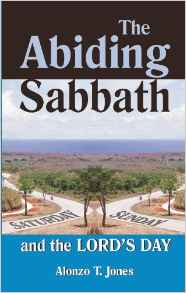
The Abiding Sabbath and the Lord’s Day

The Abiding Sabbath

The Abiding Sabbath and the Lord’s Day

By Alonzo T. Jones
In 1883, a $500 prize was offered to whoever could write an essay on “The Perpetual Obligation on the Lord’s Day.” Rev. George Elliot won the essay with a work entitled The Abiding Sabbath. A second prize was offered, this time for $1,000, was awarded to Professor A.E. Waffle of Pennsylvania. His essay was entitled “The Lord’s Day; it’s Universal and Perpetual Obligation” was printed in 1885. Both of these works were written to defend keeping the first day of the week (Sunday).

Alonzo T. Jones wrote a work that strongly refuted both of these essays and proved the seventh day as the Scriptural day of rest. This book is a must have for anyone looking to defend their faith.

Click the link below to learn more:

https://biblesabbath.org/shopping/pgm-more_information.php?id=109&=SID

Thoughts Upon Baptism


By Bonnie Williams

“Standley Lake is in our city but it is removed from the buildings, houses and noisy roads. We (Erick, my husband, my Mom, Dad and I) had to walk about 5 minutes to the lake shore in the freezing cold wind. For some reason, the wind blew harder and colder the closer we got to the water ( I felt that Satan must have been upset!).

As Erick and I walked, we could see whitecaps on the lake’s surface and we could smell the colder weather tumbling over the mountains next to us. The sun hid behind clouds and the clouds banded together, determined to keep us cold. The mud at the lake shore was almost like freezing quicksand. The more you walked, the more mud you accumulated on your feet.

Erick went first, since he would have to be wet and cold the longest. From where my mother and I stood, we could see the genuine pain on his face when he sat in the water…”

(this article is an excerpt from the March-April 2000 edition of the Sabbath Sentinel)

To read the rest of this article, which starts on page 16, click this link:

http://biblesabbath.org/tss/482/tss_482.pdf


How the BSA Can Help You Individually or as a Church (Part 2 of 3)

How the BSA Can Help You Individually or as a Church (Part 2 of 3)
by Kelly McDonald, Jr.

In this blog, we will continue looking at practical ways that BSA materials can help you individually or build the faith of your congregation.
Study Idea #4 – Practical Ways to Observe the Sabbath

With this study, the focus is on Biblical principles that guide our practical observance of the Sabbath. This would include activities to avoid on the Sabbath as well as positive activities to apply on the Sabbath (each individual and congregation may have some different views on how to honor the Sabbath).

Suggested Materials: “From Sundown to Sundown, How to Keep the Sabbath…and Enjoy It!” by May-Ellen Colon. In this book, the author tackles honoring the Sabbath from the perspective of our relationship to God as our Father. It will cause you to give deep thought to how you observe the Sabbath. “How to Keep The Sabbath Holy” by Doug Batchelor is a work that asks questions about Sabbath observance and practical ways to address those questions.  “52 Things to Do on the Sabbath” by Glen Robinson is another appropriate work for this subject. It contains practical activities for all ages.

Suggested Practice: In this study, try to navigate issues relating to sabbath observance, such as practical ways to get off work on the Sabbath and how to better incorporate children/families into the Sabbath experience. You could also ask people in the study to share any concepts, traditions, or practices that they have found contribute to Sabbath observance. You might research practices from different Sabbath groups.


Study Idea #5 – The Sabbath in Prophecy

The Sabbath also has an interesting place in Bible prophecy. The attempt to change the Sabbath was prophesied in Daniel 7:25. Moreover, it was prophesied that the beast power government would hunt down Christians who practiced the commandments of God.

Suggested Materials: “A Woman Rides the Beast: Roman Catholic Church Last Days” by Dave Hunt. In this provocative prophetic book, Dave goes through history to unveil the identity of the woman of Revelation 17, named the Whore of Babylon. There is also a DVD on this same subject. “Spirit of Antichrist” by Alan Knight is an examination of how past pagan practices have infiltrated Christianity. He takes into account the different Bible prophecies as fulfillment of these events and warns Christians to avoid them in light of unfulfilled prophetic events!

Other Suggestions: In this study, it would be great to include news articles showing how the attack against the Sabbath prophesied in Daniel 7:25 is continuing to happen even in our times. One could look at Sunday laws in different parts of the world, especially Europe (where they have made a revival in recent years.


Study Idea #6 – The Ten Commandments

The Ten Commandments are absolute laws to guide Christian living. In this study, you could discuss the place of the Ten Commandments in our modern world. Though the world has changed, the Ten Commandments have not.

Suggested Materials: “The Ten Commandments Twice Removed” – In this short book, you will learn about the recent attack in our country against the Ten Commandments and how the Church in general has not emphasized the commandments to the degree that she should. “The Ten Commandments” by Taylor Bunch. This book explains the spiritual and practical importance of the Ten Commandments. Further, it conveys how the Ten Commandments lay the foundation of human liberty and love.

Suggested Practice: In this study, you might consider going over Bible verses where people broke the Ten Commandments and the consequences they incurred. Also, you could explain more modern applications of the Ten Commandments to emphasize their unchanging nature (for instance, how downloading copyrighted music without paying for it is stealing).

Study Idea #7 – You can always put together your own study group with our materials. These are just some practical ideas that will encourage and edify your faith and the faith of those in your church/Bible Study.

To look at the BSA materials, click the links below.

http://biblesabbath.org/Books.php

http://biblesabbath.org/Books2.php

http://biblesabbath.org/index.php?pr=DVDs


Thanks for reading and I hope we can help build your faith!

Kelly McDonald, JR.

BSA President

www.biblesabbath.org


The Pre-Existence of the Sabbath

Pre Existence of the Sabbath

The Pre-Existence of the Sabbath

By Maurice Caines

For whom is the Sabbath designed? What is the nature of the Sabbath? Is it enforced on this planet only, or does its influence have cosmic implications? Why does the Sabbath matter? What does the seventh-day Sabbath have to do with our relationship with God and others?

Whatever your views on the Sabbath, this little book will intrigue and inspire you and make you think in new ways about the day God set apart and sanctified. In Pre-existence of the Sabbath, Maurice Caines presents new perspectives from God about heaven, the Sabbath, and your place in His universe that he found while studying the Word of God. Looking at the nature of the Sabbath through Caines’ eyes might just change the way you view God’s gift of His holy day.

To this short, but informative book, click the link below!

https://biblesabbath.org/shopping/pgm-more_information.php?id=120&=SID

How BSA Materials Can Help Your Church (Part 1 of 3)


How BSA Materials Can Help Your Church (Part 1 of 3)
By Kelly McDonald, jr.

The Sabbath is mentioned over 140 times in the Bible. It is mentioned far more than many other doctrines taught in the church today. This means it has a vital function in our relationship with God. Every human was created with the innate need to rest on the seventh day of the week. Truly, there is more for us to learn about this eternal precept.

The BSA has a variety of materials about the Sabbath and the Ten Commandments. Perhaps quarterly, semi-annually, or annually, your Bible study group or congregation could have a special study on some aspect of the Sabbath. This type of study would deepen one’s understanding of this special day and its practice.

I have some examples of these types of studies below, with suggested materials:

Study Idea #1Heroes of the Faith – This study would utilize books or videos about Sabbatarians putting their faith into action. These true-life testimonials would highlight how people honored the Sabbath despite extreme and adverse conditions.

Suggested Materials: “Miracle of the Seventh-Day Ox” – The miraculous story of a man who honored the Sabbath in a concentration camp in Communist Russia. He suffered for his faith, but God provided for Him in a miraculous way. “A Thousand Shall Fall” is a book about a German man who honored the Sabbath and avoided fighting in the war even after he was drafted by Hitler’s Nazi regime. “Chains in China” – A Sabbatarian in China was imprisoned over the Sabbath. He still spread his faith despite the terrible conditions around him.

Other Suggestions: You could read these books consecutively or perhaps do this type of study over the course of a year. You can also ask the study group to input their own stories of perseverance. I’m sure that online you could find inspiring stories from other Sabbatarians or from history. This type of study will encourage people to keep the Sabbath despite threats from employers or others.

Study Idea #2 – Why Do We Keep the Sabbath? – This study would take a look at the fundamental reasons why we honor the Sabbath. It is important for Sabbatarians to be reminded why we honor the Sabbath. We do not want to simply go through the motions.

Suggested Materials: “Why I Am A Sabbath Keeping Christian” by Dan Jarrard. This book details one man’s journey in learning about the Sabbath. “35 Reasons Why I Keep the Bible Sabbath” by Robert Correa. This book gives unique insights as to why we should honor the Sabbath. “The Morality of the Sabbath” by D.M. Canright. This book examines the moral foundation of honoring the Sabbath. It puts forth the idea that the Sabbath is the moral centerpiece that holds the other commandments together. “The Sabbath: Its Meaning for Modern Man” by Abraham Herschel is a philosophical examination the Sabbath; it is very in-depth.

Other Suggestions: This type of study would be good to include a time for people to give testimonials as to how they learned about the Sabbath and how to practice it. It is good for others in the Body to hear personal testimonies of how we came into the Sabbath truth.


Study Idea #3 – History of the Sabbath – In this study, you could look at the history of the Sabbath in general or in certain parts of the world. This would help resolve or overcome common objections to keeping the Sabbath such as “the Sabbath wasn’t observed by early Christians” or “Sabbath keeping just started in the 1800s”.

Suggested Materials: “History of the Sabbath” by J.N.Andrews is a thorough, in-depth read. It covers the history of Sabbath and Sunday in Christianity for over 1,000 years. “Time is the Ally of Deceit” by Richard Rives conveys on a simple level how paganism crept into Christianity and tainted it. “From Sabbath to Sunday” by Samuel Bacchiocchi is another in-depth book that covers the first few hundred years of Christianity. It examines the potential causes as to why some people moved away from the true Sabbath. “The Celtic Church in Britain” by Leslie Hardinge looks at Sabbatarians in Britain, especially in early Christianity. We have several other works on Sabbath history available on our website.

Other Suggestions: Participants in the study could discuss historical claims about the Sabbath that they have heard (and even historical arguments against the Sabbath). You could always invite a historian from a Sabbatarian Church to speak at your congregation. Richard Rives is a great speaker to exhort congregations and even evangelize the general public.

We also have several DVD sets available that are great to use with a group.

To look at the BSA materials, click the links below.

http://biblesabbath.org/Books.php

http://biblesabbath.org/Books2.php

http://biblesabbath.org/index.php?pr=DVDs

Thanks for reading and I hope we can help build your faith!

Kelly McDonald, JR.

BSA President

www.biblesabbath.org

Time is the Ally of Deceit

Products-TimeAllyOfDeceit332

Time is the Ally of Deceit

by Richard Rives

This exciting book and 5-part DVD series explains in great detail the events that led to people trying to replace Sabbath worship with Sunday worship.

Many aspects of Traditional Christianity cannot be found in the Bible. They can however be traced directly to the worship of pagan gods which predate Christianity by centuries. How is it that precepts that have nothing to do with Christ and everything to do with pagan sun worship have found their way into our churches? History reveals that there is one very good answer.

Part 1: Flee To The Mountains. First century believers, based on the warning by Jesus, left Jerusalem prior to its destruction in 70 A.D. 53 mins.

Part 2: Baal Comes To Rome. During the 2nd and 3rd centuries, aspects of pagan sun worship were combined with the true faith of first century believers, resulting in a Christianity unlike anything that those who walked and talked wtih Christ would have recognized. 70 mins.

Part 3: The Persian Sun God Mithra – Greco Roman Christianity. Historians report that during the 4th century the worship of the Persian sun god Mithra mysteriously vanished as Christianity was established as the religion of the Roman Empire. Was it Mithraism that vanished, or true Christianity? 53 mins.

Part 4: The Conversion Of Constantine And The Nicean Council. While his coins state that he was committed to the sun god Sol Invictus, Constantine was also recognized as the First Christian Emperor. Presiding over the Nicean Council, the date for the observance of Passover was changed from the Biblically prescribed timing. 51 minutes.

Part 5: Remember The Sabbath Day – A Delight – The Holy Of The Lord – Honourable. Many theologians would tell us that Sunday has replaced the 7th day Sabbath, that in fact, the law has been “nailed to the cross.”” Yeshua, Jesus said that until heaven and earth pass away not even the slightest aspect of the law would change. See an overview of historical events that led to the abandonment of Biblical precepts and their replacement by Traditional Christianity. 93 minutes.

To order the book only, click the link below:

https://biblesabbath.org/shopping/pgm-more_information.php?id=43&=SID

To order the book and DVD set, click the link below:

https://biblesabbath.org/shopping/pgm-more_information.php?id=44&=SID


Who, Then, Is Our Brother?


By Royce Mitchell, Jr.

“Nearly 2000 years ago, during a conversation with Peter, Jesus Christ shocked him by making the following statement. It is found in Matt 16:18, “And I tell you that you are Peter, and on this rock I will build my church, and the gates of Hades will not overcome it” (NIV).

Christ Built His Church From Many Different People

This verse has been misunderstood in the past by some who would give men the power to modify, or delete altogether, the laws of God. But such was not the case in the statement of Christ. It was intended to show that Christ was going to build His Church, and it was to be built on Himself, not on Peter. He was preparing to build His Church, one church. Not many churches preaching many different gospels, and not many churches preaching similar doctrines, but one Church, consumed with the passion for completing the Work of the Father, even as Christ Himself was (Luke 2:49). He was building His Church, based on His Word, the Word given to Him by the Father. In doing so, He would be bringing many sons to glory (Hebrews 2:10). These sons, all adopted sons of the glorious Father, then, would be brothers. In this article, we will show who these brothers are, not using our own ideas, but as defined by God’s Word…”

(this article is an excerpt from the JANUARY-FEBRUARY 1999 edition of the Sabbath Sentinel)

To read the rest of this article, which starts on page 8, click this link:

http://biblesabbath.org/tss/475/tss_475.pdf

A False Doctrine Spreading Among Sabbatarians

Danger.jpg

A False Doctrine Spreading Among Sabbatarians

By Kelly McDonald, Jr.

There is a false doctrine spreading among Sabbatarians that directly contradicts the True Sabbath. It is called the lunar sabbath. What is the lunar sabbath?

It is the belief that the true Sabbath is kept on the seventh, fourteenth, twenty-first, and twenty-eighth days from the appearance of the New Moon. While this belief has spread in recent years in the Body of Christ, it is certainly not new. A.H. Sayce was an archeologist who did work in the Middle East. He gives us insight into the origins and ancient practice of the lunar sabbath:

“An old list of Babylonian festivals and fast-days tells us that on the seventh, fourteenth, nineteenth, twenty-first, and twenty-eighth days of each month the Sabbath-rest had to be observed” (Sayce, The Higher Criticism and the Verdict of the Monuments, p 74).

The only difference between the ancient practice of lunar sabbaths and its modern reappearance is that the ancient Babylonians rested on the nineteenth day as well. Despite this difference, the practice of honoring the Sabbath based upon the appearance of the moon is still Babylonian.

In the Bible, we are instructed to come out of Babylon, not to go into her. “And I heard another voice from heaven, saying, Come out of her, my people, that ye be not partakers of her sins…” (Rev. 18:4).

How does this teaching contradict the Bible?

First of all, the Sabbath is honored every seventh day of the week (Friday sunset to Saturday sunset). It is not honored on the seventh day of each month. God makes this very clear in the Bible. Let’s look at some examples from Scripture.

When God gave the Fourth Commandment, He said: “Six days shalt thou labour, and do all thy work: But the seventh day is the sabbath of the LORD thy God: in it thou shalt not do any work…For in six days the Lord made the heavens and the earth, the sea, and all that is in them, but he rested on the seventh day. Therefore the Lord blessed the Sabbath day and made it holy” Exodus (20:9-10a, 11). Notice that a month is not mentioned in these verses. The Sabbath is called a specific day.

In Leviticus chapter 23, God discusses His Feasts. The first of these special days is the Sabbath. Nowhere in His description of the Sabbath is the term “month” found; it is found on the seventh day of every week. “Six days shall work be done: but the seventh day is the sabbath of rest, an holy convocation; ye shall do no work therein: it is the sabbath of the LORD in all your dwellings” (Leviticus 23:3).

When we read the rest of Leviticus chapter 23, the Annual Festivals ARE based upon specific months of the year. Consider Passover as an example: “In the fourteenth day of the first month at even is the LORD’S passover” (Lev 23:5). God specifies the difference between a festival that occurs on a day of the week (the Sabbath) versus one that is related to a specific  day of a specific month (such as Passover).

There are no verses that say the Sabbath is held on the seventh, fourteenth, twenty first, and twenty-eighth day of the month.

Secondly, the lunar month is not divisible by seven. The lunar cycle is approximately 29 ½ days. This means that if one kept the lunar sabbath, then there would be four weeks of seven days followed by one week of either eight or nine days. This means that the sabbath would not fall every seventh day. This breaks God’s continuous weekly cycle of seven days.

I have heard proponents of the lunar sabbath claim that the days between the fourth lunar Sabbath and the appearing of the next New Moon do not count as days. This also contradicts the Bible. God defines a day as evening followed by daytime. “…evening and the morning were the first day” (Gen 1:5b). God reckons this as a day whether we want it to be or not. We can’t just say ‘they don’t count’ without God instructing us about it!

For another Biblical illustration of the seven day week, consider the manna in the desert. God gave one portion of manna for five days, twice as much on the sixth day, and none on the seventh day. This weekly cycle of manna lasted for 40 years. God did not allow a break in this seven-day cycle to wait for the new moon to appear.

Third, there is no way to honor Pentecost under such a system. Pentecost is reckoned by counting seven Sabbaths from the weekly Sabbath during Unleavened Bread (Lev. 23:15-21). The day after the seventh Sabbath is called Shavuot or Pentecost; this is the fiftieth day. There is no manner of reckoning time under the lunar sabbath system where the day after the seventh lunar sabbath is the fiftieth day. God reckons Pentecost based upon a seven-day week regardless of the month.

Fourth, there are dozens of languages that preserve which day of the week is the Sabbath. Consider the words for Saturday in the following languages: Indonesian (Sabut), Tagalog (Sabado), Italian (Sabato), Spanish (Sabado), Greek (Sabatoh), Arabic (Al Sabt), and Mandingo (Sibiti).

CLICK HERE to read more about languages which confirm the seventh day of the week.

As the writer of Hebrews warned us: “Therefore we must pay much closer attention to what we have heard, lest we drift away from it” (Hebrews 2:1). Like a boat that drifts slowly from the shore, we can drift away from God’s purpose for our lives. The lunar sabbath causes this sort of drifting. It disconnects people from the reality of God’s Creation; it causes people to miss the true Sabbath. Furthermore, the notion disregards the Word of God and the seven-day weekly cycle established by God.

CLICK HERE to learn more about other historical attempts to change the seven-day weekly cycle. 

Unfortunately, I have had friends who have been deceived by this false doctrine. I pray for them to turn away from it. Please share this article and help others avoid this doctrine which has led many astray and shipwrecked their faith.

Kelly McDonald, Jr.

BSA President – www.biblesabbath.org