What Difference Does God’s Law Make?

What Difference Does God’s Law Make?

Loren Seibold

(This article is an excerpt from the May – June 2008 edition of the Sabbath Sentinel)


“During a few weeks of each year, my back patio becomes a demonstration lab for one of the most famous laws of science: the law of gravity. Above the deck stand several large black walnut trees that produce thousands of hard, heavy walnuts. For a few weeks in the autumn, you relax on the patio at your peril, unless you’re wearing a hard hat! Only the squirrels are delighted. Walnuts fell from trees for centuries before Isaac Newton formulated the law of gravitation (he used apples). Newton’s law doesn’t make the walnuts fall; it only explains why they fall. There are, in fact, hundreds of laws of science. You may have learned some of them in school: for every action there is an equal an opposite reaction. Energy cannot be created or destroyed. You can know either the location of a particle or its momentum, but not both. The laws of science differ from laws made by governments.

A friend was driving above the speed limit when she saw the red and blue flashing lights of a patrol car in the car’s rearview mirror. She was so startled (it was her first encounter with the law) that by the time the patrolman asked her to roll down the window, she was weeping. He took mercy on her and gave her a warning instead of a ticket. A person can sometimes get away with breaking the laws of a government. The laws of science, though, aren’t negotiable. They are invariable facts of the physical world. You would be very foolish to say, “I’ve decided not to follow the law of gravity today,” and then step off the edge of the Grand Canyon. God’s Invariable Laws God is the Originator of the laws of science, in that He created all that we describe by them. Because the laws of science never fail, they help us understand how the physical world works; we make use of them in order to fly an airplane, heat a house, or even hammer in a nail.”

To read the rest of this article, which starts on page 9, click this link:

http://biblesabbath.org/tss/531/tss_531.pdf

The Morality of the Sabbath

The Morality of the Sabbath

by Kelly McDonald, Jr.

When we think about the Sabbath, many Christians will say, “Well, God doesn’t care which day we rest and worship him on. One day in seven is all that matters.” Let’s seriously consider this line of reasoning with two of the other Ten Commandments.

Does God care whose property you have in your possession? (Your own or someone else’s?)

Does God care whose spouse you take home with you? (Your own or someone else’s?)

Again, most Christians would agree that God does care whose property you have in your possession. They will agree that it matters whose spouse you take home with you. For some reason, many will make an exception to the Sabbath. The Ten Commandments are absolute laws.

Just as God cares that we only possess our own property and that we stay faithful to our own spouse, He cares what day we rest upon. Since He saved us, we are called to be like Him (Leviticus 19:1-2).

There is only one day that God set apart for the Sabbath; it is from Friday sunset to Saturday sunset. If we do not rest on the Sabbath, then we have broken it. The morality of this commandment is set in stone just as are the others.

Kelly McDonald, Jr.

BSA President – http://www.biblesabbath.org

Virginia Beach business fired Seventh Day Adventist improperly

Virginia Beach business fired Seventh Day Adventist improperly

NORFOLK

A chain of self-storage businesses based in Virginia Beach improperly fired a Seventh-day Adventist employee who had complained he should not have to work on his Sabbath, a federal judge has ruled.

U.S. District Judge Raymond A. Jackson ordered Mini Price Storage – also known as Central Drive Mini Storage Inc. – to pay Sean Mohammed $150,730 in back pay, as well as attorneys’ fees and court costs.

“This is vindication,” said Ari Wilkenfeld, one of Mohammed’s lawyers. He noted that his client found it difficult to find work after his termination in 2011 and is now in debt. He said Mohammed was crying the last time they spoke.

“The results are very gratifying,” Wilkenfeld said. “This is life-changing for him.”

To read the rest of the Article, go here:

http://pilotonline.com/news/judge-virginia-beach-business-fired-seventh-day-adventist-improperly/article_66c1add0-4ebc-5334-88aa-eec755e84db3.html


The History of Sabbath and Sunday

Products-AHistoryofSabbathandSunday125

The History of Sabbath and Sunday

By John Kiesz

This book provides a brief overview of Sabbath keeping from Jesus until now. It shows that there have always been Christians keeping the Sabbath from the time of the original Apostles. Here is an excerpt from pages 23-24.

“Of the Christians of the British Isles, before the mission of Augustine to that country in about A.D. 596, we note that they had not been in subjection to Rome. When Augustine arrived he found the northern part well-nigh filled with Christians and Christian institutions….

Those Christians were Culdees, whose chief seat was the island of Iona, on the western coast of Scotland. Their chief missionary leader was Colomba (borth 543), and he was an observer of the seventh-day Sabbath. On this point we quote a standard Catholic author, Dr. Alvan Butler, who recorded some of Colomba’s dying words:

“Having continued his labors in Scotland thirty-four years, he clearly and openly foretold his death, and on SAtuirday the ninth of June said to his disciple Diermit: ‘This day is called the Sabbath, that is, the day of rest and such will it truly be for me; for it will put an end to my labors’” (Butler’s Lives of the Fathers, Martyrs, and Principle Saints, art. St. Colombo, A.D. 597).

Sabbath History Seventh Century to the Reformation

“Rome never succeeded in driving the Sabbath wholly from its dominions. We have reasons to believe that there have been Sabbath-keepers functioning in every century, some in the wilderness, and some in and around the Alps. In their time, they were known by such designations as Nazarenes, Cerinthians, Hypsistari, and later as Vaudois, Cathari, Toulousians, Albigenses, Petrobrusians, Passagii and Waldenses….”


To order this book, click here:

https://biblesabbath.org/shopping/pgm-more_information.php?id=2&=SID


Tiger And Tom And Other Stories For Boys

Products-TigerTom125

Tiger And Tom And Other Stories For Boys

By J.E. White

This book is available to order through the Bible Sabbath Association. In it, you will find character-building stories for boys.

Read one of the recommendations of this book:

“I have spent literally $1,000.00’s on educational and character building materials for our son… and none have been as encouraging, nor as influential as your old time stories.”

These stories were compiled from orphanage stories used in the United States many years ago. Fortunately, Godly character does not have a time period attached to it. These timeless stories will encourage boys to choose right from wrong. Read them to your children and even grandchildren!


To order this book, just click the link below:

https://biblesabbath.org/shopping/pgm-more_information.php?id=48&=SID

Sabbath Keeping in 400 AD

Sabbath Keeping in 400 AD

By Kelly McDonald, Jr.

In the 300s and 400s AD, a group of Christians called Arians were the majority belief system. Dr. Arius and his followers were known for practicing a lifestyle considered by many to be Jewish. Below, we have some quotes from two early Church historians – Sozomen and Socrates. They record the Sabbath-keeping practices of the Arians and most of Christianity in general.

Approximately 400 AD

“Likewise some meet both upon the Sabbath and upon the day after the Sabbath, as at Constantinople, and among almost all others. At Rome and Alexandria they do not. Among the Egyptians, likewise, in many cities and villages, there is also a sacred custom among all of meeting on the evening of the Sabbath, when the sacred mysteries are partaken of” (Sozomen, Church History, bk 7, ch 19).

“The Arians, as we have said, held their meetings without the city. As often therefore as the festal days occurred — I mean Saturday and Lord’s day—in each week, on which assemblies are usually held in the churches, they congregated within the city gates about the public squares, and sang responsive verses adapted to the Arian heresy. This they did during the greater part of the night : and again in the morning, chanting the same songs which they called responsive, they paraded through the midst of the city, and so passed out of the gates to go to their places of assembly” (Socrates, Church History bk 6, ch 8).

For although almost all churches throughout the world celebrate the sacred mysteries on the Sabbath of every week, yet the Christians of Alexandria and at Rome, on account of some ancient tradition, have ceased to do this. The Egyptians in the neighborhood of Alexandria, and the inhabitants of Thebais, hold their religious assemblies on the Sabbath, but do not participate of the mysteries in the manner usual among Christians in general : for after having eaten and satisfied themselves with food of all kinds, in the evening making their offerings…” (ibid, bk 5, ch 22)

The quote provides clear evidence that the Arians had Sabbath-keeping tendencies. Unfortunately, many of them also met on the first day of the week. There could be various explanations of this. We go into depth about this development in another article, which you can read by CLICKING HERE.

The first quote from Socrates above indicates that they celebrated the Sabbath so strongly that their celebration spilled over into the first day of the week. Also, remember that Constantine set the precedent years before to force all Roman citizens to rest on the first day of the week (it had been reinforced in 386 by Theodosius I). This is discussed in the article link provided above. An entire generation grew up resting on Sabbath to honor the commandments of God and then the first day of the week out of social custom.

God’s plan in the Bible is to work six days and rest on the seventh. One thing we do learn from these historical examples is that most Christians honored the Sabbath. Rome and Alexandria were the exceptions.

God Bless!

Kelly McDonald, Jr.

BSA President – www.biblesabbath.org

The Turning Point

The Turning Point

By Dianne D. McDonnell

Sometimes there are major turning points in one’s life. Jeff had a wife, a family and lots of bills to pay. He made decent money, but the new house payment was still difficult. The thought of being made a supervisor was the carrot on a stick he had been chasing for some time. He did a great job on every assignment, and got along well with others, so why did the supervisor position elude him? He was sure it was the major turning point he needed.

Of course, there was that new thing about going to church on Saturday. At first he had let his wife go alone or with the kids, but now he attended also. It had seemed so odd at first. He had even told his wife she was making a big mistake when she was baptized, but now years later, he was going with her. Jeff was checking on each of the new beliefs. There really were a lot of places in the Bible that supported the Sabbath, and yes, Jesus did keep that day. Then the time finally came. “Jeff, we want you to be a supervisor. The pay raise will be significant. You will be expected to come in every Saturday, but just for an hour or two.”

Jeff decided not to tell his wife. He had to pray about it first, and think it over. After three days he summoned the courage to go back into the boss’ office, and quietly he explained that his conscience wouldn’t allow him to work on Saturdays. It was a heavy decision to make, and he couldn’t help that a part of him still grieved over the lost income. He felt he would never get a raise. So the months slid by, and somehow there was enough to pay all the bills. Nine months later he was surprised to be called into the boss’ office again. “Jeff, I’ve created a new position. It’s an individual contributor job, but it will pay the same amount as the supervisor’s position. And you won’t ever have to work on Saturdays.”

God had intervened! This was an entirely new position created just for him! He had never heard of other position like it, and it was something he could do well. He could barely wait to thank God and to tell his wife what God had done! This is a true story, only the name has been changed. It was, indeed, a turning point. This man is still keeping the Sabbath over twenty-five years later and God has continued to bless him and his family.

Dianne McDonnell is the founder of Freedom Ministry.

http://www.freedom-ministry.com/


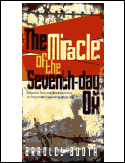
The Miracle of the Seventh-Day Ox

miracleof7thday-small

The Miracle of the Seventh-Day Ox

By Bradely Booth

Nickolai Panchuck was a Sabbath-keeping minister in Communist Russia. He was arrested for his faith and refused to give up the names of his congregants. He was subsequently exiled to Siberia by the KGB. In this incredible, riveting story, you will learn how Nickolai kept his faith in God and the seventh-day Sabbath during the entirety of his imprisonment. His faith led to others believing in Jesus and eventually led to his release from prison.

Here is an excerpt from page 50:

“The first time Nickolai had been severely beaten by both Yuri and the warden. The second Sabbath they had locked him up in a box for 10 days. On the third time around would they finally give up, or would the persecutions continue?

Nickolai wondered how much worse things could get. He was sure that there would be another confrontation with the warden, and he dreaded it, but he also knew that he had to remain faithful to God no matter what. He couldn’t give up now. The Sabbath was a special blessing from God. With all of his heart he wanted to honor the sacred day and the Creator God who had designed it….”

To read more from this breath-taking story, order the book from the BSA (click the link below)

https://biblesabbath.org/shopping/pgm-more_information.php?id=105